

top of page

What Are the 10 Best Car Garage Lifts in 2026?

The right Car Garage Lift can turn a crowded workshop into useful space, but the best choice depends on the vehicle and garage. A low ceiling, narrow bay, or uneven concrete floor can rule out a model before price becomes relevant. Details matter. This 2026 guide compares ten popular lift options by capacity, lift style, footprint, height requirements, safety features, and stated warranty. It is designed to help home mechanics and small-shop owners narrow the field, not replace a site inspection.

Before choosing, compare the lift’s rated capacity with the heaviest vehicle you plan to raise. Check the manufacturer’s required ceiling clearance, anchor layout, and concrete specifications against your actual garage. A truck may fit between the posts yet still need more overhead space for doors, roof racks, or a raised hood. Consider whether you need a two-post lift for underbody access, a four-post lift for storage, or a portable option for occasional work. No shortcut works. Look for clearly documented safety locks, operating instructions, replacement-part support, and service availability. Product specifications and prices can change, so confirm current details directly with the manufacturer or seller. A qualified installer can assess the slab and setup before use. Some compromises remain: the most affordable lift may not suit a taller vehicle, while a high-capacity model may consume valuable space.
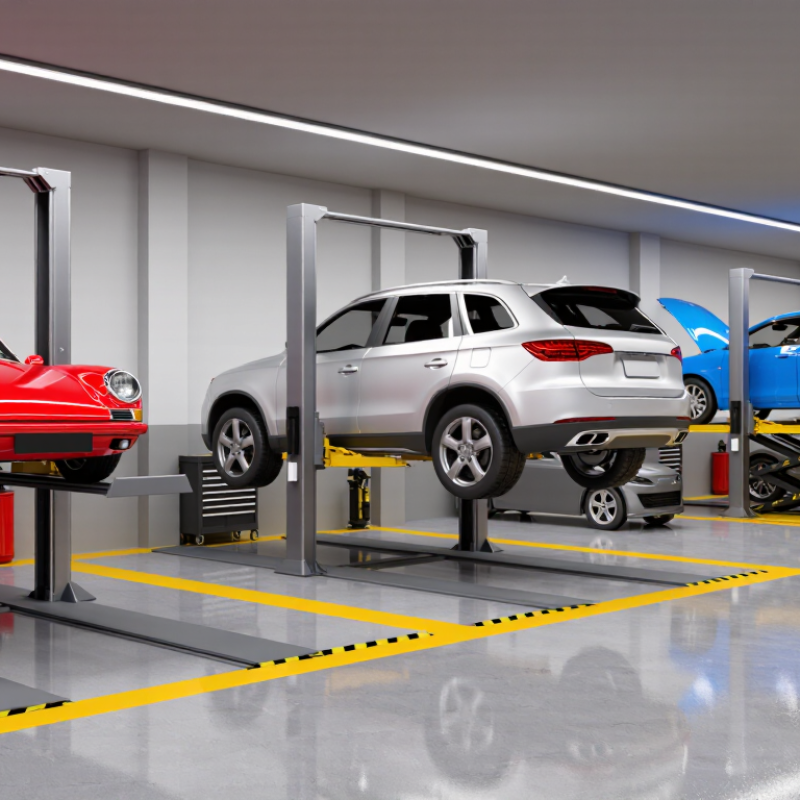
What Are the 10 Best Car Garage Lifts in 2026?

How Car Garage Lifts Work and Where They Are Used

A car garage lift raises a vehicle by transferring its weight through arms or platforms to a stable structure. On a two-post lift, adjustable arms meet the vehicle’s approved lifting points; a four-post lift supports the tires along runways. Hydraulic pressure usually provides the lifting force, while mechanical locks help hold the vehicle at working height. The operator still needs to check balance, clearance, and lock engagement. A lift can make access easier, but it does not make a poorly positioned vehicle safe.

Repair shops use lifts for tire, brake, suspension, and underbody work. Home garages may use compact models for maintenance, though ceiling height, floor strength, and vehicle weight limit what fits. The U.S. Bureau of Labor Statistics reported 805,600 automotive service technician and mechanic jobs in 2023, with 4% employment growth projected from 2023 to 2033. That workforce figure does not measure lift use directly, but it shows the scale of vehicle service work where safe access matters. Small details count: a misaligned arm pad can shift under load.

Tip: Check the lift’s rated capacity and the vehicle manual’s lifting points before raising a car. Keep people clear, raise the vehicle slightly, then pause and verify contact before lifting higher. I’d still inspect the setup twice; routine can make anyone careless. Sources: U.S. Bureau of Labor Statistics, Occupational Outlook Handbook; vehicle and lift manufacturer instructions.

How Car Garage Lifts Work and Where They Are Used

Typical vehicle curb weights help illustrate why lift capacity matters in home garages, repair shops, and commercial service bays.

These are approximate category-level estimates, not specifications for every vehicle. Actual curb weight varies by model, trim, battery, and equipment. Choose a lift with a rated capacity suitable for the vehicle, and follow the lift and vehicle manufacturers’ guidance on lifting points.

The Main Types of Garage Lifts Available in 2026

Garage lifts differ in how they support a vehicle, how much floor space they use, and what work they allow. A two-post lift raises a car by its frame, leaving the wheels accessible for brake, suspension, and tire service. It requires a suitable concrete slab, precise positioning, and clear access around the vehicle. Setup matters.

A four-post lift supports the tires on long runways, making it useful for storage, inspections, and some underbody work. Rolling jacks may be needed to lift the wheels clear. The larger footprint can be a drawback in a narrow home garage. Scissor lifts use linked arms and often take up less space, but lifting height and access vary by design. Some sit above the floor; others are recessed.

Portable column lifts raise vehicles at several wheel points and can be moved when not in use. They suit adaptable work areas, but require careful synchronization and enough clearance. Check the rated capacity against the vehicle’s actual weight, including accessories. Verify ceiling height, floor condition, power needs, and service access before installation. A capacity label alone is not enough.

A layout can look roomy on paper, then feel cramped once doors, tools, and a raised vehicle are in place. Follow the manual, and inspect locks and contact points regularly. Slightly inconvenient? Yes. Worth doing.

Key Criteria for Evaluating the Best Garage Lifts

When comparing the 10 best car garage lifts in 2026, start with safety and fit, not price. Check rated capacity against the heaviest vehicle you actually service, including tools or attachments. Then measure ceiling height, bay width, floor condition, and door clearance. A lift that fits on paper may still block a workbench or leave too little room beneath a raised vehicle. Small details matter.

The Automotive Lift Institute’s safety materials cite estimates of about 4,500 injuries and 20 deaths annually in the United States involving vehicle lifts. Treat these figures as estimates, not a prediction for any one shop. They underline why buyers should verify independent certification to current ANSI/ALI requirements, inspect locking mechanisms, and review installation and maintenance instructions. Compare lifting height, arm reach, runway length, power needs, and access to service parts. Ask a qualified installer to assess the concrete slab; its thickness and condition can affect safe installation. I would still want an on-site check. Spec sheets cannot reveal every floor crack.

Tips: Measure twice, including the vehicle’s wheelbase and roof height. Confirm the lift’s rated capacity and certification in writing. Keep inspection records, and train every operator. No checklist catches everything.

Ten Standout Car Garage Lifts in 2026

Ten standout car garage lifts in 2026 cover very different workshop needs. Symmetric two-post lifts suit balanced access beneath many vehicles, while asymmetric two-post designs can make door opening easier in tight bays. Four-post storage lifts hold a vehicle on runways; alignment versions add adjustable turntables for wheel work. Heavy-duty four-post models serve larger vehicles, but require careful checks of rated capacity and floor space. A good fit matters.

Scissor lifts come in low-rise forms for wheels and brakes, and full-rise designs that provide more underbody access. Portable mid-rise lifts can free floor space when not in use, though their height may limit certain repairs. Mobile single-post lifts offer another flexible option, while in-ground lifts keep equipment out of sight but need substantial site planning. There is no universal winner. Measure ceiling height, bay width, vehicle wheelbase, and the garage floor before comparing options. Confirm that lifting points, anchors, and safety locks match the equipment’s specifications. A rushed installation can turn a useful lift into a frustrating one. Even experienced owners should schedule regular inspections and follow the lift’s operating instructions.

How to Compare Lift Capacity, Safety, and Installation Needs

When comparing the 10 best car garage lifts in 2026, start with the vehicle, not the advertised maximum. Check the lift’s rated capacity against the heaviest vehicle you expect to raise, including equipment or cargo. Then consider how weight is distributed between the axles; a rating alone does not confirm that every vehicle will fit safely. Capacity matters. Also measure wheelbase, track width, and lifting points before choosing a model.

Safety features deserve close inspection. Look for mechanical locks that engage during raising, clear lock-release controls, and arm restraints that help prevent movement. Read the maintenance schedule and check whether cables, hoses, and contact pads are easy to inspect. Keep the vehicle balanced, and never work beneath a lift supported only by hydraulic pressure. No shortcut here.

Installation can rule out an otherwise suitable lift. Measure ceiling height, door clearance, and the space needed to open vehicle doors or position support arms. The concrete slab is easy to underestimate: verify its thickness and condition against the lift’s installation requirements, rather than guessing from appearance. Some installations need anchoring or electrical work, so factor in qualified setup and inspection. Measure twice. A careful comparison takes time, and even a detailed checklist can miss an awkward fit in a crowded garage.

What Are the 10 Best Car Garage Lifts in 2026? — Compare Capacity, Safety, and Installation Needs

A practical comparison of common automotive lift types by typical capacity, space requirements, safety features, and installation needs. The ranking reflects general use cases, not specific products.

Rank Lift Type Typical Rated Capacity Space and Ceiling Considerations Typical Safety Features Installation Needs Best Suited For
1 Two-post, symmetric About 9,000–12,000 lb (4,100–5,440 kg) Requires adequate ceiling height, a clear approach, and enough width for the columns and swing arms. Mechanical safety locks, synchronized carriages, arm restraints, and locking-point adapters are common. Anchored to a suitable concrete slab. Slab thickness, strength, anchor spacing, and layout must meet the lift maker’s specifications. General repair work where access to the wheels and underside is important.
2 Two-post, asymmetric About 9,000–12,000 lb (4,100–5,440 kg) Often helps with door clearance in narrower bays, but still needs suitable ceiling height and column spacing. Mechanical locks, arm restraints, synchronized lifting, and correctly positioned lifting points. Requires engineered placement and anchoring on a qualifying slab; vehicle positioning must follow the lift instructions. Passenger cars and light trucks in garages where door access is a priority.
3 Four-post, service About 8,000–14,000 lb (3,630–6,350 kg) Needs runway length for the longest vehicle and extra clearance for ramps and access. The runways raise the vehicle’s wheels. Runway or carriage locks, anti-sway features, and secure approach ramps are common; wheel chocks are important during use. Many designs are surface-mounted and may not require floor anchors, but the floor must be level and capable of supporting the loads. Routine underbody work, vehicles with difficult lifting points, and users who prefer drive-on loading.
4 Four-post, parking or storage About 7,000–9,000 lb (3,175–4,080 kg) per platform rating varies by design Requires substantial ceiling height for stacked vehicles and sufficient bay length and width for both vehicles. Multiple mechanical locking positions, safety latches, and secure ramps are typical. Follow instructions for loading and vehicle placement. Usually floor-mounted; the floor must be level and suitable for the system. Some installations require anchoring or additional accessories. Adding vehicle storage without building a permanent second level.
5 Full-rise scissor About 6,000–12,000 lb (2,720–5,440 kg) Ceiling needs depend on lift height and vehicle height. The platform and scissor mechanism occupy space beneath the vehicle. Mechanical locks, hydraulic protection features, and controlled descent systems are common; verify the specific design. Surface-mounted versions need a suitable floor; flush-mounted versions require excavation and planned drainage or service access. Shops needing a compact footprint with substantial lifting height.
6 Mid-rise scissor About 6,000–9,000 lb (2,720–4,080 kg) Typically needs less overhead clearance than a full-rise lift, but provides less under-vehicle working height. Mechanical safety locks and secure lifting pads or platforms are common; correct pad placement is essential. Often portable or surface-mounted. Confirm floor condition, power requirements, and the specified vehicle lift points. Wheel, brake, and tire work where a full standing-height lift is not required.
7 Low-rise platform or pad lift About 6,000–10,000 lb (2,720–4,540 kg) Low lifting height makes it suitable for lower-ceiling spaces, but access beneath the vehicle remains limited. Mechanical locks or safety stands may be part of the system; use only the designated lifting points and safety procedures. Some models are portable; others are anchored. Check floor suitability, vehicle clearance, and the required power source. Quick tire, brake, and light service work in a low-ceiling garage.
8 Portable mid-rise About 6,000–7,000 lb (2,720–3,175 kg) Can be moved or stored when not in use, but still needs sufficient room to position the lift and vehicle. Locking positions and secure lifting pads are common; confirm the locks are engaged before working underneath. Usually needs a level, load-capable floor and access to the specified electrical supply. Setup and connection requirements vary. Home garages that need occasional lifting without a permanently installed system.
9 In-ground two-post About 9,000–18,000 lb (4,100–8,165 kg), depending on design Leaves the floor relatively clear when lowered, but the bay must accommodate the lift geometry and vehicle dimensions. Mechanical locking systems and hydraulic safeguards are common; service access and inspection of concealed components are important. Requires excavation and a purpose-designed foundation, plus planned access for hydraulic or electrical components. Professional installation is generally needed. High-use shops seeking an unobstructed floor and a permanent installation.
10 In-ground scissor About 6,000–12,000 lb (2,720–5,440 kg) Can sit nearly flush with the floor when lowered; vehicle length and platform spacing determine bay suitability. Mechanical locks and hydraulic safety devices may be included; inspect and maintain concealed components as instructed. Requires a pit or recessed installation, appropriate foundation, and provisions for drainage and service access where specified. Professional facilities that want drive-on access and a clear floor when the lift is lowered.

Important: Capacity figures and installation details are typical ranges for lift categories, not specifications for a particular lift. Ratings, clearances, electrical requirements, concrete requirements, and safety systems vary by design. Before purchase or installation, verify the lift’s documentation, vehicle weight and lifting points, local requirements, and the manufacturer’s floor and anchoring specifications. Never work beneath a raised vehicle unless the lift’s mechanical safety locks are engaged as instructed.

bottom of page