

top of page

2026 Best Carton Flow Racking Systems for Global Buyers

Global buyers entering 2026 face a practical warehouse question: which Carton Flow Racking Systems improve picking speed without creating hidden safety or replenishment problems? E-commerce growth, labor pressure, and tighter delivery windows continue to reshape storage decisions. MHI’s 2024 Annual Industry Report identifies workforce challenges and technology investment as major supply chain concerns. These findings matter because carton flow is not merely a rack selection. It affects walking distance, replenishment timing, order accuracy, and operator fatigue.

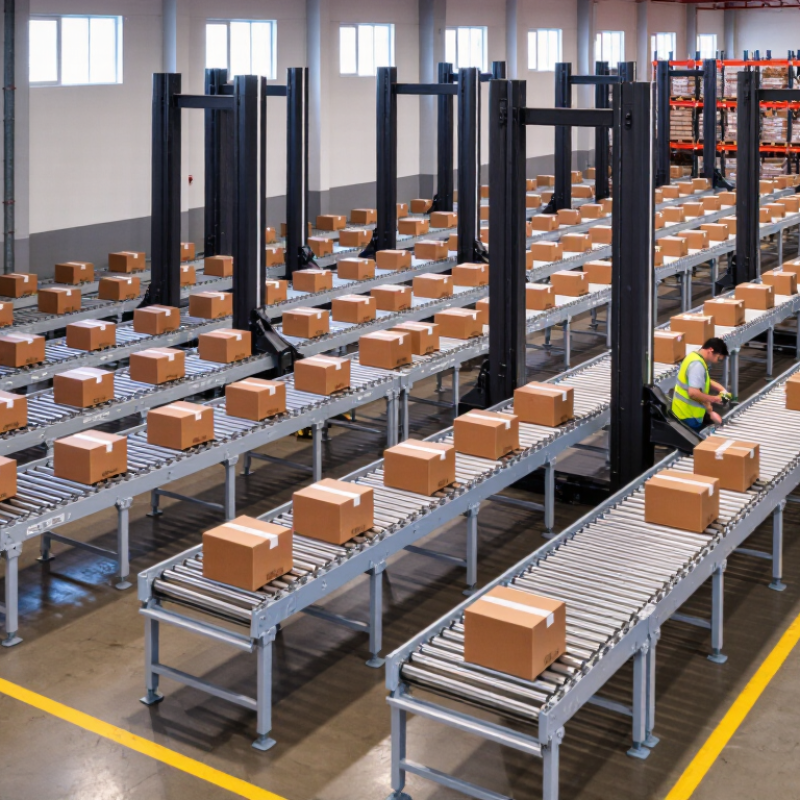
A well-designed system uses inclined roller lanes, rear loading, and front-facing picking positions. The result can resemble a quiet conveyor: cartons move forward, labels remain visible, and the next unit arrives naturally. Small details decide performance. Wheel spacing must match carton bottoms. Lane depth should reflect daily demand. Dividers must prevent stock from drifting sideways. Otherwise, a beautiful installation may become an expensive obstruction.

This 2026 guide compares leading Carton Flow Racking Systems for international buyers. It considers capacity, carton dimensions, FIFO suitability, modularity, maintenance, lead times, and supplier documentation. The World Bank’s 2023 Logistics Performance Index also reminds buyers that logistics reliability depends on infrastructure, service quality, and shipment coordination. Rack performance deserves the same discipline. Ask for load calculations, inspection guidance, material specifications, and installation records. Do not accept vague claims.

The “best” system is conditional. A fast-moving spare-parts warehouse needs different lanes from a grocery operation. That point is easy to overlook. Buyers should test representative cartons, measure replenishment effort, and review future SKU changes before signing. A rack that works today may fail after one seasonal expansion.
2026 Best Carton Flow Racking Systems for Global Buyers

What Carton Flow Racking Systems Are and How They Work

Carton flow racking is a dynamic storage system designed for fast-moving cartons. It uses inclined roller lanes instead of fixed shelves. After a worker loads cartons from the rear, gravity moves them toward the picking face. The next carton rolls forward automatically.

Each lane usually follows a first-in, first-out flow. This arrangement helps reduce aging stock and keeps picking locations organized. Front stops hold cartons safely while workers remove individual units. Some systems use brake rollers to control heavier loads or longer lanes. Dividers separate products and make each carton easier to identify.

Good performance depends on accurate planning. Engineers should check carton weight, base quality, dimensions, and daily pick volume. A carton with a weak bottom may drag or stop halfway. That problem is easy to miss during a short trial. It becomes frustrating during a busy shift.

Operators should load from the replenishment side and pick from the opposite side. Clear labels, stable lane spacing, and suitable roller pitch reduce errors. Regular inspections should check rollers, frames, stops, and connections for damage. The system is practical, not magical. Poorly matched cartons can still create jams, uneven flow, and unnecessary handling. In real warehouses, testing representative cartons before installation often reveals problems that drawings cannot show.

Key Components and Main Types of Carton Flow Racking

Key Components and Main Types of Carton Flow Racking

Carton flow racking supports FIFO picking through inclined lanes, gravity rollers, and controlled replenishment. Its core components include upright frames, load beams, roller tracks, lane dividers, guide rails, and rear stops. A front pick face keeps products visible and reachable. The design should also include load labels, safety pins, and end guards.

The main types are roller-track, wheel-track, and skate-wheel systems. Roller tracks suit heavier cartons and smoother movement. Wheel tracks reduce friction for lightweight packaging. Skate-wheel lanes often provide economical handling for mixed carton sizes, but they may need closer spacing. A slight slope matters. Too much slope creates carton collisions.

MHI’s 2024 Annual Industry Report states that 91% of supply-chain professionals plan to increase technology investment within two years. Carton flow remains a practical step before advanced automation. WERC’s 2024 DC Measures Report highlights picking accuracy, labor productivity, and cycle time as essential warehouse benchmarks. These metrics should guide rack selection, not appearance alone. A perfect layout is rare. Measure real cartons first.

In field installations, operators should test carton width, weight, packaging stiffness, and replenishment frequency. One detail is often missed. Soft cartons can twist between poorly spaced rollers. Adjustable dividers help, but they do not solve every product problem. Regular inspections should check bent beams, loose fasteners, damaged wheels, and blocked lanes. Proper anchoring and aisle clearance must follow local safety requirements.

How to Choose the Right System for Your Warehouse

2026 Best Carton Flow Racking Systems for Global Buyers

How to Choose the Right System for Your Warehouse

Choosing carton flow racking starts with product behavior, not catalog photos. Measure carton width, depth, weight, and daily order frequency. A 600-millimeter case may need different rollers than a 12-kilogram case. Check whether operators pick from the front or replenish from the rear. That decision affects FIFO control, travel distance, and labor effort.

MHI’s 2024 Annual Industry Report, produced with Deloitte, found that 55% of supply chain professionals expected increased technology investment. This supports careful system selection, but automation is not always the answer. For high-velocity SKUs, dynamic lanes can reduce walking and simplify replenishment. For slow movers, adjustable shelving may cost less and use space better. Review at least three months of order history before fixing lane quantities.

Safety and local conditions also matter. Confirm rack load ratings, floor capacity, seismic requirements, and inspection procedures with qualified engineers. Use lane dividers when cartons drift or labels become hidden. Test a sample lane with real packaging; glossy boxes often behave differently from corrugated cartons. I would not trust theoretical capacity alone. Small errors in carton dimensions can create jams, damaged goods, or empty pick faces. MHI’s 2024 report also highlights continuing workforce pressure, making ergonomic reach heights and clear replenishment paths practical priorities. A perfect layout is rare. Leave room for seasonal demand and future carton changes.

2026 Best Carton Flow Racking Systems for Global Buyers - How to Choose the Right System for Your Warehouse

Carton Flow Racking Selection Matrix
System Type / Configuration Typical Application Typical Technical Range Main Advantages Key Buying Considerations
Single-sided carton flow rack Wall-side picking, small parts storage, and low-to-medium SKU operations. Usually 2–6 picking levels; approximately 300–1,200 mm lane depth; commonly designed for carton loads up to about 50–150 kg per lane, subject to engineering approval. Efficient use of wall space; simple replenishment; clear product visibility. Confirm access aisle width, shelf load rating, carton dimensions, and whether replenishment can be performed without interrupting picking.
Double-sided carton flow rack High-throughput distribution centers where replenishment and picking occur on opposite sides. Typically 4–8 levels; commonly 600–1,200 mm usable depth per side; total unit depth often approximately 1,300–2,600 mm, depending on frame and lane design. Supports continuous FIFO flow; separates replenishment from order picking; increases operator productivity. Requires sufficient aisle space on both sides and careful coordination of replenishment rates, lane capacity, and fire-protection clearances.
Pallet-supported carton flow Large warehouses combining pallet reserve stock with carton-level picking. Carton flow lanes installed within or below pallet-rack structures; pallet-beam loads must be calculated separately from carton-flow loads. Combines reserve storage and forward picking; can reduce travel distance and replenishment frequency. Obtain a complete structural design for uprights, beams, decking, lane supports, seismic conditions, and local rack-safety requirements.
Gravity roller carton flow Medium and heavy cartons with relatively flat, rigid bases. Uses steel or polymer rollers; lane pitch and roller spacing are selected according to carton footprint and weight; lanes are commonly installed with an incline of about 3–5%, subject to product testing. Lower rolling resistance for heavier loads; durable construction; consistent FIFO movement when correctly configured. Test the smallest and largest cartons, check base rigidity, and specify braking or speed-control features where carton momentum may be high.
Wheel-bed carton flow Light-to-medium cartons, totes, trays, and containers with smooth, stable bases. Uses multiple wheel tracks; best suited to loads that contact enough wheels at all times; lane capacity depends on wheel type, track spacing, and support spacing. Low friction; flexible lane adjustment; often economical for small cartons and totes. Avoid unstable or soft-bottom cartons; verify wheel-track alignment, carton overhang, and performance at minimum load weight.
Pick-module carton flow system E-commerce, grocery, spare-parts, and omnichannel fulfillment with many active SKUs. Multi-level structure with integrated carton flow, walkways, stairs, lighting, conveyors, or put-to-light equipment; design is highly site-specific. High SKU density; reduced picker travel; supports zone picking and batch-picking workflows. Evaluate building height, floor loading, emergency egress, ergonomics, order profile, replenishment windows, and future expansion requirements.
Adjustable modular carton flow Warehouses with changing product dimensions, seasonal demand, or frequent assortment revisions. Adjustable dividers, lane guides, shelf positions, and roller or wheel tracks; exact adjustment increments depend on the rack design. Improves space utilization; easier SKU re-slotting; supports phased installation and expansion. Check tool-free adjustment, replacement-part availability, lane-change time, and compatibility with the full carton-size range.
Buyer Evaluation Criteria for Global Warehouse Projects
Evaluation Dimension Recommended Check Practical Selection Guidance
Inventory rotation Identify whether products require FIFO, LIFO, or date-controlled rotation. Carton flow is generally appropriate for FIFO picking, while date-sensitive goods may require clear lot-control procedures and disciplined replenishment.
Carton profile Measure length, width, height, weight, base stiffness, packaging material, and carton variation. Use rollers for heavier or rigid-base cartons; use wheel beds for stable, lightweight cartons; conduct a physical flow test before purchase.
Throughput and order profile Review lines per order, picks per hour, daily order volume, peak-season demand, and replenishment frequency. High throughput usually benefits from two-sided access, dedicated replenishment aisles, ergonomic pick heights, and clearly defined forward-pick quantities.
Warehouse dimensions Confirm clear height, column spacing, floor condition, aisle width, door access, and sprinkler clearances. Rack height and aisle layout must be coordinated with local building, fire, seismic, and occupational-safety requirements.
Safety and compliance Request load calculations, inspection procedures, guarding details, signage, and installation documentation. Specify rack protection, backstops, lane stops, anti-collapse measures, and safe access equipment according to the site risk assessment.
Operating environment Check temperature, humidity, corrosion exposure, hygiene requirements, and cleaning methods. Choose finishes and materials suitable for ambient, chilled, frozen, humid, dusty, or food-handling environments.
Total cost of ownership Compare equipment, shipping, installation, maintenance, spare parts, labor, and future reconfiguration costs. A lower purchase price may not deliver the lowest lifecycle cost if replacement rollers, lane adjustments, or local service support are difficult to obtain.

Note: All technical figures shown are typical planning ranges rather than universal specifications. Final dimensions, capacities, materials, rack stability, and compliance requirements should be confirmed through a site survey, product testing, and a project-specific structural design.

Installation, Loading, and Maintenance Requirements

2026 Best Carton Flow Racking Systems for Global Buyers

Installation begins with the floor, not the frame. Confirm slab capacity, levelness, aisle clearance, and local anchoring requirements before assembly. Each bay should be plumb, securely connected, and fitted with lane dividers, front stops, and adjustable rollers. The Rack Manufacturers Institute’s ANSI MH16.1 standard provides useful structural guidance, but local engineering review remains essential. A neat installation can still hide a poor assumption: carton dimensions often change.

Loading discipline protects both throughput and equipment. Place heavier cartons on lower lanes, keep loads centered, and never exceed the posted lane capacity. Test each carton size through a sample lane before full operation. The U.S. Occupational Safety and Health Administration requires stored materials to remain stable and secure, while the 2024 MHI Annual Industry Report found that 83% of supply-chain leaders expect technology investment to increase. That investment only works when operators follow clear loading rules. Small errors become expensive.

Maintenance should be practical and visible. Inspect rollers, lane dividers, frames, anchors, and stop bars for bending, looseness, debris, or unusual noise. Remove damaged components from service immediately. The UK HSE’s HSG76 guidance recommends regular racking inspections, with expert examinations at intervals not exceeding twelve months. Weekly checks may suit busy facilities, though risk levels differ. Record findings with photographs and dates. Do not rely on memory. Yet maintenance schedules are sometimes too optimistic; dusty cartons, forklifts, and rushed replenishment can demand more frequent checks.

2026 Best Carton Flow Racking Systems for Global Buyers

Typical Carton-Flow Lane Load Ranges

The chart shows commonly specified load ranges per carton-flow lane. Actual capacity depends on beam spacing, roller type, lane width, carton dimensions, frame configuration, and the engineered rack design.

Installation should include a level floor, secure frame connections, correct lane slope, and anchoring where required by the structural design. During loading, cartons should be evenly distributed, kept within the stated lane capacity, and loaded from the replenishment side. Maintenance should include regular checks of rollers, lane dividers, beams, fasteners, labels, and rack damage, with damaged components removed from service.

Global Buying Factors: Standards, Costs, and Suppliers

Global buyers should evaluate carton flow racking against destination-specific safety requirements. Requirements may differ across Europe, North America, and Asia. Common references include EN 15635, FEM guidance, and ANSI-based rack specifications. These references address load capacity, inspections, anchoring, and operational safety. Ask suppliers to provide stamped drawings, load tables, material grades, and test records. Do not accept general claims such as “international standard.” Ask for evidence. Small details matter.

The purchase price includes more than steel frames and roller tracks. Budget for brakes, dividers, guard rails, installation, freight, duties, and replacement parts. A cheaper quote can hide thinner materials or unsuitable rollers. Freight may become expensive when long beams require special packaging. Confirm whether the price includes unloading and site assembly. Compare the same configuration across suppliers. Cheap rollers fail quickly.

Supplier reliability depends on technical support and communication. Experienced suppliers should recommend channel depth, pitch, roller spacing, and load limits based on carton weight. Request a layout drawing before approving production. Ask for samples when cartons vary in size or packaging quality. Confirm warranty terms, spare-part availability, and response times. During factory review, inspect weld consistency, surface coating, and roller movement. One weakness in many buying plans is ignoring future product changes. A rack designed for today’s cartons may perform poorly after a packaging redesign. Allow adjustable lanes where practical.

bottom of page