2026 Top Rolling Tool Carts Buying Guide
Choosing the right Rolling Tool Carts in 2026 requires more than comparing drawer counts and glossy finishes. A reliable cart should match your tools, workspace, mobility needs, and daily working habits. In a compact garage, four smooth casters can matter more than ten shallow drawers. On a workshop floor, strong brakes and a reinforced handle may prevent costly movement or accidents.
This buying guide examines practical features through an experienced user’s perspective. It considers steel thickness, drawer capacity, bearing quality, caster size, locking systems, worktop materials, and warranty support. Each feature affects performance differently. A heavy-duty cart may survive years of vibration, but it can become difficult to move when fully loaded. A lighter model may roll easily, yet flex under large power tools. Check the manufacturer’s specifications carefully. Marketing language is not a load rating.
Real-world details also deserve attention. Measure doorways before choosing a wide cabinet. Test whether drawers open smoothly beside a vehicle or workbench. Look for casters that roll across concrete without constant rattling. Small details become obvious during a long repair session. Very obvious.
The best choice depends on honest assessment, not brand loyalty. Some recommendations may change as new materials, storage systems, and safety features enter the 2026 market. Product testing can also miss problems that appear after months of use. Therefore, compare verified specifications, user feedback, maintenance requirements, and return policies before purchasing. This approach supports a more confident decision, even when no cart is perfect.
What Is a Rolling Tool Cart and Why Does It Matter in 2026?
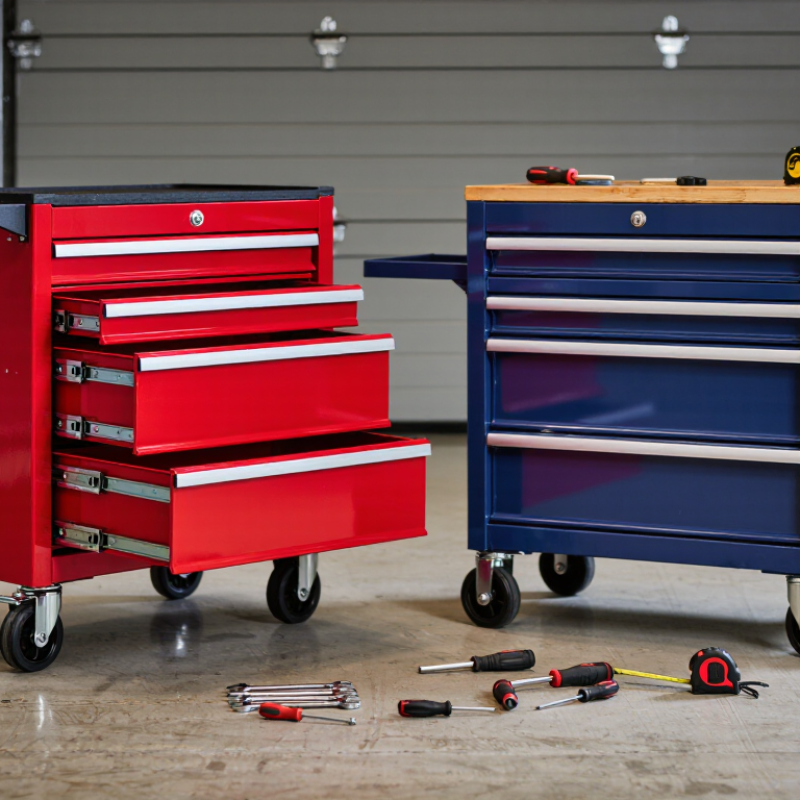
A rolling tool cart is a mobile storage unit with drawers, shelves, casters, and a handle. It keeps hand tools, fasteners, and measuring equipment near the work area. Unlike a fixed cabinet, it moves with the technician. That simple change can reduce repeated walking and interruptions.
A 2024 Grand View Research analysis estimated the global tool storage products market at roughly USD 8 billion in 2023. The report also expects steady growth through 2030. This growth reflects more organized workshops and rising maintenance demands.
Workplace data adds another reason to care. The U.S. Bureau of Labor Statistics reported that overexertion and bodily reaction caused about 26% of days-away-from-work cases in 2023.
A cart cannot remove every lifting hazard. It can reduce unnecessary carrying.
In practical use, the best cart matches the job, not the photograph. Deep drawers suit power tools, while shallow trays support small sockets and labels. Locking casters help on smooth floors. Wide wheels perform better across cracks and thresholds.
I have found that overloaded carts become awkward and unsafe. More storage is not always better. Check drawer ratings, wheel quality, handle strength, and center of gravity before buying. A bright finish looks useful, but layout matters more. Avaliable space matters too. Measure doorways and workbench clearance first.
Which Rolling Tool Cart Features Should You Compare?
When comparing rolling tool carts, start with the load rating, not the drawer count. A full steel cart can become difficult to push across a workshop floor. The U.S. Bureau of Labor Statistics reported 888,100 private-industry cases involving days away, job transfer, or restriction in 2023. That figure is not cart-specific, but it reinforces a practical point: mobility and handling deserve serious attention. Choose casters with brakes, smooth bearings, and enough diameter for floor joints. A cart that rattles over a threshold may damage tools and your patience.
Compare drawer depth, extension quality, and usable storage space. Shallow drawers suit sockets and drivers. Deep drawers hold drills, meters, and bulky fixtures. Check the stated load rating carefully; some manufacturers quote total capacity, while others limit each drawer. Look for a locking system, rounded handles, and a steel worktop that resists oil and small impacts. OSHA’s materials-handling guidance emphasizes reducing manual lifting and improving workplace layout. In real use, a cart that parks beside the workbench can save repeated trips. I still find perfect organization unrealistic. Dust wins eventually.
Tips: Test the cart fully loaded. Push it over a floor seam. Open every drawer at once. Confirm the brakes hold on a slight slope. Review dimensions against doorways, aisle widths, and your tallest stored tool. A compact cart may work better than a larger one that becomes permanent clutter.
How to Choose the Right Size, Storage Layout, and Weight Capacity
2026 Top Rolling Tool Carts Buying Guide
How to Choose the Right Size, Storage Layout, and Weight Capacity
A rolling tool cart should fit your workspace before it fits your tool collection. Measure doorways, work aisles, and turning areas carefully. A cart that looks compact online may feel bulky beside a workbench. Leave enough clearance for open drawers and safe movement. Measure twice.
Choose width and height based on daily access. A narrow cart suits tight garages, while a wider model offers better stability. Drawer depth matters too. Shallow drawers keep screwdrivers visible, but deeper drawers hold power tools and protective cases. Avoid placing heavy equipment in top drawers. It can raise the center of gravity and make rolling less stable.
Storage layout should match your working habits. Keep frequently used tools between waist and chest height. Reserve lower compartments for heavy items. Check the internal dimensions, not only the external size. Foam liners can reduce noise and stop tools from shifting. They also consume a little drawer space. That detail is easy to miss.
Weight capacity needs careful reading. Some specifications describe static capacity, while others measure the cart during movement. Confirm whether the rating includes drawers, liners, and stored tools. Choose a margin above your expected load, especially on uneven floors. A fully loaded cart may roll acceptably in a showroom but struggle over thresholds. I have underestimated this before. Larger casters help, yet they do not fix poor weight distribution. Consider wheel locks, handle strength, and drawer security as part of the same decision.
2026 Top Rolling Tool Carts Buying Guide
Compare typical rolling tool cart categories by storage capacity and maximum rated load to help select the right size for your workspace.
How to choose: Compact carts suit light maintenance and limited spaces. Medium carts provide a practical balance of storage and mobility. Large carts are better for professional workshops, but require more floor space and a higher load-rated structure.
Which Materials, Mobility Systems, and Security Options Offer Better Value?
A rolling tool cart earns its value through daily movement, not showroom appearance. The U.S. Bureau of Labor Statistics recorded about 2.6 million nonfatal workplace injuries and illnesses in 2023. OSHA’s ergonomics guidance also links forceful pushing, awkward reaches, and poor storage height with injury risk. Therefore, choose steel or reinforced aluminum based on load and route. Steel resists dents and vibration better, while aluminum reduces empty-cart weight. A lighter cart helps only when its casters remain stable.
Caster design matters more than advertised drawer capacity. Four large polyurethane casters usually roll more smoothly across expansion joints and concrete dust. Two fixed and two swivel casters improve straight-line control. Full swivel systems turn easily but may wander under heavy loads. Check the rated capacity after adding drawers, liners, tools, and a vise. That detail is often missed. The Material Handling Industry’s safety guidance emphasizes load stability, controlled travel, and clear operating paths. A narrow cart can pass between benches, yet it may tip sooner when drawers are fully extended.
Security should match the workspace, not fear alone. A keyed lock is adequate for a supervised workshop; a coded lock offers faster shared access. For valuable instruments, select reinforced drawer fronts, an internal locking bar, and anti-tilt interlocks. UL 768 covers combination-lock performance, but certification does not replace careful installation. I would question electronic locks near metal dust and weak batteries. Convenience can become downtime. Measure aisle width, floor gaps, and the cart’s loaded turning radius before buying. Those three measurements often reveal better value than a longer feature list.
How to Evaluate Prices, Brands, Maintenance, and Long-Term Use
A rolling tool cart should be evaluated by value, not by its lowest price. In my workshop, inexpensive carts often developed loose caster bolts and sticking drawers within months. A higher price can reflect thicker steel, better drawer slides, stronger locks, and smoother wheels. However, expensive does not always mean durable. Check the load rating, frame construction, wheel diameter, and warranty terms before paying more.
Brand reputation matters, but it should not replace evidence. Look for clear specifications, repair support, and consistent customer feedback from long-term users. A reliable manufacturer should explain replacement parts and service procedures. I once chose a cart based on appearance and ignored its shallow drawers. That decision was costly. Measure your tools first, including handles and power cords.
Maintenance affects the cart’s working life. Clean metal filings from drawer tracks, tighten caster fasteners, and inspect wheel movement every few months. Use a suitable lubricant sparingly; excess oil attracts dust. Keep heavy tools in lower drawers to reduce tipping stress. Do not exceed the stated capacity, even if the frame feels solid. I still sometimes overload one drawer during busy projects. It is convenient, but not ideal. Before purchase, calculate the cart’s total cost, including liners, replacement wheels, delivery, and possible repairs. A practical cart earns its price through years of stable service.