Why Use a Back Stretcher Board for Back Pain Relief?
Back discomfort can make ordinary moments feel longer: sitting through a meeting, tying a shoe, or getting out of bed. A Back Stretcher Board is a curved device designed to support a gentle extension position. Some people use it for a few minutes at home, hoping to ease stiffness and move more comfortably. It is not magic.
The appeal is easy to understand. A board may offer a controlled stretch without requiring special equipment, and adjustable levels can help users begin with less arch. Still, comfort varies. A stretch that feels relieving to one person may irritate another, especially when pain is new, severe, or related to an underlying condition. Gentle matters.
This guide explores how a back stretcher board works, its possible benefits and limitations, and ways to use one more safely. It also covers what to check before buying, including stability, padding, and adjustability. Evidence for any single device is limited, so it should not replace a clinical assessment or a broader care plan. Stop if symptoms worsen, and seek professional advice for persistent pain, numbness, weakness, or pain after an injury. One useful caveat: relaxing on a board may feel helpful, but it cannot identify the cause of back pain.
What a Back Stretcher Board Is and How It Works
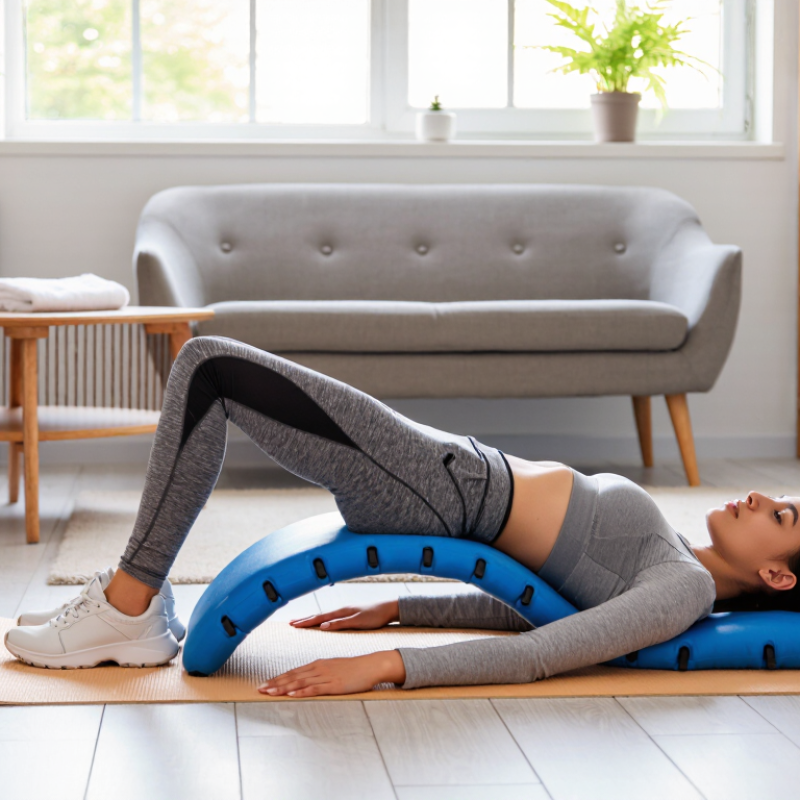
A back stretcher board is a curved support that lets you lie back over a raised arch. Many models have several height settings, so the curve can feel mild or more pronounced. The board supports the spine while your back extends gently; some designs also include raised bumps that press against muscles beside the spine. You may feel a stretch across your lower back, not a forceful “realignment.” Keep your knees bent and feet on the floor if that feels steadier. Start with a short session. More is not always better.
The proposed benefit is temporary relief from stiffness or muscle tension, but results vary, and a board cannot diagnose the cause of pain. The World Health Organization estimates that 619 million people experienced low back pain in 2020, with cases projected to reach 843 million by 2050. That scale makes careful evidence important. NICE guideline NG59 advises against offering traction as a treatment for low back pain, so a stretcher board should not be treated as proven spinal decompression. The distinction is easy to miss. Stop if pain worsens, spreads down a leg, or brings numbness or weakness. Seek clinical advice before use after surgery or with osteoporosis.
Why Use a Back Stretcher Board for Back Pain Relief? - What a Back Stretcher Board Is and How It Works
| Topic | What to Know | Practical Takeaway |
| What it is | A curved support, often made of plastic or wood, designed to support the back in a gently extended position while a person lies on it. | Shape, firmness, and adjustment options vary by product; follow the instructions for the specific board. |
| How it works | The curved surface positions the trunk in extension and may create a gentle stretching sensation through the back and nearby muscles. | It does not permanently realign the spine or address every cause of back pain. |
| Possible benefit | Some people find a brief, gentle stretch or a change of position temporarily soothing. | Comfort varies, and a back stretcher board is not a proven cure or a substitute for individualized care. |
| Getting started | Begin with the lowest or gentlest setting, if adjustable, and a short session while keeping movements controlled. | Use the board on a stable surface and get on and off slowly. Do not force a deeper stretch. |
| Stop if symptoms worsen | Stop if use causes sharp or increasing pain, numbness, tingling, weakness, or pain that travels into a limb. | Seek advice from a qualified health professional if symptoms persist or worsen. |
| When to ask a clinician first | A clinician can advise whether extension-based stretching is appropriate, particularly after an injury, surgery, or with a diagnosed spinal condition. | Get urgent medical care for back pain with new bladder or bowel problems, significant leg weakness, or numbness around the groin or saddle area. |
General information only; a back stretcher board may not be suitable for everyone.
How Back Stretching May Help Relieve Muscle Tightness
Muscle tightness can make ordinary movements feel stiff, especially after long periods of sitting or repeated activity. A back stretcher board supports a gentle arch, allowing the front of the body to open while the back muscles ease into a different position. Start gently. The stretch should feel mild, not sharp.
Place the board on a stable floor and lower yourself onto it slowly. Keep your knees bent if that feels more comfortable, and breathe steadily instead of forcing a deeper arch. A minute or two may be enough at first. The aim is gradual mobility, not a dramatic stretch. People respond differently, and a board may not relieve tightness for everyone. The position can feel awkward at first; notice that rather than pushing through.
Use the board only within a comfortable range, and stop if you feel pain, numbness, or tingling. If back symptoms are severe, persistent, or linked to an injury, seek advice from a qualified healthcare professional before trying a new stretch. Small adjustments matter: a folded towel for support or a shorter session may feel better than stretching farther.
Who May Benefit from Using a Back Stretcher Board
People who feel mild back stiffness after long hours at a desk may find a back stretcher board helpful for gentle movement. It can support a brief extension position, which some users find comfortable after sitting or driving. That matters. Someone who is new to stretching may prefer a low setting and a few minutes at first, rather than pushing into a strong pull. Slow breathing and relaxed shoulders can make the position easier to assess.
It may also suit people who already use gentle mobility exercises and want another option at home. However, a board may not be appropriate for everyone. Recent injuries, osteoporosis, spinal conditions, surgery, or pain that travels down a leg call for advice from a qualified health professional before use. Stop if symptoms worsen, or if numbness or weakness appears. Go slowly. A board can feel awkward at first, and that is worth noticing rather than ignoring. If back pain is persistent or severe, seek professional assessment instead of relying on a stretching device alone.
How to Use a Back Stretcher Board Safely
A back stretcher board may offer a gentle stretch, but it is not a cure for back pain. Check the instructions and place it on a firm, level floor, away from furniture edges. Start with the lowest arch setting, or the gentlest position available. Sit down carefully, then lower your back onto the board with your knees bent and feet flat. Go slowly. Keep your breathing easy, and stay only briefly at first. A mild stretch can be expected; sharp pain, numbness, or tingling is a reason to stop.
Use the board only as directed, and do not fall asleep on it. Getting up matters, too: roll onto your side, pause, then push yourself up with your arms rather than sitting up abruptly. Less is often enough. If you have a recent back injury, osteoporosis, a spinal condition, or pain that travels down a leg, ask a healthcare professional before trying it. Seek prompt medical advice for new weakness or bladder or bowel changes. Comfort can be hard to judge at first, and a position that feels fine one day may not suit you the next. Stop there if symptoms worsen, and discuss persistent pain with a clinician.
Risks, Limitations, and When to Seek Medical Advice
A back stretcher board may feel relieving, but it is not risk-free. The curved surface places the spine in extension, and too much pressure can irritate sore joints or muscles. Start with a short session on a stable floor, and keep your movements gentle. A mild stretch may be expected; sharp pain is not. Stop there.
The board also has limits. It cannot identify or correct the cause of back pain, and temporary comfort does not prove that an injury has healed. I would not push through worsening pain just to reach a suggested position or duration. People with osteoporosis, a recent spinal injury or surgery, or a condition affecting balance should ask a clinician before trying one. That matters.
Seek medical advice if pain persists, keeps returning, or travels down a leg with tingling or numbness. New leg weakness needs prompt assessment. Loss of bladder or bowel control, numbness around the groin, or severe pain after an accident requires urgent care. These signs are uncommon, but waiting them out is not a sensible experiment. A clinician can help decide whether stretching is appropriate and suggest safer alternatives.
Why Use a Back Stretcher Board for Back Pain Relief?
Back-pain duration categories help put symptoms in context—they do not show that a stretcher board is effective or suitable for you.
How to read the chart: Common clinical definitions describe acute low back pain as lasting less than 6 weeks, subacute pain as 6–12 weeks, and chronic pain as more than 12 weeks. The bars mark the 6-week and 12-week boundaries; they are not treatment targets.
Limitations and risks: Evidence that back stretcher boards relieve pain is limited. Stretching may worsen symptoms for some people; stop if pain increases, spreads, or causes numbness or weakness. A board should not replace assessment or treatment by a healthcare professional.
Seek medical advice: Get urgent care for new bowel or bladder problems, numbness around the groin or saddle area, or progressive leg weakness. Contact a clinician if pain is severe, worsening, follows significant trauma, or is not improving.
Duration categories: American Academy of Family Physicians, “Low Back Pain: Evaluation and Treatment” (2023).