

7 Best Circuit Breaker Parts for Global Buyers
Selecting reliable Circuit Breaker Parts is not a simple catalog exercise. Global buyers must examine electrical ratings, material quality, compatibility, and supplier consistency. A part that looks identical online may perform differently under heat, vibration, or repeated switching. Small details matter.
This guide introduces seven practical circuit breaker components for international purchasing teams. It considers contacts, terminals, trip units, arc chutes, operating mechanisms, insulation barriers, and auxiliary contacts. Each part affects safety, service life, or maintenance efficiency. The discussion reflects common industrial inspection practices, including checking datasheets, sample dimensions, terminal plating, and test documentation. Experienced buyers should also confirm voltage, current, frequency, breaking capacity, and installation conditions before approval.
There is no universal “best” component. A compact molded-case breaker may suit a factory panel, while a robust air-breaker assembly may fit heavy industrial distribution. Supplier reputation matters, but paperwork alone is not enough. Request samples.
In practical sourcing, I have found that overlooked details cause many delays. A mismatched terminal can stop installation. An incorrect trip setting can create nuisance shutdowns. Even a strong supplier may provide an unsuitable part when specifications remain vague. That is an uncomfortable point, but it deserves attention. Reliable decisions require technical comparison, traceable quality records, and communication with qualified electrical professionals. This introduction prepares global buyers to evaluate seven Circuit Breaker Parts with greater confidence, caution, and technical clarity.
What Circuit Breaker Parts Do and How They Work
7 Best Circuit Breaker Parts for Global Buyers
What Circuit Breaker Parts Do and How They Work
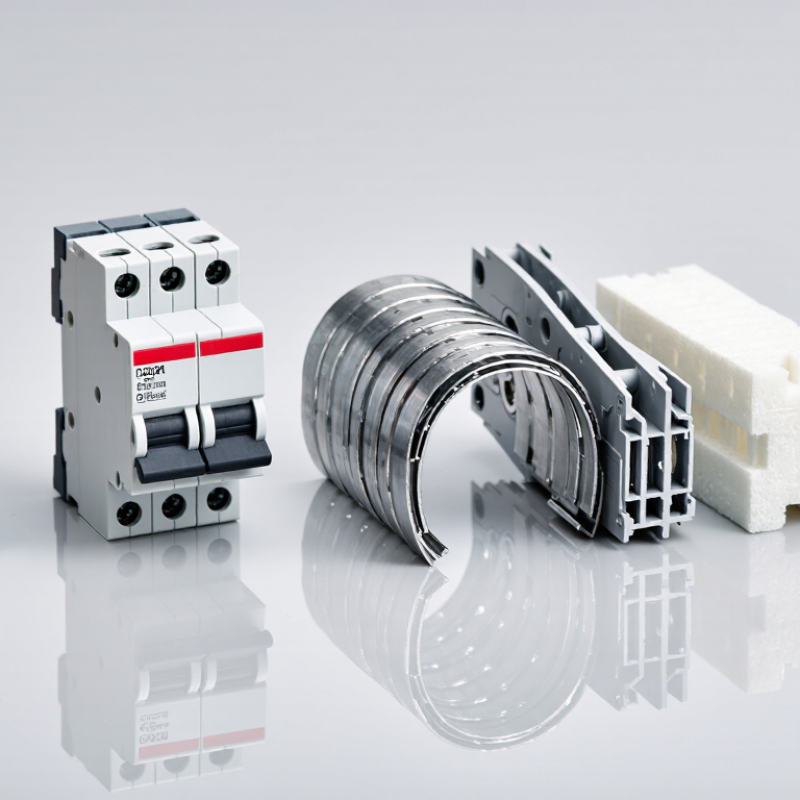
Circuit breakers rely on seven key parts: contacts, trip units, arc chutes, operating mechanisms, terminals, insulation housings, and auxiliary contacts. The contacts carry current during normal operation. When a fault appears, the trip unit detects excessive current and releases the mechanism. The contacts separate quickly. The arc chute then divides and cools the electrical arc. It is a small component with a serious responsibility. IEA’s Electricity 2024 report forecasts global electricity demand will grow by about 3.4% annually from 2024 to 2026, increasing pressure on reliable protection equipment.
Terminals connect the breaker to cables or busbars. Poor torque can create heat, discoloration, and eventual failure. The insulation housing prevents unintended contact and must suit the system’s voltage, temperature, and pollution level. Auxiliary contacts provide remote status signals, which help control panels identify whether a breaker is open or closed. IRENA’s Renewable Capacity Statistics 2024 reports 473 GW of renewable capacity additions in 2023. More distributed generation means protection parts must handle changing current directions and frequent switching.
For global buyers, check interrupting capacity, rated voltage, frequency, terminal size, and environmental ratings. Standards matter, but paperwork alone cannot reveal weak assembly quality. I still inspect contact alignment and mechanism movement manually. It takes minutes. A breaker may pass a basic test yet fail under heat, vibration, or repeated operation. That uncomfortable gap deserves attention.
Current-Carrying Parts: Contacts, Terminals, and Conductors
7 Best Circuit Breaker Parts for Global Buyers
Current-carrying parts determine how safely a circuit breaker transfers, interrupts, and withstands electrical current. Fixed and moving contacts need low resistance, stable pressure, and controlled wear. Silver-based contact surfaces can reduce heating, but material selection must match voltage, current, and switching frequency. A contact that looks clean may still develop hidden pitting.
Terminals connect the breaker to external wiring, so their shape and plating deserve careful inspection. Copper terminals offer strong conductivity, while suitable surface treatments can limit oxidation in humid environments. Confirm the terminal size, tightening range, thread accuracy, and temperature rating before purchase. Small mismatches create loose connections. This step is often skipped.
Internal conductors, busbars, flexible links, and braided shunts must carry current without creating excessive heat. Their cross-sectional area, insulation clearance, and connection method affect long-term reliability. Buyers should request test reports covering temperature rise, dielectric performance, mechanical endurance, and short-circuit conditions. Testing should follow recognized international requirements, not only a supplier’s internal checklist. In real installations, dust, vibration, and repeated thermal cycling can change performance. I would not judge a part by appearance alone. A heavier conductor is not automatically better; poor joints can waste its advantage. Samples should be inspected, measured, and tested under conditions close to the final application.
Protection Parts: Trip Units, Sensors, and Release Mechanisms
For global buyers, seven valuable circuit breaker parts center on trip units, sensors, and release mechanisms. Thermal trip units respond to prolonged overloads and protect cables from rising heat. Magnetic trip units act quickly during short circuits. Electronic trip units provide adjustable thresholds for demanding distribution systems. Current sensors measure load conditions inside the breaker. Voltage sensors detect abnormal supply levels and support controlled protection decisions. Shunt trip releases open the breaker after a remote signal. Undervoltage releases disconnect circuits when control voltage falls too low.
Field experience shows that correct coordination matters more than selecting the most advanced part. A sensitive trip unit may cause unwanted interruptions on motors with high starting current. A slower setting may leave conductors exposed to excessive heat. Check rated current, interrupting capacity, control voltage, operating temperature, and enclosure conditions. Confirm compatibility with the breaker frame and accessory terminals. Certification requirements also differ across markets, so buyers should review applicable regional standards before ordering.
Measure twice. Specify once.
A reliable selection process includes test records, clear technical drawings, and traceable inspection data. Sensors should maintain stable readings after repeated thermal cycles. Release mechanisms need smooth movement, firm spring action, and dependable reset performance. I have seen installation delays caused by one overlooked auxiliary connection. That small detail deserves attention. Protection parts should be evaluated as a coordinated system, not as isolated replacement items.
7 Best Circuit Breaker Parts for Global Buyers: Protection Parts
Typical response-time windows for trip units, sensors, and release mechanisms in low-voltage AC circuit-breaker applications.
The ranges are representative engineering values in milliseconds for 50/60 Hz low-voltage systems. Actual performance depends on breaker design, rated current, fault level, settings, control voltage, and applicable IEC 60947 requirements. Thermal-magnetic trip units have the widest timing range because thermal overload protection responds more slowly than instantaneous magnetic protection.
Arc-Control Parts: Arc Chutes, Insulation, and Barriers
7 Best Circuit Breaker Parts for Global Buyers
Arc-Control Parts: Arc Chutes, Insulation, and Barriers
For global buyers, circuit breaker parts must match the equipment’s voltage, current, and fault conditions. Arc-control parts deserve careful attention. When contacts separate, the arc chute divides, cools, and redirects the hot arc. Its internal plates need stable spacing and strong heat resistance. Small vent openings matter. They help release gases without weakening the enclosure.
Insulation supports safe separation around energized components. Buyers should check dielectric strength, tracking resistance, moisture behavior, and operating temperature. A material may perform well in dry testing but fail after repeated heat cycles. Barriers add another layer of control. They separate phases, reduce accidental flashover paths, and help contain arc movement. Their edges should remain smooth, because sharp damage can create stress points.
I have seen a visually clean assembly fail because its insulation thickness was inconsistent. No checklist is perfect. That is why experienced purchasers compare drawings, sample measurements, and test records together. Confirm creepage distances, clearance values, mounting tolerances, and flame performance before ordering. Ask for batch traceability and inspection data, not only a general certificate. Suppliers should explain how arc chutes and barriers were tested under applicable technical standards. A small mismatch can create expensive rework. Global sourcing needs patience, especially when replacement parts must fit existing chambers without modification.
| No. | Circuit Breaker Part | Arc-Control Function | Typical Materials and Design | Typical Technical Data | Common Applications | Key Buyer Checks |
|---|---|---|---|---|---|---|
| 1 | Arc Chute Assembly | Splits, cools, deionizes, and extinguishes the arc after contact separation. | Stacked ferromagnetic steel splitter plates with heat-resistant insulating side supports and a vented housing. | Commonly designed for low-voltage AC circuit breakers up to 690 V AC; plate spacing and quantity depend on the interrupting rating and pole design. | Molded-case circuit breakers, air circuit breakers, motor protection, and distribution panels. | Confirm pole geometry, contact path, mounting points, vent direction, creepage distance, and tested short-circuit performance. |
| 2 | Arc Runner and Arc Horn Set | Transfers the arc away from the main contacts and guides it into the arc chute. | Copper or copper-alloy runners, often nickel- or silver-plated at contact interfaces; formed or stamped to match the current path. | Current-carrying capacity is determined by cross-sectional area, alloy, temperature rise, and duty cycle; short-time withstand is application-specific. | AC and DC breakers, switch-disconnectors, contact systems, and high-current switching assemblies. | Verify conductivity, plating thickness, bend accuracy, contact pressure, resistance, and compatibility with the moving contact. |
| 3 | Phase Insulation Barrier | Prevents phase-to-phase flashover and limits the spread of hot gases and ionized particles. | Glass-filled polyester, epoxy molding compound, thermoset sheet, or other flame-resistant electrical insulation with molded locating features. | Typical continuous-use temperature classes range from approximately 105°C to 155°C, depending on the material system; dielectric strength is material- and thickness-dependent. | Three-pole and four-pole breakers, busbar compartments, switchboards, and compact distribution equipment. | Check insulation system, CTI, flame rating, creepage and clearance, dimensional tolerance, and resistance to arc by-products. |
| 4 | Arc Chute Side Plate and Insulating Support | Maintains splitter-plate alignment and electrically isolates the arc chute from adjacent conductive parts. | High-temperature thermoset molding compound, glass-filled polyester, ceramic, or mica-based insulation with precision slots and bosses. | Designed to withstand mechanical impact, thermal shock, and repetitive interrupting events; temperature capability commonly falls between 130°C and 180°C for specialized grades. | Replaceable arc-chute modules, compact breakers, and equipment exposed to repeated fault interruption. | Inspect slot alignment, flatness, surface tracking, heat aging, fastening torque, and resistance to carbon deposits. |
| 5 | Magnetic Blowout Assembly | Uses a magnetic field to lengthen and move the arc, particularly useful for DC interruption. | Permanent magnets or field coils with steel pole pieces, insulating holders, and a controlled magnetic circuit. | DC interruption voltage may range from 125 V DC to 1,000 V DC or higher depending on pole configuration, series connection, and tested breaker design. | DC distribution, battery storage, photovoltaic systems, rail equipment, and industrial control circuits. | Confirm polarity, magnetic field direction, insulation clearance, thermal limits, DC time constant, and verified interruption data. |
| 6 | Contact Insulation and Shroud | Reduces the risk of contact-to-ground and contact-to-phase flashover during switching and fault interruption. | Molded thermoset compound, glass-reinforced polyester, polyamide, or high-temperature thermoplastic selected for electrical and mechanical strength. | Typical insulation systems are designed for low-voltage equipment up to 1,000 V AC or 1,500 V DC, subject to clearance, creepage, and applicable testing. | Fixed and withdrawable breakers, contact assemblies, terminal zones, and compact switchgear. | Check dielectric strength, CTI, flame behavior, heat resistance, impact strength, and clearance under worst-case tolerances. |
| 7 | Arc-Resistant Barrier and Gas Deflector | Controls hot gas, molten metal particles, and arc pressure to protect nearby insulation and enclosure components. | Flame-resistant molded insulation, ceramic-filled composite, mica-based sheet, or steel with an electrically insulating surface layer. | Performance depends on the enclosure and breaker assembly; designs should be evaluated for thermal exposure, pressure relief, dielectric recovery, and repeated fault duty. | Switchboards, panelboards, molded-case breakers, and equipment requiring controlled exhaust paths. | Verify gas-flow direction, vent openings, enclosure interface, material flammability, thermal aging, and clearance from serviceable parts. |
| Technical values shown are representative industry ranges rather than universal specifications. Final selection should be based on the complete breaker design, rated operational voltage, rated current, short-circuit withstand or interrupting rating, AC/DC duty, insulation coordination, environmental conditions, and applicable requirements such as IEC 60947-2 or UL 489. | ||||||
How Global Buyers Can Compare Ratings, Standards, and Compatibility
Global buyers should compare seven circuit breaker parts as a working system: contacts, arc chutes, trip units, operating mechanisms, terminals, housings, and auxiliary contacts. Start with the system. A breaker’s rated voltage, current, frequency, and interrupting capacity must match the installation. The IEA Electricity 2024 report expects global electricity demand to grow by about 3.3% annually from 2024 to 2026, increasing pressure on dependable protection equipment.
Check whether the product follows IEC 60947-2, UL 489, or another required national standard. These standards are not interchangeable. IEC 60947-2 focuses on low-voltage circuit breakers, while local installation rules may require additional testing. Review the short-circuit rating, insulation voltage, temperature correction, and terminal size. A higher ampere rating does not automatically provide better protection. It may create dangerous coordination problems with downstream devices.
Compatibility also involves physical details. Confirm mounting dimensions, busbar spacing, cable entry direction, auxiliary contact voltage, and replacement-part availability. Inspect the arc chute and contact wear indicators, not only the label. Field experience shows that loose terminals often create heat before the trip unit responds. Independent laboratory certificates improve confidence, but paperwork can contain errors. I have seen catalog tables omit altitude limits and neutral-pole requirements. That detail matters. Compare the complete datasheet, installation instructions, and test report before purchasing across borders. NFPA 70 and local electrical codes should guide final selection, especially where enclosure ratings and conductor protection differ.