

What Is the Best Pallet Rack for a Warehouse in 2026?
Choosing the best Pallet Rack for a warehouse in 2026 is not a matter of picking the tallest frame or the lowest price. It means matching storage design to inventory, handling equipment, building constraints, and daily pick patterns. A forklift’s turning radius matters. So does the space needed to reach the rear pallet safely. Small mismatches can slow every shift.
The 2024 MHI Annual Industry Report, based on a survey of more than 2,000 supply-chain professionals, found that 55% planned to increase investment in supply-chain technology. That figure does not prove that automation suits every warehouse. It does show why rack decisions increasingly need to account for future equipment and data systems, not just today’s pallet count. Warehouse consultant Ken Ackerman’s practical guidance can be paraphrased this way: “Design storage around the work the warehouse must do.” Treat that as a principle, not a universal formula.
The right system depends on the operation. Selective rack offers direct access to each pallet; denser options can trade access for capacity. A warehouse storing fast-moving, mixed-SKU goods may value selectivity more than maximum density. A facility holding uniform products may reach a different answer. Neither choice is automatically best. Check load requirements, aisle widths, rack condition, and planned growth with qualified professionals before deciding. This guide compares common rack types and the trade-offs behind them, so you can identify a system that fits your floor, workflow, and realistic expansion plans. It also flags a frequent blind spot: the cheapest layout on paper may cost more in congestion and handling time.
How Pallet Racking Supports Warehouse Storage
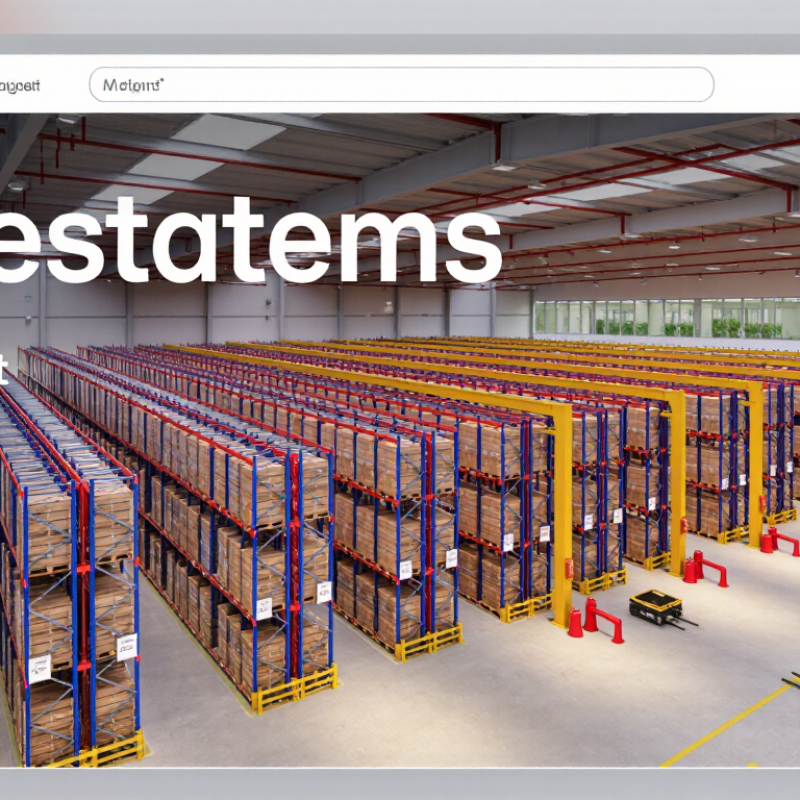
A pallet rack is more than a place to park loads. It shapes how quickly workers find stock, how safely forklifts move, and how much floor space remains usable. Selective rack gives direct access to each pallet, which suits warehouses with many product types. Drive-in or push-back systems can store more pallets in a smaller footprint, but reduce immediate access to individual loads. That trade-off matters.
The U.S. Census Bureau reported that e-commerce made up 16.1% of U.S. retail sales in 2024, with sales rising 8.1% from 2023. More varied orders can mean faster picking and frequent replenishment. A layout should therefore match SKU count, pallet turnover, forklift turning space, and inventory rotation—not just the number of bays. MHI’s 2024 Annual Industry Report also identifies warehouse automation as a major supply-chain investment area; rack design affects whether future equipment can move through the aisles.
Before choosing a system, confirm pallet dimensions, actual load weights, slab capacity, and clearance for sprinklers and handling equipment. Leave room for inspection and repairs. A denser layout can look efficient on paper. In practice, blocked access or damaged uprights can erase those gains. I would question any plan that optimizes capacity alone. The best fit depends on daily operating habits, and those habits are sometimes documented poorly.
What Is the Best Pallet Rack for a Warehouse in 2026?
How pallet racking supports warehouse storage depends on the balance between direct pallet access and storage density.
This comparison shows the share of positions directly accessible from an aisle in a simplified, fully occupied lane: selective rack (1 of 1), double-deep rack (1 of 2), drive-in rack (1 of 5), and push-back rack (1 of 4). These are layout-based examples, not universal capacity or performance figures. Selective rack favors access; deeper systems can store more pallets in less aisle-facing space but limit immediate access.
Which Warehouse Conditions Shape Rack Selection in 2026?
Warehouse conditions matter more than a rack’s headline capacity. Start with the building: measure clear height, column spacing, aisle widths, sprinkler clearance, and floor condition. A narrow-aisle layout may add storage positions, but it can slow picking if lift trucks cannot turn safely. Check actual pallet dimensions and loaded weights; mixed sizes can make a neat plan fail on day one.
Product mix and movement matter too. Fast-moving, uniform pallets may suit selective or high-density systems differently from slow-moving goods that need frequent access. MHI’s 2024 Annual Industry Report found that 55% of surveyed supply-chain professionals planned to increase technology investment. That shift makes compatibility with scanners, conveyors, or future automation worth checking, even if automation is not currently planned. Still, more technology does not automatically mean better storage.
Tips: Map one busy shift before choosing a layout. Note peak inbound volume, picking paths, and awkward loads. Ask a qualified rack designer to verify loads, floor capacity, and building constraints. Keep some flexibility. Real warehouses change, sometimes messily.
How the Main Pallet Rack Systems Differ
Pallet rack systems differ mainly in access, storage density, and how much handling they require.
Selective rack gives forklifts direct access to every pallet position, making it practical for mixed products and frequent picking. The trade-off is wider aisles and lower storage density. It is straightforward.
Drive-in rack stores pallets several positions deep, with forklifts entering the rack lanes. This can suit large quantities of similar products, but operators must manage loading order carefully. A damaged pallet or blocked lane can disrupt access.
Push-back rack also stores pallets several deep, but each new pallet pushes the previous one backward on inclined carts. It reduces forklift travel into the rack, though the carts and rails need regular inspection.
Pallet flow rack uses gravity rollers to move loads from the loading side toward the picking side. It can support first-in, first-out rotation, but pallet quality and consistent loading matter.
Cantilever rack is designed for long, bulky items such as timber or pipe, not standard pallet loads.
A useful comparison starts with actual pallet dimensions, daily movement, and forklift turning space. Measure the busiest aisle, not just the empty one. There is rarely a perfect layout; a dense system may look efficient on paper and feel awkward during a busy shift. Check clearances and load requirements with a qualified rack professional before installation.
How to Match Rack Design to Inventory and Equipment
A rack is only “best” when it fits the pallet, the pick pattern, and the equipment moving between its frames. Start with the load. Record pallet dimensions, weight, overhang, and the heaviest likely unit load; then check beam capacity and clear height. Selective racks offer direct access to each pallet, while double-deep, drive-in, or push-back layouts trade access for denser storage. The right trade depends on SKU count and turnover, not floor space alone. U.S. Census Bureau data put e-commerce at 16.1% of 2024 retail sales, up 8.1% year over year. That growth can increase pressure on fast-moving pick faces, but it does not mean every warehouse needs automated or high-density storage.
Match the layout to the truck’s actual turning radius, mast height, and load-handling method. A reach truck may work in narrower aisles than a counterbalance truck, but confirm clearances with the equipment supplier and test the layout against real travel paths. MHI’s 2024 Annual Industry Report, based on a survey of supply-chain professionals, tracks growing interest in automation; still, automation should follow a sound storage plan, not rescue a poor one. Leave room for inspections and safe access, and have a qualified rack designer verify loads and connections. One detail is easy to miss: pallet quality. A damaged pallet can foul a flow lane or sit unevenly on beams. I would not finalize a layout from drawings alone; measure a busy aisle during a normal shift.
What Is the Best Pallet Rack for a Warehouse in 2026? — How to Match Rack Design to Inventory and Equipment
The best system depends on how many different SKUs you store, how quickly they move, how pallets are handled, and which material-handling equipment operates in the warehouse.
| Rack design | Best inventory fit | Selectivity and storage density | Typical equipment fit | Choose it when | Key trade-offs |
|---|---|---|---|---|---|
| Selective pallet rack | Many SKUs, mixed product types, and inventory with frequent access requirements. | High selectivity: each pallet position is directly accessible. Density is generally lower than in deep-lane systems. | Counterbalance, reach, or other forklifts configured for the aisle layout and load dimensions. | Operators need direct access to individual pallets, and the warehouse handles a broad assortment of products. | Uses more aisle space than many high-density designs. Beam levels and bays must be planned for actual pallet sizes and loads. |
| Double-deep rack | Several pallets per SKU, with enough inventory depth to store pallets in pairs. | Medium selectivity and higher density than single-deep selective rack; rear pallets are less directly accessible. | Reach trucks with a suitable pantograph or telescopic fork arrangement. | Reducing aisle count is important and the operation can manage paired pallet positions. | Requires compatible equipment and a replenishment plan for rear positions. Not ideal when every pallet must be accessed independently. |
| Drive-in or drive-through rack | Large quantities of a small number of SKUs, often in batches or lots. | High storage density, but lower selectivity because pallets share a storage lane. | Forklifts that can enter the rack lanes and handle the required pallet loads safely. | Bulk storage and space utilization are priorities, and lane-based storage suits the inventory rotation method. | Forklifts operate inside the rack structure. Pallet condition, load consistency, rack protection, and operating discipline matter. |
| Pallet-flow rack | High-volume, date-sensitive goods stored in consistent pallet loads. | High density with pallet flow from the loading face to the picking face; supports first-in, first-out operation when correctly managed. | Forklifts load pallets from the replenishment side; pick-face equipment removes them from the opposite side. | Stock rotation is important and pallet throughput is high enough to justify a dedicated flow lane. | Needs suitable pallets and controlled loading. Lane condition, product characteristics, and flow components affect performance. |
| Push-back rack | Multiple pallets per SKU where last-in, first-out access is acceptable. | Higher density than selective rack, with several pallets stored in depth on nested carts or similar components. | Forklifts load and retrieve pallets from the aisle face; the system moves pallets within the lane. | Space is limited and inventory can be managed by SKU or lot in compact lanes. | Typically operates last-in, first-out. Pallets must be compatible with the system, and lane depth affects accessibility. |
| Cantilever rack | Long, bulky, or irregular items such as pipe, timber, sheet goods, and profiles. | Open-front storage with access to individual stored loads; density depends on product length and handling clearances. | Forklifts or other handling equipment selected for the load length, weight, and required maneuvering space. | Loads do not fit safely or efficiently on conventional pallet beams. | Arm length, column spacing, bracing, and load restraint must be designed for the actual product and handling method. |
Planning note: Rack capacity, beam spacing, upright configuration, clearances, and aisle width must be engineered for the actual building, pallet or product dimensions, load weights, floor conditions, seismic requirements where applicable, and selected equipment. Confirm the design with a qualified storage-system professional and applicable local codes before installation.
What Safety and Compliance Factors Should Be Evaluated?
The best pallet rack for a warehouse in 2026 is not simply the system with the highest stated capacity. Safety depends on matching each bay to real pallet weights, dimensions, beam spans, and handling equipment. Check the rack’s design documentation against ANSI MH16.1, the industrial steel storage rack standard, and applicable local building and fire codes. Verify seismic requirements where relevant. Every change in pallet size or load can alter the design assumptions.
Capacity labels matter. They should state allowable loads clearly and remain visible from the aisle. OSHA material-handling rules require stored materials to remain stable and secure against sliding or collapse. OSHA’s powered industrial truck guidance cites Bureau of Labor Statistics estimates of about 85 forklift-related fatalities and 34,900 serious injuries annually. These are cited estimates, not a forecast for one warehouse. Still, they show why rack layout, forklift clearance, and impact protection deserve serious attention.
Inspect uprights, braces, beam connectors, anchors, and floor slabs, especially after a forklift strike. Look for leaning frames, loose anchors, or beams that no longer sit properly in their connectors. A tidy checklist is not enough. Even a clean inspection log can miss a bent connector hidden behind cartons. Set inspection intervals, document damage, and restrict access to visibly compromised bays until a qualified person assesses them. Keep sprinkler clearance and marked exit routes unobstructed.