

top of page

China Best Capacitive Switch Manufacturers and Suppliers

China’s capacitive switch industry serves applications ranging from control panels to medical equipment and smart appliances. Selecting the right manufacturer requires more than comparing unit prices. Buyers should examine sensing stability, surface materials, sealing performance, customization capability, and production consistency.

In practical projects, a reliable Capacitive Switch must respond through gloves, resist accidental activation, and maintain sensitivity across changing temperatures. It should also match the panel’s thickness and lighting design. Small details matter. A poorly tuned sensor may create false triggers near motors or power cables. Experienced suppliers normally verify these risks through sample testing, environmental checks, and repeated production inspections.

Donald Norman, a leading authority on human-centered design, wrote, “The design of everyday things is about the interaction between the user and the object.” This principle applies directly to capacitive controls. A switch can look elegant, yet feel confusing or unreliable during operation. China’s strongest manufacturers combine electronic engineering with practical interface design. They may offer custom icons, backlighting, communication modules, and protective coatings. However, no supplier is perfect. Some factories communicate well but lack advanced testing equipment. Others provide excellent prototypes but struggle with consistent mass production. Buyers should ask for test records, material specifications, quality certificates, and verified application references. Factory audits remain valuable, even when a website appears convincing. This guide compares leading Chinese manufacturers and suppliers through technical capability, responsiveness, manufacturing experience, and quality control. The final choice still depends on your operating environment, volume, budget, and risk tolerance. That part deserves careful reflection.
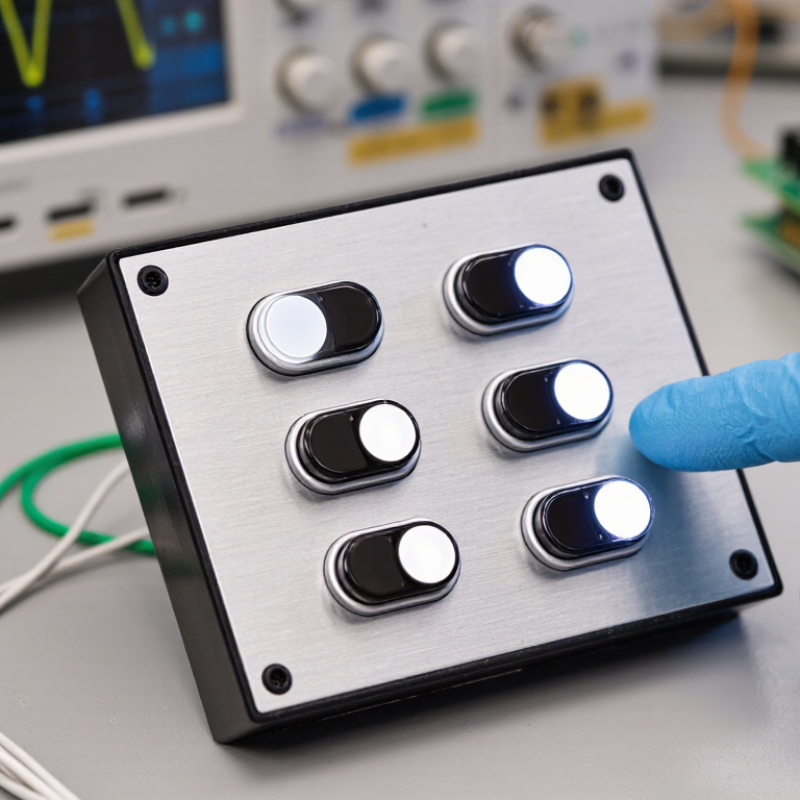
China Best Capacitive Switch Manufacturers and Suppliers

What Is a Capacitive Switch and How Does It Work?

A capacitive switch detects touch without relying on moving parts. It uses an electrode beneath glass, plastic, or another insulating surface. When a finger approaches, the body changes the local electric field. A controller measures this capacitance shift and interprets it as an input.

There is no mechanical click. The sensing circuit usually applies a low electrical signal and monitors the electrode repeatedly. Self-capacitance measures one electrode against ground, while mutual capacitance measures the change between paired electrodes. This difference affects sensitivity, button spacing, and resistance to accidental activation. A reliable design also considers finger size, panel thickness, and operating temperature.

Moisture changes everything. Water droplets, wet gloves, and cleaning residue can imitate a touch or weaken the signal. Field testing should include dry fingers, damp surfaces, gloves, repeated presses, and electrical noise. A supplier with strong engineering practice can provide threshold data, circuit samples, and environmental test records. In production, electrode alignment must remain consistent. Small variations can create uneven response times. That detail matters.

The first threshold is rarely perfect. Engineers often adjust firmware after testing real users, not only laboratory samples. For equipment used outdoors or near machinery, shielding and filtering may improve stability. However, excessive filtering can make the switch feel slow. Clear specifications should identify response time, standby current, overlay material, and expected service conditions.

Key Types of Capacitive Switches for Different Applications

China Best Capacitive Switch Manufacturers and Suppliers

Key Types of Capacitive Switches for Different Applications

Capacitive switches suit panels where moving parts create maintenance problems. MarketsandMarkets’ 2024 report estimates the capacitive sensor market will grow from USD 31.2 billion in 2023 to USD 41.2 billion by 2028. That growth reflects demand in appliances, industrial controls, vehicles, and medical equipment.

Momentary switches work well for start, reset, and call functions. Latching switches maintain an output after a brief touch. They fit lighting controls and access panels.

Slider and rotary capacitive controls offer fine adjustment for brightness, temperature, or audio levels. Illuminated switches improve visibility in dark cabinets.

Sealed versions support dusty or damp environments, but sealing alone does not solve every reliability issue. Designers should examine the complete panel structure, not only the switch surface. In practice, I have seen thick gloves, wet fingers, and nearby metal reduce sensitivity. The first prototype often behaves perfectly in the laboratory, then fails beside a motor.

Tips: Select an IP rating based on the real installation area. Test bare fingers, gloves, moisture, and repeated cleaning. Check electromagnetic immunity against IEC 61000-4-2 requirements. Keep the sensing electrode separated from grounded metal. For suppliers, request samples, response-time data, lifecycle testing, and temperature results. A transparent test report is more useful than a confident specification sheet. Some projects still overlook software filtering, which can cause false triggers. That mistake is easy to make.

How to Evaluate China-Based Capacitive Switch Manufacturers

When evaluating China-based capacitive switch manufacturers, look beyond a low quotation. Review their engineering depth, production controls, and communication habits. Ask for a technical datasheet covering sensing distance, operating voltage, response time, and expected life. Then request samples from normal production, not only hand-finished prototypes. Test them with your actual panel thickness, gloves, moisture, and lighting conditions. Small changes can affect touch sensitivity.

Reliable suppliers explain material choices, tooling limits, and inspection checkpoints clearly. Check whether incoming materials are traceable and whether each batch receives functional testing. For industrial use, discuss temperature cycling, vibration, surface contamination, and connector durability. Ask for applicable compliance documents and current test records. A factory visit or live video audit can reveal production discipline. Look for clean workstations, calibrated instruments, labeled samples, and controlled rework areas. Do not rely on photographs alone. A polished presentation may hide weak process control. I would not reject one imperfect sample, but I would question vague corrective actions.

Tips: Compare at least three suppliers using the same written requirements. Confirm mold ownership, lead times, warranty terms, spare parts, and engineering support before ordering. Keep every promise in writing. Price matters, but unstable quality costs more through delays and field returns.

Manufacturing Standards, Customization, and Quality Control

China’s leading capacitive switch manufacturers follow controlled processes from material selection to final inspection. Reliable production begins with documented specifications, traceable components, and trained operators. Common references include ISO 9001 quality systems and applicable electrical safety requirements. Local regulations still need verification for each export market.

Customization should solve a real operating problem. Engineers may adjust electrode patterns, overlay thickness, LED colors, connector layouts, or touch thresholds. A kitchen control panel needs resistance to moisture and cleaning chemicals. An industrial interface may require gloves, vibration tolerance, and stable operation across temperature changes. Prototype testing should include sensitivity, response time, insulation resistance, dielectric strength, and repeated touch cycles. Small details matter.

Quality control cannot depend only on appearance. Inspectors should check printing alignment, surface defects, adhesive bonding, cable placement, and electrical performance. Sample units need environmental testing before mass production. A perfect first sample can hide process weaknesses. We have learned that touch sensitivity may shift after assembly, especially when overlays or metal housings change. That deserves another test, not a confident assumption. Suppliers should provide inspection records, corrective-action reports, and clear acceptance criteria. Consistent communication between designers, factories, and buyers reduces costly revisions, although no process removes every risk.

China Best Capacitive Switch Manufacturers and Suppliers - Manufacturing Standards, Customization, and Quality Control

Evaluation Dimension Recommended Requirement or Industry Reference Typical Technical Data Verification Method
Product Type Printed or assembled capacitive touch switch designed for low-current electronic control systems. Single-point, multi-point, slider, keypad, or backlit touch-panel configurations. Review the approved drawing, circuit diagram, and functional sample.
Applicable Electrical Safety Standard Use the standard applicable to the end product and intended market. IEC 61058-1 may apply to switches for appliances when the product falls within its scope. Insulation, dielectric strength, temperature rise, endurance, and abnormal-operation requirements depend on the final application. Third-party testing, design review, dielectric test, and production safety-test records.
Quality Management System A documented quality management system aligned with ISO 9001:2015 principles is recommended. Document control, incoming inspection, process control, nonconformity handling, corrective action, and traceability. Current certificate scope, internal audit records, process documents, and corrective-action reports.
Ingress Protection Specify an IP rating only when the complete assembled product has been designed and tested for environmental protection under IEC 60529. Common project targets may include IP54, IP65, or higher, depending on enclosure design and sealing method. Test the finished assembly, including overlays, gaskets, bezels, connectors, and enclosure interfaces.
Operating Voltage and Current Define the electrical interface according to the touch controller, host circuit, LED load, and wiring arrangement. Many capacitive interfaces operate at low-voltage signal levels; LED backlighting and external loads require separate electrical specifications. Measure supply limits, standby current, signal output, load current, and abnormal input conditions.
Touch Sensitivity Sensitivity must be tuned for the overlay material, thickness, grounding design, glove use, and installation environment. Performance can vary with overlay thickness, moisture, electromagnetic noise, and user contact conditions. Test bare-finger operation, gloved operation where required, false-trigger resistance, and response consistency.
Response Time Set the response-time requirement according to the user interface and controller software. The actual value depends on sensing method, scan rate, filtering, debounce settings, and firmware logic. Measure from touch contact to confirmed electrical output using a defined test fixture.
Overlay Material Select polyester, polycarbonate, glass, acrylic, or another material according to appearance, durability, and sensing requirements. Thickness, surface finish, transparency, chemical resistance, and dielectric properties must be defined on the drawing. Verify material certificates, thickness, color, print adhesion, abrasion resistance, and dimensional conformity.
Graphic and Interface Customization Support custom icons, colors, legends, window areas, touch zones, mounting features, and connector positions. Customization should be controlled through approved artwork, mechanical drawings, Gerber files, and interface specifications. First-article inspection against the signed artwork and engineering drawing.
Backlighting Specify LED color, brightness, viewing angle, light uniformity, dimming method, and thermal conditions. Common options include single-color, multi-color, edge-lit, and distributed LED illumination. Measure brightness and uniformity under the specified electrical and ambient conditions.
Environmental Resistance Define temperature, humidity, chemical exposure, UV exposure, vibration, and cleaning-agent requirements based on the application. Typical commercial and industrial designs require application-specific environmental limits rather than a universal rating. Conduct approved environmental tests before mass production and inspect function, appearance, and adhesion afterward.
Flammability and Material Compliance Specify the required flammability rating for polymeric parts and confirm market-specific substance restrictions. UL 94 classifications may be relevant to plastic components; RoHS and REACH requirements depend on the destination market and product scope. Review material declarations, supplier certificates, and independent laboratory reports where required.
Dimensional Control Control overall dimensions, touch-zone alignment, hole positions, connector locations, and mounting tolerances. Tolerance values must be defined by the engineering drawing and the fit requirements of the final assembly. Use calibrated gauges, optical measurement, coordinate measurement, or validated inspection fixtures.
Production Process Control Use controlled printing, lamination, bonding, soldering, assembly, and programming processes. Key process parameters should have approved limits, inspection frequency, and reaction plans. Review work instructions, process capability data, equipment calibration, and lot records.
Electrical and Functional Testing Every finished unit should be checked against the approved functional test specification. Recommended checks include continuity, insulation where applicable, touch response, LED function, current consumption, and communication output. Use automated test fixtures with recorded results and clear pass/fail criteria.
Reliability and Endurance Define the expected touch cycles and environmental life based on the intended service conditions. Capacitive switches have no conventional mechanical contact travel, but overlays, printed conductors, adhesives, LEDs, and electronics still require life validation. Perform accelerated life, repeated-touch, thermal cycling, humidity, and appearance evaluations as specified.
Incoming and Outgoing Inspection Use documented inspection plans for raw materials, work-in-process units, and finished products. Inspection may cover dimensions, graphics, surface defects, adhesion, electrical function, packaging, and quantity. Review sampling plans, acceptance criteria, inspection records, and lot traceability.
Supplier Selection Criteria Select suppliers based on technical capability, documented quality controls, customization support, communication, and delivery performance. A reliable supplier should provide drawings, samples, test reports, change-control procedures, and production traceability. Use an audit checklist, sample approval process, supplier scorecard, and periodic performance review.

Note: Standard applicability, test limits, material requirements, and performance values must be confirmed against the final product design, destination market, and end-use environment.

Leading Applications and Selection Considerations for Suppliers

Capacitive switches serve more than sleek kitchen panels. They operate elevator controls, laboratory equipment, medical devices, industrial consoles, and vehicle interiors. A 2024 MarketsandMarkets assessment identifies consumer electronics, automotive systems, and industrial automation as major capacitive-sensing application areas. The report also forecasts continued market growth through 2029, driven by touch interfaces and connected equipment. Suppliers should understand the working environment, not only the switch’s appearance.

Selection needs practical testing. For wet areas, request sealed construction and an appropriate IP rating. In factories, check resistance to electromagnetic interference, chemicals, vibration, and repeated cleaning. Medical interfaces may require stable response through gloves and reliable low-force activation. Automotive applications demand wide temperature performance and compliance with relevant vehicle standards. Grand View Research reports that capacitive sensor demand is expanding with automation and smart-device adoption, but market estimates differ. That gap deserves caution. A low quotation can hide weak shielding, limited calibration, or short service life.

Tips: Ask for sample panels and test them with dry, wet, and gloved fingers. Review response time, false-trigger records, operating temperature, and lifecycle results. Confirm whether the supplier provides engineering support and traceable quality documents. Do not rely on a glossy demonstration. Our own evaluation experience suggests that installation conditions often change performance more than catalog specifications. Suppliers should disclose limitations clearly, even when the answer is inconvenient.

bottom of page