

top of page

China Top 10 Mold Parts Manufacturers for Global Buyers

China is a major sourcing destination for precision Mold Parts, serving industries that depend on repeatable dimensions and reliable production. For global buyers, the challenge is not simply finding a supplier. It is matching a manufacturer’s capabilities to the part’s material, tolerance, surface finish, and expected service life. A small mismatch can affect assembly, tool performance, or delivery schedules.

This guide introduces ten China-based manufacturers for buyers comparing mold bases, inserts, core pins, ejector components, and custom parts. It considers practical purchasing factors, including machining capabilities, quality-control processes, customization options, communication, and export experience. Look for clear inspection records and confirm how critical dimensions are measured. A neat catalog is useful, but it is not proof of consistent quality. Ask for drawings, material specifications, and sample details before making a decision.

Fit matters most. A supplier suited to standard components may not be the right choice for tight tolerances or short production runs. This list is a starting point, not a universal ranking; capabilities and lead times can change, and each project has different demands. Verify current certifications and production details directly with each company. Even careful checks leave some uncertainty. Treat quotations as a basis for discussion, then confirm specifications, packaging, and delivery expectations in writing.
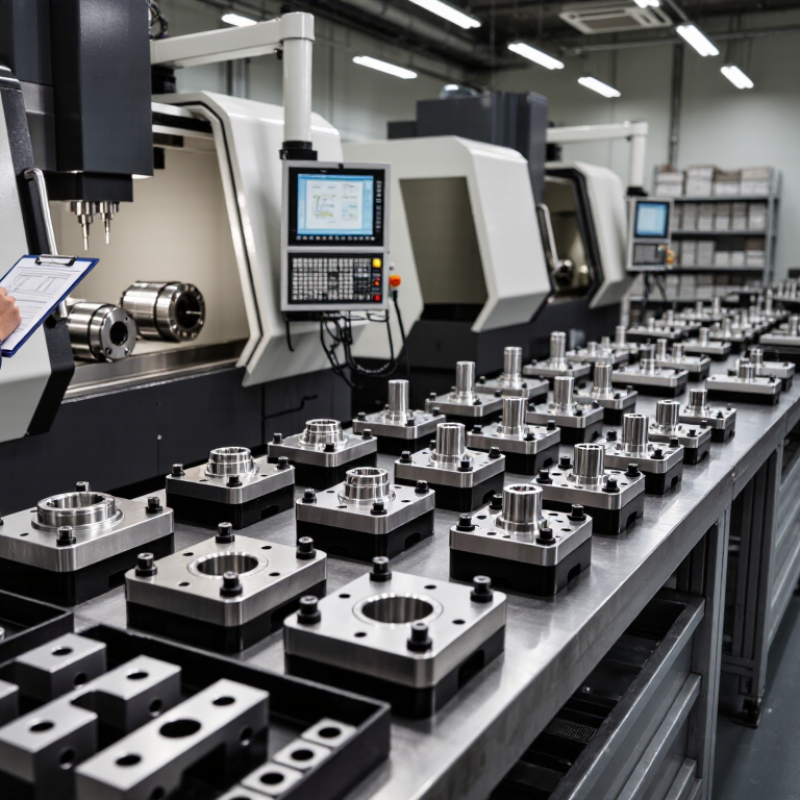
China Top 10 Mold Parts Manufacturers for Global Buyers

Understanding Mold Parts and Their Role in Manufacturing

Mold parts are the working components that shape, support, and release a molded product. A mold may contain cavity inserts, guide pins, bushings, ejector pins, and cooling channels. Each has a specific job. Small parts matter. Guide pins keep the mold halves aligned during repeated closing cycles. Ejector pins push the finished part out without bending its edges. Cavity inserts form details such as ribs, lettering, or a narrow snap-fit feature. Cooling channels carry heat away, helping control cycle time and part consistency. A small mismatch can leave flash, uneven surfaces, or marks that are difficult to remove.

For global buyers, understanding these functions makes supplier discussions more precise. Share the material, expected production volume, working conditions, and critical dimensions with a technical drawing. Ask how tolerances, surface finish, and wear-prone areas will be checked. A polished surface may matter on a visible cavity, while a guide pin needs dependable alignment and hardness. It is tempting to compare parts by price alone. That can miss the cost of replacement, downtime, or inconsistent output. One point deserves extra thought: drawings do not always show how a component behaves after many cycles. Inspection records and clear maintenance guidance help, though they cannot prevent every failure. Regularly checking pin movement, contact surfaces, and cooling flow can reveal problems early.

Key Criteria for Evaluating Chinese Mold Parts Manufacturers

For global buyers, evaluating Chinese mold parts manufacturers means checking evidence, not just quoted tolerances. Ask for material certificates, heat-treatment records, and inspection results tied to the actual production lot. A drawing may specify a 0.01-millimeter tolerance, but the supplier should explain how it measures that feature and how often. Small details matter. Request a first-article inspection report, plus samples showing critical dimensions and surface finish. ISO Survey 2023 counted 1,265,216 valid ISO 9001 certificates worldwide, including 397,319 in China. This indicates broad quality-system adoption, not proof that any specific mold component meets your requirements.

Assess process control alongside paperwork. Check whether the shop uses calibrated measuring equipment, maintains tool and machine records, and can trace steel grades through production. For a cavity insert, ask how it controls hardness, flatness, and polishing consistency; for a guide pin, review diameter measurements and wear-related specifications. Compare quoted lead times with documented capacity and recent delivery performance. Agree on packaging, change approval, and how nonconforming parts are handled before placing a large order. A polished audit can still miss a weak handoff between machining and inspection. I would also test communication with one small order; it is useful, though not a perfect predictor of long-term performance.

Profiles of China’s Top 10 Mold Parts Manufacturers

The ten manufacturer profiles should reveal more than factory size. They should show how each supplier handles mold bases, precision inserts, slides, and lifters. Some workshops focus on standard components, while others machine custom parts from customer drawings. Useful profiles also describe equipment, inspection methods, material traceability, and typical lead times. These details help buyers match a supplier’s strengths to a project’s tolerance and production volume.

Tips: Ask for inspection records and sample measurements. A polished catalog is not proof of consistent quality.

Compare the profiles against your own part drawings, not just advertised capabilities. Check whether the supplier can hold the required tolerances across repeat orders, and ask how it documents dimensional changes. Look for clear communication about surface finish, heat treatment, packaging, and delivery risks. Some profile details may be incomplete or difficult to verify; that deserves a follow-up question. A small trial order can expose gaps before production scales. Real performance is in the details.

Comparing Product Range, Quality, and Export Capabilities

Global buyers comparing mold-parts manufacturers should look beyond catalog size. A useful range includes ejector pins, guide pillars, bushings, date inserts, and cooling components. Grand View Research’s 2024 Injection Molding Market report estimated the global market at USD 284.3 billion in 2023, with projected annual growth of 4.8% through 2030. This signals broad demand, not guaranteed demand for any specific mold component. Buyers should match a supplier’s stock and custom-machining capacity to their actual tooling plans.

Quality is measurable. Request drawings, material certificates, hardness results, and inspection records for critical dimensions. For example, a guide pillar that arrives slightly out of tolerance can cause alignment problems during repeated mold cycles. Ask how the manufacturer controls surface finish and verifies batch consistency. ISO-based procedures can help, but paperwork alone cannot prove stable production. A sample inspection tells you more.

Export capability also needs practical checks. Confirm typical lead times, protective packaging, shipment tracking, and the supplier’s experience preparing export documents. Ask for a recent example of how it handled a delayed shipment or a specification change. Small parts can be damaged or mixed during transit. This comparison is imperfect: published market reports describe industry demand, not supplier-level performance, and buyers should verify claims directly.

China Top 10 Mold Parts Manufacturers for Global Buyers - Comparing Product Range, Quality, and Export Capabilities

Category-level comparison of ten common mold-component product groups. These are not named or ranked companies, and the descriptions do not represent claims about any individual supplier. Confirm actual specifications, quality records, and export arrangements directly with each manufacturer.

No. Manufacturer Product Group Typical Product Range Common Materials or Processes Quality Checks to Compare Export Details to Confirm
01 Mold bases and plates Standard and custom mold bases; cavity, core, support, and clamping plates. Tool steels and pre-hardened steels; milling, drilling, grinding, and heat treatment where specified. Plate dimensions, flatness, parallelism, hole positions, material documentation, and hardness where applicable. Confirm drawings and revision control, packing against corrosion and transit damage, shipment terms, and required customs documents.
02 Guide pillars and guide bushings Guide pillars, guide bushes, and related alignment components for mold guidance. Hardened alloy or bearing steels; ground working surfaces and optional surface treatments depending on specification. Diameter and length, roundness, straightness, surface finish, hardness, and fit against the mating component. Check part-number matching, corrosion protection, packaging separation, and consistency of supplied inspection records.
03 Ejector pins Straight ejector pins in standard and drawing-based sizes; selected suppliers also offer stepped or custom forms. Tool steels or hot-work steels; heat treatment and surface treatments vary by grade and application. Diameter, overall length, straightness, hardness, surface finish, and tip geometry against the drawing. Confirm clear labeling by size and material, protective packaging for ground surfaces, and traceability requirements.
04 Ejector sleeves Hollow sleeves used with ejector pins to release molded parts; standard and custom dimensions may be available. Tool steels and other specified steels; internal and external grinding are commonly used for precision surfaces. Inner and outer diameters, concentricity, length, end geometry, hardness, and fit with the ejector pin. Request individual or batch identification, packaging that protects thin walls, and dimensional reports for critical fits.
05 Locating rings and sprue bushings Locating rings and sprue bushings matched to mold and machine interface requirements. Specified steels; machining, drilling, and finishing operations depend on the interface and design. Mounting dimensions, concentricity, bore and radius details, surface condition, and compatibility with the mold design. Confirm interface drawings, mating-part requirements, export packing, and whether documentation must accompany each lot.
06 Springs for molds and dies Compression springs selected for mold return, positioning, and other specified mechanical functions. Spring steels; wire forming and heat treatment, with finish options depending on the product specification. Free length, outside diameter, load at specified deflection, spring rate where required, and batch consistency. Confirm product identification, packing by specification, and any required material or test documentation.
07 Slide and wear components Wear plates, slide components, retainers, and related parts used in moving mold mechanisms. Tool or wear-resistant steels; grinding and specified surface treatments may be used for contact areas. Overall dimensions, contact-face flatness, hardness where specified, surface finish, and alignment features. Agree on drawing tolerances, matched-set identification, protection of sliding surfaces, and shipment grouping.
08 Core pins and cavity inserts Machined core pins and replaceable cavity or core inserts, often made to customer drawings. Tool steels selected for the application; machining, heat treatment, grinding, and polishing may be specified. Drawing dimensions, hardness, profile accuracy, surface finish, material traceability, and inspection method for critical features. Confirm drawing confidentiality, revision status, identification, protective packing, and approval of inspection documents before shipment.
09 Hot-runner components Hot-runner-related components such as nozzles, manifolds, and associated parts, depending on supplier scope. Heat-resistant steels and electrical components may be involved; materials and assembly requirements are design-specific. Dimensional conformity, electrical checks for supplied heaters or sensors, connection details, and functional test records where applicable. Confirm electrical specifications, spare-part identification, product documentation, and shipping requirements for electrical items.
10 Cooling and temperature-control components Water connectors, baffles, plugs, and related mold cooling or temperature-control hardware. Materials vary by component and fluid conditions; machining, sealing features, and corrosion considerations are specification-dependent. Thread and connection dimensions, sealing surfaces, material suitability, and leak or pressure testing when required by the design. Confirm thread standards, sealing method, compatible fluid requirements, packing, and any destination-specific compliance documents.

How Global Buyers Can Select and Work with a Manufacturer

When evaluating a mold-parts manufacturer, compare evidence, not polished capability sheets. Request the latest audit scope, calibrated equipment list, and sample inspection records. ISO’s 2022 Survey of Management System Standard Certifications reported 1,265,216 ISO 9001 certificates across 189 countries and economies. Certification is common, not proof of consistent output. Check whether the supplier’s procedures cover your actual parts, tolerances, and production site.

Ask for a design review before approving the quotation. Share 2D drawings, 3D files, resin or steel specifications, expected volume, and critical dimensions. Agree on inspection methods and acceptance limits in writing. For example, specify how the supplier will measure a 0.02 mm feature and report results.

A clean sample can still mislead. Request trial results, not just photographs, and clarify who pays for corrections if the first trial fails.

Communication matters after the order. Set named contacts, response times, and dated milestones for design approval, machining, sampling, and shipment. Review changes through controlled drawings; even a small gate or vent adjustment can affect fit or cycle time. Keep a short issue log with photos and corrective actions. This process can feel slower at the start. It often prevents expensive surprises later.

Article Source:

bottom of page