China Top 10 Railway Freight Companies for Global Buyers
Choosing a Railway Freight partner can shape delivery speed, landed cost, and supply chain resilience. For global buyers, the decision involves more than comparing company names.
Rail routes connect factories, ports, inland terminals, and distribution centers across vast trading corridors. A container leaving Chongqing may pass through Kazakhstan, Russia, Belarus, Poland, and Germany before reaching a European warehouse. Each handover matters.
This guide examines China’s top ten Railway Freight companies from an international buyer’s perspective. It considers route coverage, customs coordination, equipment availability, tracking systems, transit consistency, and communication quality. It also reviews practical service details, including terminal access, container handling, documentation support, and response times during disruptions.
As logistics scholar Alan C. McKinnon has noted, “Rail freight is generally more energy-efficient than road freight.” That advantage can support lower emissions, especially on long overland routes. However, rail is not automatically the best choice. Weather, border procedures, gauge changes, terminal congestion, and seasonal demand can affect performance.
Details matter.
A reliable provider should explain its operating network clearly. It should also disclose realistic transit ranges instead of promising perfect schedules. Buyers may need different solutions for electronics, machinery, automotive parts, textiles, or temperature-sensitive goods. One ranking cannot fit every shipment.
This article therefore avoids treating scale as the only measure of quality. Large operators may offer stronger networks, while specialized providers may deliver more responsive service. The comparison has limitations, and company performance can change with market conditions. Global buyers should verify current quotations, insurance terms, compliance procedures, and route availability before signing a contract.
China’s Railway Freight Industry and Its Role in Global Trade
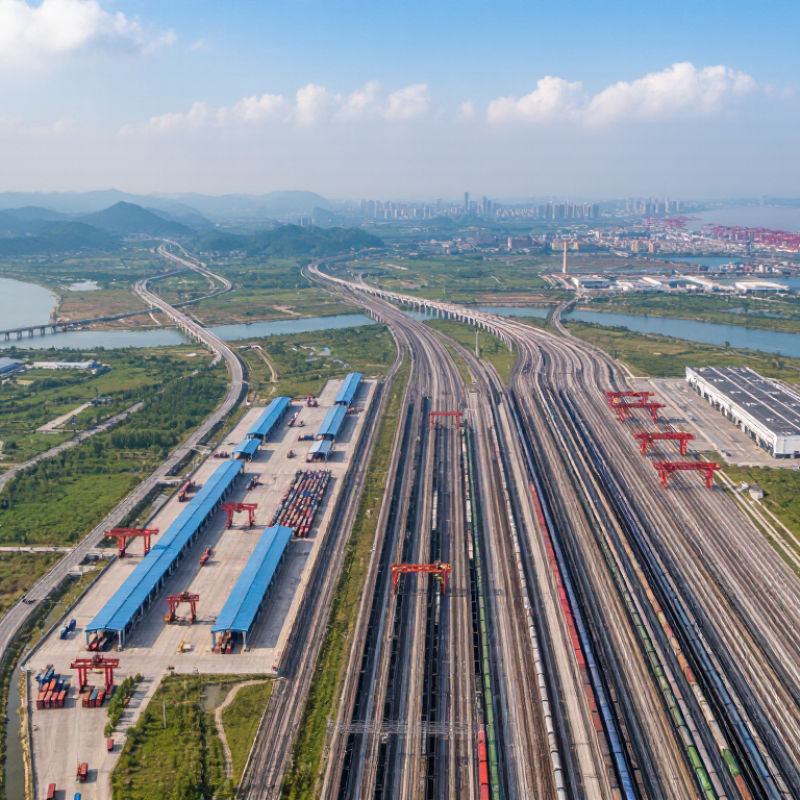
China’s railway freight industry has become a practical link between inland production zones and overseas markets. In 2024, national rail freight volume exceeded 5.1 billion tonnes, according to China’s official railway statistics. This scale supports steel, machinery, grain, chemicals, and temperature-sensitive goods. Rail usually costs more than sea transport. Yet it can reduce transit time for long continental routes.
The 2024 Review of Maritime Transport by UNCTAD states that shipping carries over 80% of global merchandise trade by volume. Rail therefore works as a complement, not a replacement. Cross-border trains connect factories, dry ports, and European logistics hubs. They also reduce dependence on congested maritime gateways. However, gauge differences, border inspections, and uneven return cargo still create delays. Those problems are often underestimated. A single missing document can leave containers waiting beside a quiet terminal.
Tips: Check gauges early. Confirm customs documents. Build time buffers.
The World Bank’s Logistics Performance Index 2023 emphasizes tracking, customs efficiency, and delivery reliability. Global buyers should compare complete door-to-door performance, rather than advertised rail speed. Ask about wagon availability, terminal handling, cargo insurance, and contingency routing.
China’s railway network offers strong capacity, but reliability varies by corridor and season. Procurement teams should review shipment records, not promises. Some routes look efficient on paper, yet weak backhaul demand can raise costs unexpectedly.
How the Top 10 Chinese Railway Freight Companies Are Selected
China Top 10 Railway Freight Companies for Global Buyers
The top ten are selected through evidence, not advertising claims. China Railway’s 2023 statistics recorded about 3.91 billion tonnes of national rail freight, showing the network’s enormous operating scale. The selection therefore starts with verifiable shipment volume, international route coverage, terminal access, and equipment availability.
Service reliability matters more than size. The 2023 World Bank Logistics Performance Index emphasizes customs efficiency, tracking, infrastructure, and delivery timeliness. Each candidate is reviewed against these indicators. We examine average transit times, schedule changes, cargo visibility, claims handling, and the clarity of shipping documents. We also check whether the company can coordinate rail, road, and port transfers without creating hidden handover risks.
Details reveal weaknesses.
The 2023 China-Europe Railway Express report recorded 17,000 train trips and 1.9 million TEUs, according to China’s railway authorities. That growth supports rail freight’s commercial importance, but volume alone cannot prove dependable service. A smaller operator may provide better communication or faster exception handling. Data can also be incomplete, especially for delays caused by border congestion and seasonal capacity limits. The final shortlist weighs audited records, customer references, compliance procedures, cargo insurance, and measurable performance over several quarters. No ranking is perfect. Some judgments still require careful human review.
China Top 10 Railway Freight Companies for Global Buyers
How the Top 10 Chinese Railway Freight Companies Are Selected
The screening process gives priority to suppliers operating in a large and expanding rail-freight market. Key evaluation dimensions include freight-handling scale, international corridor access, intermodal capability, network coverage, shipment reliability, customs support, digital tracking, and service coverage for global buyers.
Market data: China's national railway freight volume, 2019–2023, reported in the China Statistical Yearbook and National Bureau of Statistics data releases. The figures represent market-level context and do not disclose individual company or brand performance.
Profiles of China’s Top 10 Railway Freight Companies
China Top 10 Railway Freight Companies for Global Buyers
China’s railway freight sector includes ten distinct operator profiles, each serving different buyer priorities. Profile one focuses on long-distance international corridors and scheduled departures. Profile two specializes in container consolidation for medium-sized exporters. Profile three serves inland manufacturing zones with regular terminal connections. Profile four provides temperature-controlled equipment for sensitive, lawful goods. Profile five emphasizes customs documentation and border coordination. Profile six supports oversized industrial cargo with route planning and reinforced handling. Profile seven offers flexible booking for seasonal shipments. Profile eight links coastal ports with inland distribution centers. Profile nine concentrates on digital tracking, milestone alerts, and shipment records. Profile ten develops lower-emission transport options for buyers monitoring supply-chain impact.
A practical review should examine more than advertised transit times. Ask for recent on-time data, exception procedures, equipment availability, and storage conditions. Check whether the quoted price includes terminal handling, documentation, insurance, and last-mile delivery. Small omissions can change the final cost. Experienced buyers also compare border performance during winter disruptions and holiday peaks. A clear service agreement should identify liability, communication channels, and claims timelines.
No ranking stays permanent. One operator may perform well on a western corridor but struggle with urgent coastal deliveries. Another may provide strong tracking but limited equipment during peak periods. This is where buyer feedback matters. Request shipment references, inspect sample documents, and test communication before committing to regular volumes. Railway freight can be efficient, but it is not automatically simple. Planning errors still happen.
How Global Buyers Can Compare and Choose a Chinese Rail Freight Partner
China Top 10 Railway Freight Companies for Global Buyers
Global buyers should compare railway freight partners by route performance, not ranking claims alone. Check their experience with your product type, origin city, destination hub, and seasonal capacity. A capable partner should explain transit windows, terminal handling, customs documents, cargo insurance, and delivery arrangements clearly. Ask for recent performance data, including average delays and damaged shipment rates. Request a complete quotation. It should separate rail charges, local fees, customs services, storage, and possible surcharges. Clear pricing prevents difficult disputes later.
Tips: Compare at least three written quotations. Check whether tracking updates show real milestones, such as departure, border transfer, and arrival. Ask how the provider handles missed departures, border congestion, damaged cartons, or document errors. Confirm communication hours and emergency contacts. References from similar industries can reveal practical weaknesses that sales materials hide. Small details matter.
A reliable Chinese rail freight partner should also explain compliance responsibilities in plain language. Verify licenses, insurance coverage, data security practices, and service terms before signing. Do not choose only by the shortest promised transit time. It may exclude terminal delays or final delivery. One uncomfortable lesson is that the cheapest offer often becomes expensive after storage fees appear. Even experienced buyers can overlook this. Recheck every assumption, especially during peak seasons and new trade lanes.