China Top 10 TCU Equipment Manufacturers for Global Buyers
China’s TCU Equipment sector is becoming increasingly important for global automotive supply chains. Transmission control units connect sensors, actuators, software, and mechanical systems inside modern vehicles. They must perform reliably in heat, vibration, moisture, and frequent gear changes.
The International Energy Agency’s Global EV Outlook 2024 reported nearly 14 million electric car sales worldwide in 2023. This shift is changing transmission design, but it does not remove the need for advanced control electronics. Hybrid vehicles still require precise coordination between engines, motors, batteries, and transmissions. OICA reported more than 93 million motor vehicles produced globally in 2023, showing the scale of potential demand. Grand View Research also identifies automotive electronics as a continuing growth area, supported by vehicle electrification and software integration.
Fatih Birol, Executive Director of the IEA, stated, “The clean energy transition is happening worldwide and it’s unstoppable.” His observation matters to TCU Equipment buyers because suppliers must support both conventional and electrified powertrains. A strong manufacturer should offer stable calibration, traceable testing, cybersecurity awareness, and dependable after-sales support. Price alone is not enough.
This guide examines China’s top ten TCU Equipment manufacturers for global buyers. It considers product capability, production experience, export readiness, quality systems, customization, and technical communication. The ranking is not absolute. Buyer requirements differ. A supplier that excels in high-volume passenger cars may not suit commercial vehicles or specialized hybrid platforms. Readers should verify certifications, sample performance, software compatibility, and warranty terms before making a final decision.
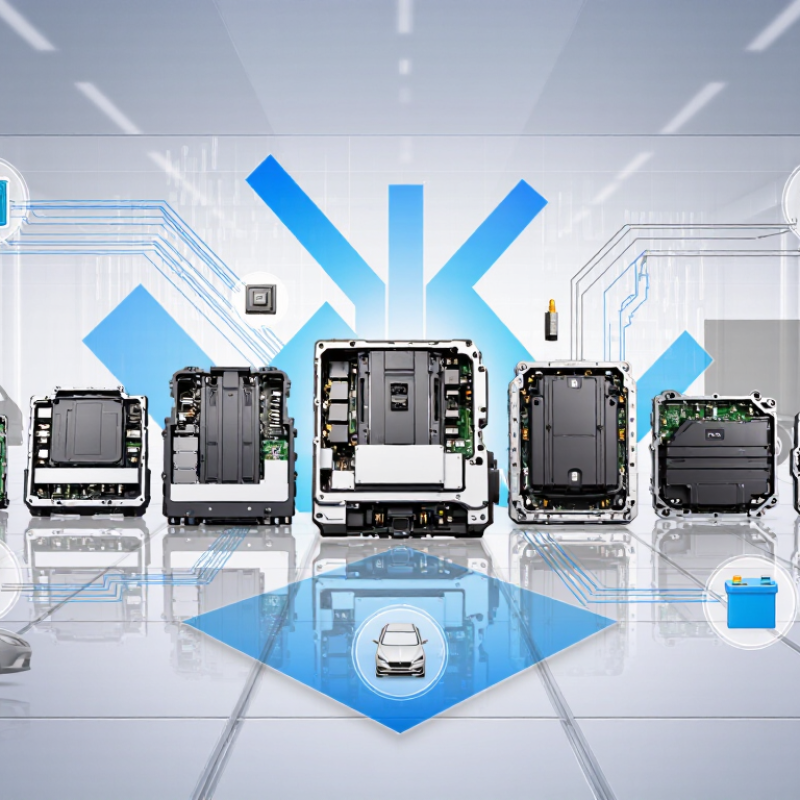
What TCU Equipment Is and Why Global Buyers Need It
TCU equipment refers to the tools used to develop, test, program, and validate transmission control units. These systems connect with electronic modules, sensors, actuators, and vehicle networks. They can measure voltage, signal timing, communication stability, and diagnostic responses. Some production lines also use end-of-line testers to confirm each unit before shipment.
Global buyers need reliable TCU equipment because transmission systems vary across vehicles and markets. A suitable tester can reduce assembly errors, shorten troubleshooting time, and create traceable test records. In a real factory, technicians may inspect wiring while software checks shifting signals within seconds. Clear data matters. Without accurate records, a small calibration issue can become a costly field problem. However, a polished specification does not guarantee practical performance. Buyers should verify actual testing capacity, software compatibility, maintenance support, and operator training.
Tips: Request a sample test report before purchasing. Confirm connector types and communication protocols. Check whether the equipment supports future software updates. Ask about replacement parts and response times. On-site trials are valuable, but they may not reveal every long-term weakness. A careful buyer should also review safety procedures, installation conditions, and data security controls. Simpler equipment is sometimes easier to maintain. More functions are not always better.
How Chinese TCU Manufacturers Are Evaluated for International Markets
How Chinese TCU Manufacturers Are Evaluated for International Markets
International buyers evaluate Chinese TCU manufacturers through more than price and production capacity. They examine transmission-control experience, engineering depth, and documented quality systems. A capable factory should explain its testing process clearly. It should also provide traceable records for components, software versions, and final inspections. These details reveal whether production is controlled or merely fast.
Technical evaluation usually begins with vehicle compatibility. Engineers check CAN communication, operating temperature, vibration resistance, response time, and fault diagnosis. Samples should complete repeated road and bench tests before approval. Manufacturing facilities also need reliable calibration equipment and trained inspectors. Independent laboratory reports can strengthen confidence, especially for buyers entering regulated markets. However, certificates alone are not enough.
Ask difficult questions.
International buyers should review change-control procedures, warranty handling, spare-part support, and production continuity. A factory may pass a sample test but struggle during volume delivery. That weakness is easy to miss. Factory audits, video inspections, and small pilot orders can expose gaps early. Secure software management also matters because uncontrolled updates may create serious compatibility problems. No manufacturer is perfect, and some technical documents may contain unclear translations. Careful buyers request revised specifications, signed test reports, and direct engineer communication before making a long-term decision.
China’s Top 10 TCU Equipment Manufacturers by Product Strengths
China’s top 10 TCU equipment manufacturers differ mainly by product strength, not factory size. Several specialize in water-based units for injection molding, offering precise control near 120°C. Others focus on oil-based systems, reaching approximately 300°C for extrusion, die casting, and composite processing. Modular units with stainless-steel tanks suit clean production lines. High-flow models serve large molds and demanding cooling cycles.
MarketsandMarkets reports that industrial temperature-control demand is growing at roughly 5% annually, supported by automation and tighter process tolerances. Energy performance matters too. The International Energy Agency notes that motor-driven systems consume a major share of industrial electricity. Therefore, leading Chinese suppliers increasingly use variable-frequency pumps, insulated piping, and automatic load adjustment. These features can reduce unnecessary circulation and improve temperature stability.
Product evaluation still requires caution. A compact TCU may look efficient, yet its pump curve, heat-exchanger area, and response time decide real performance. Export-oriented manufacturers commonly provide CE documentation, multilingual controls, remote diagnostics, and spare-part packages. Some also test units under high ambient temperatures, which is valuable for overseas plants. However, published energy claims are not always measured under identical conditions. Buyers should request flow-rate data, ±temperature deviation records, noise levels, and service response times. The ranking is useful, but not perfectly uniform. Procurement teams should verify performance on the actual polymer, mold, and production cycle.
Key Differences in Technology, Capacity, Certifications, and Service
China’s Top 10 TCU Equipment Manufacturers for Global Buyers
When comparing China’s top TCU equipment manufacturers, technology should be judged through operating evidence, not brochures. Check heating and cooling ranges, temperature stability, pump performance, control accuracy, and response time. A reliable TCU should hold a setpoint during changing production loads. Ask for test curves from conditions close to your process.
Technology varies widely. Some suppliers offer modular designs, remote monitoring, recipe storage, and alarms for low flow or abnormal pressure. Others provide simpler units that are easier to maintain. That trade-off matters. A polished interface cannot compensate for unstable control. Request factory acceptance records, component specifications, wiring diagrams, and sample data. Small details reveal engineering discipline.
Capacity also needs careful verification. A large catalog does not prove production strength. Inspect assembly areas, machining resources, testing stations, and spare-parts storage. Certifications should match the destination market and equipment type, including electrical safety, electromagnetic compatibility, and quality-management systems where applicable. Verify certificate scope and validity independently. Service often decides the real buying experience. Confirm installation guidance, language support, response times, troubleshooting procedures, warranty boundaries, and local technical partners. Ask how urgent failures are handled. Do not overlook training. I have seen projects delayed because the manual assumed too much operator knowledge. That weakness is easy to miss during a sales meeting. A practical supplier shares limits, not only advantages.
How Global Buyers Can Select the Right Chinese TCU Supplier
Selecting a Chinese TCU equipment supplier requires more than comparing quotations. Temperature control units must match your process, load profile, fluid, and operating environment. MarketsandMarkets’ 2023 Temperature Control Market report forecasts annual growth above 6% through 2028. This growth increases supplier choices, but quality differences remain significant.
Check the supplier’s thermal range, control accuracy, pump performance, and heat-exchanger materials. Request factory test records, wiring diagrams, calibration certificates, and a sample preventive-maintenance schedule. ISO Survey 2022 recorded more than one million ISO 9001 certificates worldwide, so certification alone cannot prove manufacturing discipline. Audit production records and traceability instead. Ask whether the supplier can support spare parts across your target markets. Response time matters during a stopped production line. I would not trust a polished showroom without process evidence. A low price can become an expensive lesson.
Tips: Compare total ownership cost, not only the purchase price. Review energy consumption under your actual operating conditions. The International Energy Agency reported that industry used about 37% of global final energy in 2022, making efficiency a practical purchasing issue. Require a factory acceptance test with agreed acceptance limits. Confirm alarm functions, remote communication, noise levels, and emergency procedures. Use a written specification. Small omissions often create large disputes. Allow room for reflection after supplier interviews; the first impressive answer may not be the most reliable one.
China Top 10 TCU Equipment Manufacturers for Global Buyers
How Global Buyers Can Select the Right Chinese TCU Supplier
This procurement model assigns a 100-point evaluation weight to the factors most relevant to international TCU equipment buyers. Product quality and certification receive the highest weighting, followed by customization capability, export compliance, production capacity, delivery performance, and after-sales support.