How to Choose a Green Sand Casting Supplier?
Choosing a Green Sand Cast supplier is not just a matter of comparing prices. The right partner should explain how its process fits your part, production volume, and quality requirements. John Campbell, a respected casting researcher and author, is widely associated with the principle, “The quality of a casting is determined by the quality of the liquid metal.” It is a useful reminder: a polished sales presentation cannot replace control on the foundry floor.
A practical evaluation should look beyond the quotation. Ask how the supplier monitors sand moisture, permeability, and compaction, and how often it checks those readings. Request sample inspection reports, details of defect analysis, and evidence that corrective actions are followed through. For a new component, discuss pattern design, dimensional tolerances, machining allowances, and the plan for trial castings. These details matter. A steady process often shows up in ordinary records, not dramatic promises.
Also consider communication and delivery. Can the supplier explain a rejected sample clearly, share realistic lead times, and flag a production problem early? Visit the facility if possible. Look at the sand-testing area, work instructions, and how finished castings are identified and protected. A visit is helpful, not conclusive; one clean tour cannot prove consistent performance. No supplier is perfect. The goal is to find one that can demonstrate its controls, acknowledge limitations, and improve when results fall short. The sections ahead outline the technical, quality, commercial, and practical questions that help buyers make that judgment.
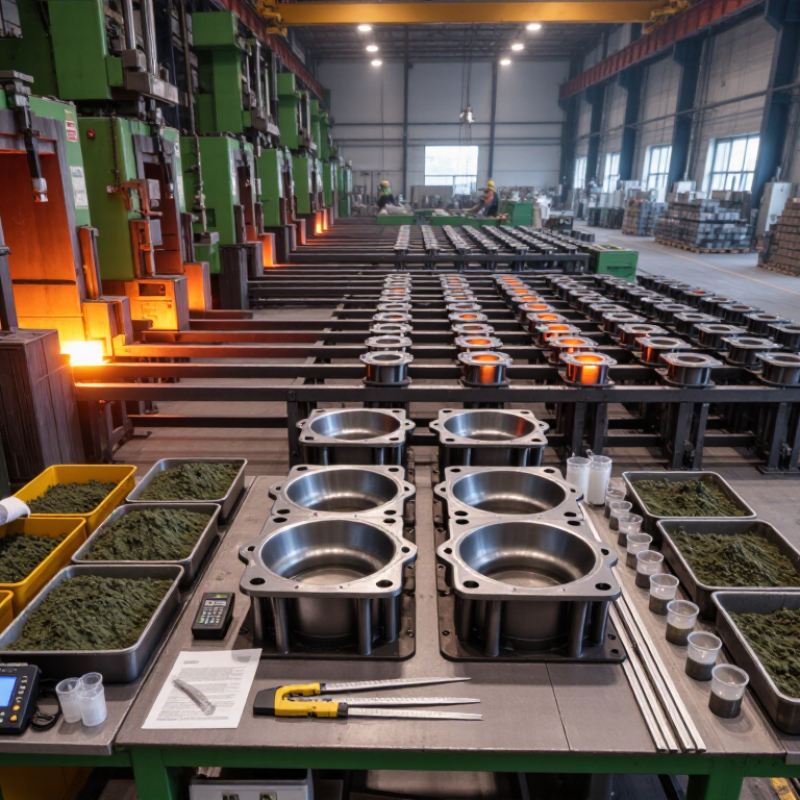
Define Your Green Sand Casting Requirements
Before requesting quotations, describe the casting as a production part, not merely a drawing. Record the alloy, finished mass, overall dimensions, wall thickness, annual demand, and expected order batches. Mark critical datums, machining stock, leak-tight areas, and unacceptable surface defects. Small details matter. Include core count, core prints, draft, and thin ribs that may cool quickly.
Green sand requirements should be measurable. Specify acceptable ranges for moisture, compactability, permeability, and mold hardness, then ask how the supplier monitors them. The U.S. Environmental Protection Agency’s 2002 review estimated that American foundries generated 6–10 million tons of spent foundry sand annually. This industry-scale figure makes sand reclamation and waste tracking useful questions, but it does not prove a supplier’s quality. Request recent process records and clarify how reclaimed sand is controlled.
Set inspection expectations before sampling: dimensional checks, surface evaluation, mechanical tests, and first-article approval. State the inspection frequency and required report format. If a casting has a hidden defect risk, identify the location and agree on a test method. Avoid vague terms such as “good finish.” I would also question specifications copied from an older part; they may add cost without protecting function. A clear requirement sheet lets suppliers explain capability gaps before tooling begins.
Assess the Supplier’s Equipment and Technical Capabilities
A supplier’s equipment should match the size, weight, and geometry of your parts. Ask about molding machines, flask dimensions, and hourly capacity. Then compare those limits with your production forecast, not just a sample part. A machine may produce a clean casting once but struggle across a full shift. That distinction matters.
Look for a controlled sand-preparation system. The supplier should monitor moisture, compactability, and permeability, and explain how readings affect adjustments. Ask to see recent test records and calibration dates. You can also check whether mixers receive scheduled maintenance. Small details count. A worn mixer blade, for example, can create uneven sand and inconsistent mold strength.
Technical capability includes more than machinery. Ask how the team handles pattern changes, thin sections, and recurring defects. Request examples of process adjustments supported by inspection data, such as dimensional checks or test-casting results. A detailed answer is more useful than a broad claim of expertise. Still, paperwork does not guarantee performance; a supplier’s records may be tidy while production varies. If possible, review a representative run and discuss how operators respond when measurements drift. That conversation can reveal practical experience—and gaps worth clarifying.
Verify Quality Controls and Industry Certifications
How to Choose a Green Sand Casting Supplier?
Verify Quality Controls and Industry Certifications
A reliable supplier should explain how it controls green sand, not just show a certificate. Ask how often operators test moisture, permeability, and compactability. These readings affect mold strength and casting consistency. Numbers matter. Request sample records, and check that they include dates, results, and corrective actions when a reading falls outside limits.
Certifications can indicate that a quality system is documented, but they do not prove every casting meets your requirements. Confirm the certificate is current and covers the facility producing your parts. Then ask how the supplier links each production lot to its inspection results. Useful evidence may include sand test logs, melt records, dimensional reports, and procedures for handling rejected parts. Look closely. A polished audit folder is less useful if shop-floor records are incomplete.
If possible, visit the foundry and observe how samples are taken and labeled. Ask who reviews test results and what happens when a mold fails inspection. The answer should be specific, not vague reassurance. I would also compare a few recent inspection reports with the drawing tolerances. Not always easy. Records can be technically correct yet hard to interpret, so agree on report formats before production begins. A small trial order can reveal gaps that a certificate alone may not show.
How to Choose a Green Sand Casting Supplier
Verify quality controls and industry certifications using a structured evidence-based audit.
How to use this chart: Scores are suggested audit priorities, not measured supplier results. Request records for sand properties, melt controls, inspection, calibration, and traceability. Verify that any certification is current and applies to the relevant site and scope; certification alone does not prove casting process control.
Evaluate Sustainability, Materials, and Waste Management
How to Choose a Green Sand Casting Supplier?
Choosing a green sand casting supplier means looking beyond the word “green.” Ask how the supplier measures energy use, emissions, and water consumption. Request recent records, not just broad sustainability claims. A clear answer should explain what is measured and how often. Numbers matter.
Material choices affect both part quality and environmental impact. Ask about sand composition, recycled content, and how incoming materials are checked. Confirm that the supplier can meet your drawings, tolerances, and testing requirements. A lower-impact material is not a good choice if it causes rejected castings. That trade-off deserves attention.
Waste management offers a practical view of daily operations. Find out how used sand is tested, reclaimed, and reused, and where excess material goes. Ask how scrap metal is separated and returned for recycling. A site visit can reveal dusty storage areas or poorly marked bins that reports may miss. No foundry is impact-free, and records may have gaps. A thoughtful supplier should acknowledge those limits and describe specific improvements, rather than promise perfection.
Compare Costs, Lead Times, and Supplier Reliability
Choosing a green sand casting supplier means comparing the full landed cost, not just the quoted price per casting. Ask for separate figures for patterns, machining, inspection, packaging, and freight. Cheap is not simple. A low unit price may depend on a large order, steady monthly demand, or optimistic scrap assumptions. Request the quote’s volume basis and clarify who pays for pattern repairs or rejected parts. For a fair comparison, use the same drawing revision, alloy, tolerances, and annual quantity with every supplier.
Lead times need similar scrutiny. Separate pattern building, sample approval, production, and shipping dates; one “six-week lead time” can hide a slow first article. Ask how the schedule changes when demand rises or a molding line is down. Stated capacity matters only if it is available to your program. Request recent on-time delivery figures and a production traveler or inspection report, with sensitive details removed. Ask for evidence.
Reliability often appears in routine controls: consistent sand moisture checks, documented melt records, traceable batches, and prompt notice when defects occur. A plant visit can show whether operators record mold conditions or rely on memory. Request corrective-action examples and speak with customers making similar parts. References help, but they cannot guarantee your experience. A polished scorecard may still miss a changed forecast or rushed tooling revision, so leave room for uncertainty.