

top of page

How to Choose a Laboratory Coating Machine in 2026?

Choosing a Laboratory Coating Machine in 2026 requires more than comparing prices or brochure photographs. The right system must match your formulation, substrate, batch size, and validation strategy. A smooth tablet film, a porous membrane, and a conductive laboratory electrode each demand different coating behavior. Viscosity changes. Drying changes. Operator habits matter too.

Recent industry research supports a careful approach. Grand View Research’s pharmaceutical manufacturing equipment analysis identifies automation, process control, and flexible small-batch production as continuing investment priorities. MarketsandMarkets’ pharmaceutical manufacturing equipment reports also emphasize scalable systems, data integration, and compliance-ready documentation. These findings are practical, not decorative. A machine with programmable spray rate, controlled air temperature, and repeatable drum movement can reduce trial variability. However, market reports often describe broad segments. They cannot replace a hands-on product trial.

Look closely at the details. Can the chamber handle your smallest sample without dead zones? Can technicians clean the spray path without awkward tools? Does the software record temperature, pressure, and coating time in an auditable format? ISPE guidance on pharmaceutical equipment design reinforces risk-based qualification, hygienic construction, and documented process control. Those principles also help laboratories outside pharmaceutical production.

There is no universal winner. Not even close. A compact unit may suit formulation screening, while a larger machine may support scale-up studies. Sometimes, the cheaper model creates higher labor costs through manual adjustments. That possibility deserves honest testing. Before purchasing, request representative substrates, measure coating uniformity, inspect cleaning access, and compare service response times. Your best Laboratory Coating Machine should produce reliable evidence, not merely impressive specifications.
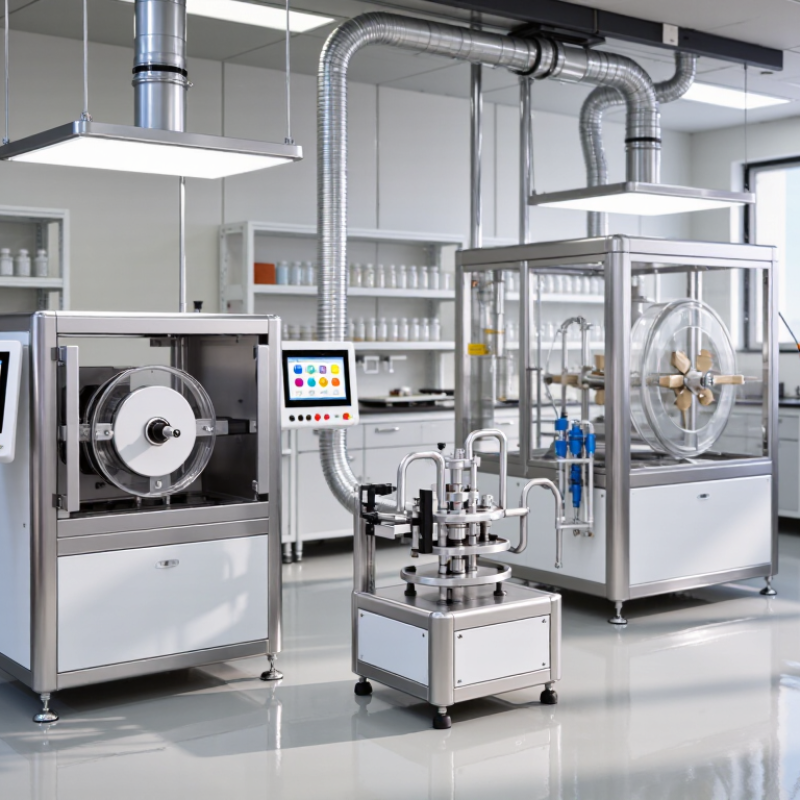
How to Choose a Laboratory Coating Machine in 2026?

What Is a Laboratory Coating Machine?

What Is a Laboratory Coating Machine?

A laboratory coating machine is a controlled instrument for depositing a thin, even layer onto a small substrate. The substrate may be glass, metal foil, polymer film, ceramic, or a test coupon. Unlike production equipment, it supports formulation trials, process development, and repeatable sample preparation. Typical systems control coating speed, solution delivery, drying temperature, and film thickness.

Common methods include bar coating, slot-die coating, dip coating, spin coating, and spray coating. Each method creates a different shear profile and drying pattern. A practical operator watches the meniscus, checks substrate alignment, and records ambient humidity. Small changes can alter a film’s appearance and performance. It is easy to blame the machine too quickly. Sometimes the formulation or cleaning routine causes the defect.

Industry data shows why these instruments matter. The MarketsandMarkets Thin Film Coatings report projects this market to grow from about 12.2 billion dollars in 2023 to 17.6 billion dollars by 2028. Research and development demand is growing with it. The 2024 Global R&D Funding Forecast also reports continued expansion in worldwide research investment, increasing pressure for efficient laboratory workflows.

When choosing a laboratory coating machine in 2026, examine control resolution, usable coating width, substrate compatibility, drying options, and data logging. Ask for measurable uniformity results, not attractive sample photographs. A compact machine may be more useful than a larger one when material quantities are limited. Yet compact does not always mean simple. Calibration, cleaning access, and operator training still determine reliable results.

Which Coating Methods and Materials Should You Compare?

Choosing a laboratory coating machine in 2026 starts with matching method to material, not chasing maximum speed. In pilot work, I compare dip coating, spin coating, spray coating, slot-die coating, and doctor-blade coating on the same substrate.

Dip coating suits simple geometries and low-viscosity liquids. Spin coating gives thin, uniform films on small flat samples, but wastes material at the edges.

Spray coating handles larger or uneven surfaces, although nozzle distance and humidity demand close control.

Slot-die and blade systems offer better thickness control for flat sheets, yet they need stable flow and careful gap settings.

Material behavior decides the machine more than the catalog does. Compare water-based, solvent-based, UV-curable, thermal-curing, ceramic, conductive, and bio-based formulations by viscosity, surface tension, solids content, drying temperature, and chemical compatibility. Ask whether seals, tubing, and chamber surfaces resist swelling or corrosion.

Measure wet and dry thickness, adhesion, roughness, coverage, and curing time. Use test coupons before expensive substrates. Keep it measurable. A 10-micron target can fail after drying.

I have seen a smooth film hide poor edge coverage. That result deserved a second test. Require calibrated flow control, exhaust planning, temperature logging, and repeatable cleaning procedures. Request documented performance data, maintenance intervals, and operator training. Speed can mislead. The best choice is the system that produces traceable results with your actual formulation, substrate, and laboratory constraints.

How Do You Determine the Required Machine Specifications?

When choosing a laboratory coating machine in 2026, start with the process, not the catalog. Define batch weight, substrate size, coating gain, solvent type, and target drying time. A 2 kg batch may require a very different drum than a 500 g formulation. Many laboratories select capacity by volume alone. That approach can produce weak mixing and uneven spray coverage. It is worth checking the actual working range. A practical starting point is 30–50% vessel fill, although the formulation may challenge this assumption.

The 2024 MarketsandMarkets Pharmaceutical Processing and Packaging Equipment report estimates that this equipment market will grow from about USD 8.6 billion in 2023 to USD 11.4 billion by 2028. That growth increases pressure for flexible, traceable systems.

Specify adjustable pan speed, controlled inlet airflow, temperature measurement near the product, and a spray system with stable low-rate delivery. For water-based coatings, drying airflow may matter more than maximum spray capacity. For heat-sensitive materials, gentle air control is critical.

Ask for data logging, recipe protection, and cleaning access. GMP expectations also support documented calibration and repeatable operating limits. Do not over-specify automation too early. It can increase cost and complicate validation.

I would test the smallest realistic batch before final purchase. The first specification is rarely perfect.

What Safety, Accuracy, and Maintenance Features Matter?

How to Choose a Laboratory Coating Machine in 2026?

Safety should be judged at the machine, not only in its manual. Look for guarded moving parts, an accessible emergency stop, grounded components, and a lid interlock. For solvent-based coatings, local exhaust ventilation and vapor monitoring deserve close attention. The WHO Laboratory Biosafety Manual, 4th edition (2020), places risk assessment and engineering controls before relying on operator behavior. That principle applies well here. A quiet machine may still release hazardous vapor.

Accuracy depends on measurable control. Choose independent monitoring for speed, temperature, pressure, and coating thickness. Ask for calibration records and repeatability data using your actual substrate. NIST Technical Note 1297 explains that measurement uncertainty should include Type A and Type B sources. A result without uncertainty is incomplete. ISO/IEC 17025:2017 also stresses suitable, calibrated equipment and traceable measurements. Do not accept “high precision” as evidence. Request raw test results, sample size, and test conditions. Even a small airflow change can alter film thickness.

Tips: Check whether operators can clean the chamber without reaching near moving parts. Inspect seals, filters, tubing, and sensor access. Ask for preventive-maintenance intervals and spare-part lead times. A simple service log can prevent repeated drift. Still, every checklist has gaps. A machine that looks easy to maintain may hide contamination behind a fixed panel. During acceptance testing, measure noise, temperature recovery, thickness variation, and cleaning time. Record what feels inconvenient. That detail is often the first maintenance warning.

How to Choose a Laboratory Coating Machine in 2026? - What Safety, Accuracy, and Maintenance Features Matter?

Evaluation Area Feature or Specification Recommended Laboratory Requirement Priority What to Check Before Purchase Maintenance Considerations
Safety Guarding and interlocks A fully enclosed coating zone with an interlocked access door that stops motion when opened. High Confirm that the door cannot be opened during hazardous movement and that the machine restarts only after a deliberate reset. Inspect switches, hinges, seals, and emergency-stop circuits during scheduled safety checks.
Safety Emergency stop system Clearly labeled, easily reachable emergency-stop buttons with a documented reset procedure. High Test the stop function at installation and verify that the machine does not automatically restart after power recovery. Perform periodic functional tests and replace damaged or difficult-to-operate actuators.
Safety Ventilation and solvent control Connection to suitable local exhaust ventilation when using volatile solvents, with compatible ducting and containment. High Review solvent compatibility, airflow requirements, exhaust routing, and the laboratory’s chemical-safety assessment. Check filters, airflow, tubing, seals, and collection containers for blockage, leakage, or degradation.
Safety Electrical protection Grounded construction, overload protection, suitable ingress protection, and electrical components rated for the laboratory environment. High Request electrical schematics, rated voltage and current, protective-device requirements, and applicable conformity documentation. Inspect cables, connectors, grounding, cooling vents, and control cabinets for wear or contamination.
Safety Chemical and thermal compatibility Wetted parts, tubing, seals, and work surfaces compatible with the coating formulation and operating temperature. High Compare all materials in contact with the coating, solvent, substrate, and cleaning agent against supplier compatibility data. Replace swollen, cracked, brittle, discolored, or softened components before they affect containment or coating quality.
Accuracy Coating-speed control Closed-loop or digitally controlled speed with a stated repeatability specification appropriate to the process. High Run repeated tests at low, medium, and high speeds and compare actual speed with the displayed setpoint. Keep drive components clean, inspect belts or couplings, and verify speed periodically with a calibrated instrument.
Accuracy Film-thickness uniformity Uniformity suitable for the application, commonly verified by a defined measurement method rather than by visual inspection alone. High Request sample data across the coated width and specify the acceptance method, sample count, and environmental conditions. Clean applicator surfaces, maintain level alignment, and replace worn blades, rods, slots, or coating heads.
Accuracy Applicator alignment Rigid, adjustable alignment with repeatable positioning and minimal lateral or vertical play. High Check parallelism, edge-to-edge gap, substrate tracking, and repeatability after removing and reinstalling the applicator. Inspect guides, clamps, bearings, and adjustment mechanisms; remove dried coating from contact surfaces.
Accuracy Wet-film measurement capability Compatibility with wet-film gauges, gravimetric checks, optical measurement, or another validated thickness method. Medium Confirm that the selected measurement method covers the expected coating range and substrate type. Clean measurement tools after use and maintain calibration records for gauges and laboratory instruments.
Accuracy Temperature and environmental control Stable substrate or drying conditions when viscosity, evaporation, or curing is temperature-sensitive. High Determine whether temperature, humidity, airflow, or drying time must be monitored and recorded for each run. Calibrate sensors, clean heaters and fans, and verify airflow or temperature uniformity at defined intervals.
Process Control Recipe storage and traceability User access control, recipe versioning, run identification, and exportable process records. Medium Verify whether speed, gap, temperature, drying time, operator, date, and material lot can be recorded and retrieved. Back up recipes and audit logs; control software updates and document any parameter changes.
Process Control Scale-up relevance Adjustable parameters that represent the intended production process, including coating method, substrate width, and drying conditions. High Compare laboratory shear, web tension, coating speed, drying load, and formulation volume with future scale-up requirements. Maintain a documented process window and record deviations that could affect scale-up conclusions.
Maintenance Cleaning access and changeover Tool-free or low-tool access to coating heads, trays, reservoirs, rollers, and splash-protection surfaces. High Time a representative cleaning and changeover procedure using the actual coating formulation and cleaning agents. Follow written cleaning intervals and prevent dried residue from accumulating around moving or sealing components.
Maintenance Wear-part availability Clearly identified replacement parts with specifications, expected service intervals, and reasonable lead times. Medium Obtain a parts list for blades, seals, tubing, filters, belts, bearings, lamps, and sensors where applicable. Keep critical consumables in stock and record replacement dates, causes of failure, and operating hours.
Maintenance Calibration and service documentation Documented calibration points, service procedures, acceptance tests, and maintenance logs. High Confirm which parameters require calibration and whether certificates or traceable reference standards are available. Set risk-based calibration intervals and retain certificates, service reports, and corrective-action records.
Usability Operator interface and training Clear controls, role-based access where needed, alarm messages, and training materials for routine operation. Medium Evaluate whether a trained operator can load, coat, stop, clean, and recover from common alarms without unsafe workarounds. Review training after software changes, process changes, incidents, or extended periods without use.
Facility Fit Footprint, utilities, and ergonomics Adequate clearance, stable bench or floor support, suitable power, ventilation, compressed air, and waste handling if required. High Check dimensions, access routes, noise, heat output, utility connections, operator reach, and service clearance. Keep service areas unobstructed and inspect utility connections for leaks, loose fittings, or deterioration.
Selection Decision Acceptance testing A written site-acceptance test using representative substrates, formulations, operators, and predefined quality criteria. High Define measurable pass/fail criteria for safety functions, speed, thickness, uniformity, repeatability, cleaning, and data records. Use acceptance results as the baseline for future preventive maintenance and process-performance reviews.

Note: Recommended values should be finalized according to the coating formulation, substrate, solvent classification, laboratory risk assessment, applicable electrical and chemical-safety requirements, and the intended scale-up process.

How Can You Evaluate Suppliers and Total Operating Costs?

Choosing a laboratory coating machine in 2026 requires more than comparing purchase prices. Supplier evaluation should begin with documented performance data, application experience, and technical support. Request coating uniformity results, speed ranges, substrate compatibility, and cleaning procedures. Ask for customer references using similar materials and batch sizes.

A low quote can mislead. Calculate the total operating cost over five years. Include energy use, coatings, solvents, filters, replacement parts, calibration, operator training, and waste handling. Add expected downtime. A machine needing frequent manual adjustment may cost more than a faster model with a higher price. Measure floor space and ventilation requirements too. These details can quietly affect installation costs.

Supplier service deserves a weighted score. Review warranty terms, response times, spare-parts availability, software updates, and technician qualifications. Ask whether factory acceptance testing and site acceptance testing are included. A reliable supplier should explain limits clearly, not promise perfect results for every formulation. One practical weakness in many evaluations is ignoring operator feedback. Ask users to test loading, cleaning, recipe changes, and emergency stops. Small frustrations become daily labor costs. I would also keep a contingency budget for unexpected repairs, because laboratory conditions rarely match sales demonstrations. Compare written evidence, not confident presentations.

How to Choose a Laboratory Coating Machine in 2026?

Compare the main five-year cost drivers before selecting a supplier. The benchmark uses typical laboratory-scale coating equipment categories and excludes taxes, financing, and facility construction.

Evaluation insight: A lower purchase price may result in higher total ownership cost when maintenance, consumables, energy use, and operator time are included. Request supplier quotations using the same operating hours, coating width, maintenance scope, warranty period, and consumables specification.

bottom of page