

How to Choose the Best Fire Pump Supplier in 2026?
Choosing a Fire Pump Supplier in 2026 is a life-safety decision, not a price comparison alone. NFPA’s report, Fire Loss in the United States During 2023, estimated 1,389,000 fires and approximately $23 billion in direct property damage. These figures describe the United States, not every market, but they show why dependable fire protection deserves careful attention. A pump is only one part of the system. Its performance depends on the water supply, driver, controller, installation, and ongoing testing.
A qualified supplier should explain how the proposed pump matches the project’s required flow, pressure, suction conditions, and site constraints. Ask for the certified performance curve, equipment documentation, spare-parts support, and commissioning plan. Check that the equipment and installation align with the applicable edition of NFPA 20 and local requirements. Details matter. A curve that looks right on paper may not resolve an inadequate water supply or a cramped equipment room. Ask who will verify operation under realistic conditions.
Compare suppliers by evidence, not confident promises. Review relevant project references, manufacturing quality controls, service response times, and the clarity of their technical answers. Confirm what is included in the quotation, from the controller to startup support. A low initial price can hide costly gaps. Still, no checklist replaces qualified engineering review; that is worth admitting. The best choice is a supplier that can document its claims, identify uncertainties, and support the system after delivery.
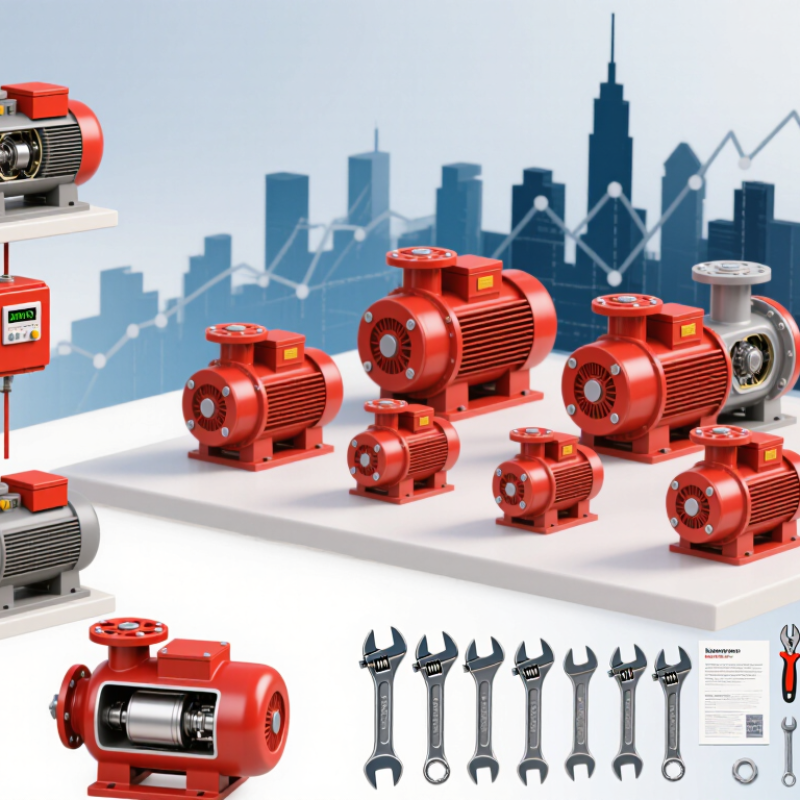
Define Fire Protection Needs and Project Requirements
Define the hazard before comparing fire pump suppliers. Record the building’s occupancy, protected area, storage height, and likely fire scenarios. Note the water source, available pressure, and expected flow demand. Include site constraints, such as a narrow pump-room doorway or limited electrical capacity. A pump selected from a generic capacity alone may not meet the system’s actual duty point. Start with the hazard.
NFPA’s U.S. Fire Loss in 2023 report estimated 1.39 million fires and $23.2 billion in direct property damage.
These national figures do not predict one project’s risk, but they show why assumptions deserve scrutiny. Ask suppliers to state the design flow and pressure they used, and to show how the proposed pump performs at that point. Numbers matter. Check that the calculation reflects the project’s water supply, elevation changes, and system losses.
Give each supplier the same written project brief. Request the proposed pump curve, driver details, applicable standards, inspection documents, and commissioning scope. Confirm how the package will connect to alarms, power, and site controls. One gap often appears late: the brief may omit future building changes or seasonal water-pressure variation. Revisit those assumptions with the fire protection engineer before ordering. A little uncertainty remains; record it rather than hiding it in a quotation.
Check Supplier Credentials, Standards, and Manufacturing Capacity
How to Choose the Best Fire Pump Supplier in 2026?
Check Supplier Credentials, Standards, and Manufacturing Capacity
A supplier’s credentials should be verifiable, not just impressive on a website. Request current certificates, test reports, and the exact product models they cover. Check whether documents come from recognized, independent bodies, and confirm their validity directly when possible. Paper is not proof.
Standards matter, but their fit depends on the project and market. Ask how the proposed pump package aligns with applicable fire protection requirements, such as NFPA 20 or relevant UL and FM approvals. Verify that the driver, controller, and accessories match the documented configuration. A certificate for one component may not cover the complete system. Look closely.
Manufacturing capacity affects quality and delivery. Ask to see the production and test areas, either in person or through a detailed remote audit. Look for controlled assembly steps, calibrated instruments, traceable components, and recorded performance tests. Ask how the factory handles peak orders and replacement parts. A busy production line can look reassuring, but capacity alone says little about consistency. Request recent delivery records and sample inspection reports. If a supplier hesitates to share basic evidence, pause and investigate further. I would not treat a polished presentation as a substitute for a careful review.
How to Choose the Best Fire Pump Supplier in 2026
Use this checklist to compare suppliers: verify four types of evidence in each area before making a decision. These counts represent checklist items, not supplier ratings or industry statistics. Confirm applicable fire-protection standards and approval requirements with the project specifications and authority having jurisdiction.
Compare Pump Performance, Configurations, and Certifications
How to Choose the Best Fire Pump Supplier in 2026?
Compare certified performance data, not just headline capacity. A pump’s rated flow and pressure should match the system demand shown in the hydraulic calculations. Review the full performance curve, including operation near shutoff and at peak flow. Ask for test results tied to the exact model and driver. Check suction conditions, elevation, and available power; small mismatches can reduce real-world performance. A polished curve is not enough.
Configuration matters. Horizontal split-case pumps can suit accessible pump rooms, while vertical designs may fit limited floor space or specific water sources. Compare the pump, driver, controller, and accessories as a complete package. Confirm maintenance clearances, spare-part availability, and whether technicians can service the unit without difficult disassembly. Space is often underestimated.
Verify recognized third-party listings and applicable project requirements for the complete assembly—not merely the pump casing. Request certificates, model numbers, test records, and clear documentation of any exclusions. Then compare installation support, commissioning procedures, and response times for service. A spreadsheet can look reassuring. Site conditions are messier. I would question any supplier that avoids specific answers, though paperwork alone cannot prove dependable support.
Assess Service Support, Delivery, and Total Ownership Costs
When comparing fire pump suppliers, look beyond the quoted delivery date. Ask whether the package arrives with certified performance curves, factory test records, installation guidance, and a clear commissioning schedule. Check where critical spares are stocked and how quickly a qualified technician can respond at night or during a holiday. Ask for proof. A low price means little if a failed controller waits days for diagnosis.
Compare total ownership costs, not just purchase prices. The Hydraulic Institute, Europump, and U.S. Department of Energy’s Pump Life Cycle Costs guide gives a general pump-system model: energy accounts for about 40% of lifecycle cost, maintenance 25%, and downtime 20%. These are not fire-pump-specific figures. A standby fire pump may run far less than a process pump, so apply the model cautiously. Still, testing fuel or electricity, inspections, replacement parts, and service contracts deserve line-item estimates. That matters. Request the expected cost of annual testing and routine maintenance, plus written service response times. A spreadsheet can miss the cost of a delayed technician; it can also overstate energy savings when operating hours are low. Compare assumptions, not just totals.
How to Choose the Best Fire Pump Supplier in 2026? - Assess Service Support, Delivery, and Total Ownership Costs
| Evaluation dimension | Weight | What to measure | Evidence to request and decision guide |
|---|---|---|---|
| Code and project compliance | 20% | Conformance of the proposed pump, driver, controller, and package to the project specification and applicable fire-protection requirements. | Request the pump curve, equipment schedules, certifications or listings required by the project, and a written compliance matrix. Confirm the applicable NFPA 20 edition and local authority requirements; listing requirements depend on the project and jurisdiction. |
| Application engineering | 12% | Fit between the selected pump performance and the system’s required flow, pressure, suction conditions, driver, and site constraints. | Ask for a project-specific selection, certified performance information where applicable, utility and connection requirements, and a documented review of operating conditions. Check that the proposed duty point is supported by the submitted curve. |
| Service support | 15% | Contracted response time, service coverage, technician qualifications, escalation process, and availability of replacement parts. | Request written service hours, emergency contact procedures, response-time commitments, service locations, technician training details, and parts lead times. Compare contractual commitments rather than relying on verbal assurances. |
| Delivery and schedule reliability | 12% | Quoted manufacturing lead time, shipping duration, milestone dates, and the supplier’s process for managing delays. | Obtain a dated schedule showing submittal, approval, production, shipment, and commissioning milestones. Compare the committed site-delivery date with the project need date and confirm how schedule changes are communicated. |
| Testing and commissioning | 10% | Scope and cost of factory testing, site start-up, acceptance testing, operator instruction, and documentation. | Request a written responsibility matrix and itemized quotation. Confirm the required tests, witnessing arrangements, test equipment, records, and coordination with the installing contractor and authority having jurisdiction. |
| Warranty and defect handling | 8% | Warranty duration, start date, covered components, exclusions, labor and travel coverage, and claim process. | Compare the complete written warranty terms, not just the headline duration. Clarify whether coverage starts at shipment, installation, or commissioning and identify costs that remain the owner’s responsibility. |
| Total cost of ownership | 18% | Compare costs over the same ownership period, operating assumptions, and scope—not purchase price alone. | Use: installed purchase cost + expected energy + scheduled maintenance + spare parts + service costs over the chosen period. State the analysis horizon, operating hours, energy rates, exclusions, and assumptions; use comparable quotations and maintenance schedules. |
| References and track record | 5% | Relevant experience with comparable applications, installations, and service requirements. | Request references for projects with similar flow, pressure, driver type, and site conditions. Ask about delivery performance, commissioning, parts support, and issue resolution. |
| Total evaluation weight | 100% | Score each supplier from 0 to 5 for every dimension, using documented evidence. Calculate the weighted score as: score ÷ 5 × weight, then add the results. | |
Use project-specific specifications, local regulations, and written supplier commitments when making the final selection. Lead times, service coverage, and costs vary by configuration, location, and market conditions.
Verify Project References and Select a Suitable Supplier
When evaluating a fire pump supplier, ask for references from projects with similar flow, pressure, power, and site conditions. A pump installed in a clean plant room may not suit a coastal site with limited space and unreliable power. Compare the actual duty points, not just the equipment descriptions.
Request commissioning records, test results, and maintenance guidance where available. Ask whether the reference customer will confirm delivery, installation support, and response times. Check details independently; a polished case study is useful, but it cannot answer every practical question. Small gaps matter. For example, who helped resolve a control-panel issue after startup? A supplier’s willingness to explain limitations can be more revealing than a perfect-looking reference list.
Then judge whether the supplier fits your project’s operating needs. Confirm technical documentation, spare-parts availability, training, and a clear route for service support. Check that proposed equipment meets the project specifications and applicable requirements, with qualified professionals reviewing the selection. Compare lead times and written commitments alongside price. The lowest quote may leave critical support unclear, while the most established supplier may not be the best fit. I would still leave room for uncertainty: one strong reference does not guarantee the same outcome on another site. A careful match between proven work and your actual conditions is the better test.