

top of page

How to Choose Vacuum Seal Pouches for Food Storage?

Choosing the right Vacuum Seal Pouches can protect flavor, reduce freezer waste, and make food storage more predictable. Yet appearance alone can mislead. A glossy pouch may look durable while having weak seams or poor oxygen resistance. I have seen carefully prepared food spoil because the pouch was too thin, oversized, or badly sealed. Small details matter.

This guide explains how to compare pouch thickness, material quality, size, texture, and sealing performance. It also considers practical storage conditions, including refrigerators, freezers, and approved sous vide applications. A pouch should match both the food and the sealing machine. Sharp bones, moist marinades, and uneven portions can create weak points. Choose bags with enough room for a reliable seal, but avoid excessive empty space. Keep the sealing area clean and dry.

Check manufacturer instructions carefully. Not every pouch suits boiling, reheating, or high-temperature cooking. Food safety still depends on proper chilling, storage times, and temperature control. Vacuum sealing does not make unsafe food safe. That distinction is easy to forget.

Look closely.

Reliable choices usually come from clear specifications, consistent manufacturing, and verified food-contact materials. Independent testing can strengthen confidence, although product claims still deserve careful review. I would not choose the cheapest option automatically. However, higher price does not guarantee better performance either. The best decision balances protection, usability, equipment compatibility, and real household needs. This approach helps turn Vacuum Seal Pouches from a simple packaging purchase into a dependable part of everyday food management.
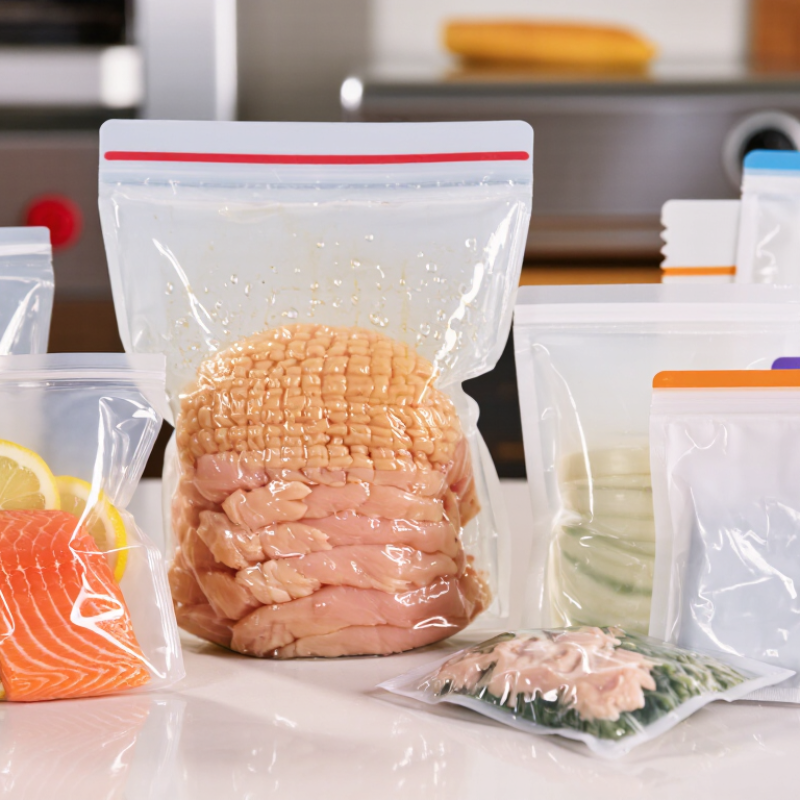
How to Choose Vacuum Seal Pouches for Food Storage?

Understanding Vacuum Seal Pouch Materials and Food-Safety Standards

How to Choose Vacuum Seal Pouches for Food Storage?

The right pouch begins with its material structure, not its appearance. Most reliable food pouches use layered plastic, often combining polyethylene with polyamide. Polyethylene provides heat-sealing performance. Polyamide improves strength and oxygen resistance. A thicker pouch usually handles bones, sharp edges, and repeated freezer movement better. However, thickness alone does not guarantee safety.

Choose pouches labeled for direct food contact and request current compliance documents from the supplier. These records should identify migration testing, temperature limits, manufacturing controls, and batch traceability. Standards vary by market, so check the requirements where the food will be sold or used. A pouch suitable for freezing may not be suitable for boiling or sous vide cooking. Do not assume “food-grade” covers every application. It is an easy mistake. Vacuum packaging also does not make perishable food shelf-stable. Keep chilled food cold and follow validated storage times.

Tips: Match the pouch to the task. Use freezer-rated material for frozen meat. Leave enough headspace for a clean seal, and keep the sealing area dry. Test one pouch before packing a full batch. Press a sealed pouch gently and inspect for wrinkles, channels, or slow air leakage. In practical use, I have found that rough bones can puncture even strong film, so covering sharp points matters. My own checking is not perfect, either; supplier documentation and routine seal tests remain more dependable than appearance alone.

Matching Pouch Size and Thickness to Different Food Types

Choosing vacuum seal pouches starts with the food, not the appliance.

Size and thickness affect sealing, storage space, and puncture resistance. A pouch should hold the food with 5–8 centimeters of clear material above it. This extra space creates a reliable seal and reduces messy trimming. Too large wastes material and may trap more air. Too small? It may split at the seal.

For berries, sliced fruit, and leafy vegetables, use smaller pouches with moderate thickness, around 70–90 microns. Freeze delicate foods first, or they may flatten under vacuum pressure. Soft bread needs a wider pouch and gentle vacuuming. Otherwise, it becomes a dense block.

For steaks, chicken portions, and fish with sharp bones, choose thicker pouches, commonly 90–120 microns. Wrap exposed bones before sealing. The detail matters. Moist foods need enough headspace to keep liquid away from the sealing area. Chill them thoroughly, and pause if liquid begins moving upward. A double seal adds useful security.

Dry pasta, rice, and nuts usually need less puncture protection, but their edges can still damage thin film. A medium pouch works well when the contents lie flat.

For soups and stews, freeze each portion in a container first, then transfer the solid block. This method is slower, yet far cleaner.

I would not treat thickness numbers as universal. Film construction, storage temperature, and handling all change performance. Test one pouch before preparing a large batch. A failed seal teaches more than a printed specification.

Choosing Between Precut Bags, Rolls, and Reusable Pouches

Choosing the right vacuum seal pouch depends on your food, storage time, and kitchen routine. I use precut bags for regular portions, such as two chicken breasts or a handful of sliced vegetables. Their fixed size makes sealing quick and reduces measuring mistakes. They also stack neatly in a freezer drawer. However, large or unusually shaped foods may not fit well.

Rolls offer more flexibility because you cut the pouch to match each item. This works well for long fish fillets, bulky vegetables, or family-sized portions. Leave enough empty space near the opening for a reliable seal. A pouch cut too short can strain the seal and trap food near the edge. I have made that mistake more than once.

Reusable pouches can reduce waste during frequent storage, especially for dry foods or refrigerated ingredients. Choose thick, food-safe material with a strong closure and inspect it for scratches. Wash every corner with warm water, then dry it completely before reuse. Moisture left inside can create unpleasant odors and weaken cleanliness. Reusable options are convenient, but they need more care than disposable pouches. For raw meat, I prefer a fresh pouch because cleaning demands are higher. My choice is not always perfect; convenience sometimes wins over waste reduction.

Checking Seal Strength, Storage Conditions, and Equipment Compatibility

How to Choose Vacuum Seal Pouches for Food Storage?

Seal strength deserves careful attention. A pouch may look sturdy but still fail at the seam. Choose material with suitable thickness for sharp bones, dry edges, or dense foods. After sealing, check for wrinkles, channels, and trapped particles. Press the pouch gently and watch for air returning. I once trusted a clean-looking seal without testing it. That assumption was wrong.

Storage conditions also change pouch performance. Freezer storage can make some films brittle, especially after repeated handling. For frozen meat, select pouches designed to resist punctures and low temperatures. Light-sensitive foods may need an opaque layer. Moist foods require enough headspace to prevent liquid from reaching the sealing area. Wipe the opening completely dry before sealing. Small details matter.

Equipment compatibility is equally important. Confirm that the pouch suits your sealer’s chamber, seal bar, and operating temperature. Some textured pouches work with external suction machines, while smooth pouches may require chamber equipment. The pouch width should fit the sealing bar without folding. Test one empty pouch first. Then test a low-value food portion. Check the seal after cooling, not immediately, because a warm seam can appear stronger than it is. Even experienced users should review these results when changing pouch thickness or storage conditions.

Comparing Pouch Features, Costs, and Environmental Considerations

How to Choose Vacuum Seal Pouches for Food Storage?

A reliable pouch should match the food, sealing method, and storage period. Thicker multi-layer pouches resist punctures from bones, shells, and frozen edges. A clear surface also helps identify freezer burn before opening. For moist foods, choose pouches with strong seals and enough headspace. A narrow seal can fail when liquid reaches the heating strip.

Cost comparisons need more than price per pouch. Cheaper bags may require double sealing or create more waste after leakage. The Food and Agriculture Organization reports that 13.2% of food is lost between harvest and retail. Better portion control can reduce household waste, even when each pouch costs slightly more. For example, sealing two chicken portions separately may prevent one unused portion from spoiling. I still question the savings when a large pouch stores a very small item.

Environmental performance is less simple. The United Nations Environment Programme reported that 1.05 billion tonnes of food were wasted in 2022, including household waste. Preventing food loss can therefore offset some packaging impacts. However, most vacuum pouches combine plastic layers, making recycling difficult in ordinary systems. Reusable containers may suit short-term refrigerator storage, while pouches often perform better for compact freezing. Check local recycling guidance, because collection rules differ widely. A perfect choice does not exist.

bottom of page