What Is a Digital Watch and How Does It Work?
A Digital Watch displays time as numerals or symbols instead of moving hands. Its screen may show hours, minutes, seconds, and sometimes the date. Inside, a small battery powers an electronic circuit. In many basic models, a quartz crystal vibrates at a steady frequency when electricity passes through it. The circuit counts those vibrations to keep time. Then the display updates. Simple, but not magic.
The screen is often an LCD, which uses little energy and can be easy to read in daylight. Some watches use LED displays, while advanced models may add alarms, timers, backlighting, or fitness sensors. These features vary, so “digital” does not describe just one design. A basic sports watch and a connected smartwatch may look similar, yet their internal systems can differ considerably. That distinction matters. Understanding the timekeeping circuit, battery, and display helps explain everyday issues, such as a dim screen or a watch that loses time. Still, quartz accuracy is not identical in every device. Temperature, battery condition, and component quality can affect performance. A watch is a small instrument, and small details count. This guide explains the main parts and how they work together, without assuming every Digital Watch works in exactly the same way.
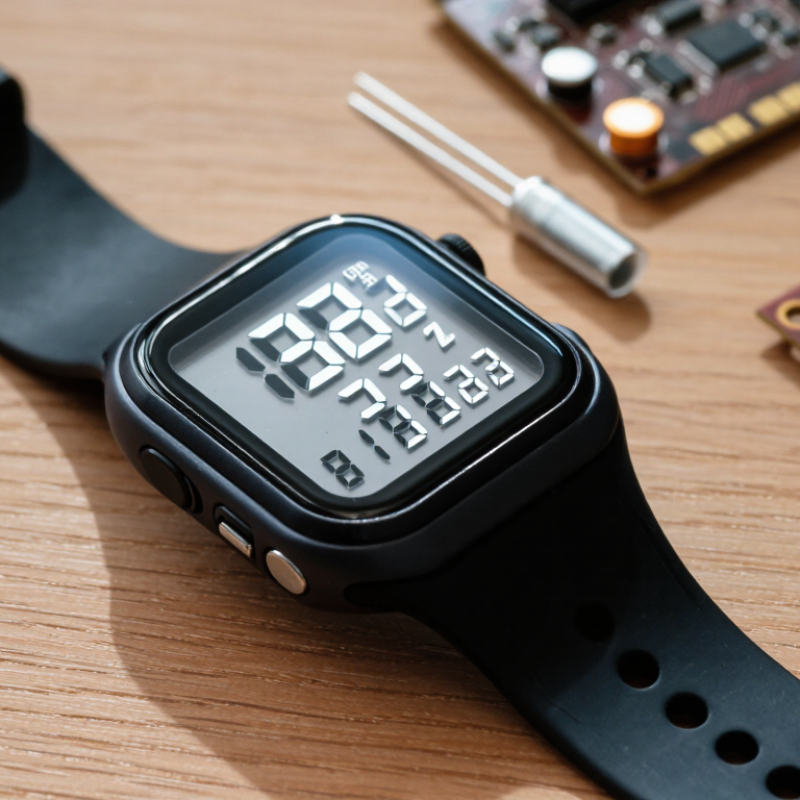
Definition and Core Components of a Digital Watch
A digital watch is an electronic timekeeping device that shows numbers on a display rather than moving hands. Its core parts are a power source, a timekeeping circuit, a display, and small controls such as buttons. The case protects these parts from knocks and dust, though protection varies by model. Simple on the wrist.
At the center, a quartz crystal provides a steady timing signal. NIST timekeeping materials describe quartz oscillators vibrating at 32,768 times per second; a divider circuit reduces this rate to one pulse per second. That is the heartbeat. A microchip counts those pulses, converts them into hours and minutes, then sends signals to the display. Liquid-crystal displays use little power because they do not produce their own light, but they can be hard to read in dim rooms without a backlight.
The battery supplies energy to the circuit and display, while buttons let the wearer set time or switch functions. IEC 60086-3:2021 addresses performance and testing for watch batteries, underscoring that battery behavior is a design consideration, not an afterthought. Some watches add alarms, calendars, or sensors, which require extra circuitry and can increase power use. This basic explanation leaves out real-world variation: temperature, aging, and display choices can all affect performance. The neat diagram is never the whole story.
How a Digital Watch Measures and Keeps Time
A digital watch keeps time by counting steady electrical vibrations. Inside, a small battery powers a quartz crystal. When current passes through it, the crystal vibrates at a precise frequency, often 32,768 times per second. A circuit divides those vibrations until it produces one pulse each second. That is the heartbeat. The watch’s counter advances the displayed seconds, then minutes and hours. On a basic model, the screen shows numbers using liquid crystals; other models use light-emitting displays.
Timekeeping is not perfectly exact. Temperature, crystal quality, battery condition, and ordinary aging can cause small errors. Some watches may gain or lose a few seconds over time. A digital display can look precise without being perfectly accurate. That distinction matters. If a watch has a seconds display, compare it with a reliable reference over several days rather than judging it from one glance.
Tips: Keep the watch within its stated temperature range, and replace a weak battery promptly. If it loses time repeatedly, check its settings and manual before assuming the mechanism is faulty. Small, steady steps. Even a simple watch benefits from occasional checking, and that is easy to forget.
How Time and Other Information Appear on the Display
A digital watch presents time as numerals rather than moving hands. A quartz timekeeping circuit sends regular signals to a small controller. The controller updates the display, often once each second. On many models, liquid crystal segments form the digits; a light behind them can help in dim rooms. The result is quick to read. Hours and minutes stand out clearly.
The same screen can show more than the time. Small labels or icons may indicate seconds, the date, an alarm, or a stopwatch mode. Pressing a button usually changes the information shown, while a tiny marker can identify the active mode. Some watches display the day beside the date, such as “TUE 14.” In practice, these extra details are useful, but crowded screens can take a moment to understand.
Readability depends on more than the numbers themselves. Contrast, viewing angle, and lighting all matter. A pale display may look sharp outdoors yet fade under certain indoor lights. Backlights help, though they can make small symbols harder to distinguish. I find that familiar layouts are easiest to scan at a glance. Still, icons are not always obvious, and the manual may be needed to decode them.
What Is a Digital Watch and How Does It Work? - How Time and Other Information Appear on the Display
| Part or Function | What It Does | How Information Appears | Useful Detail |
| Timekeeping circuit | Measures regular electrical oscillations and uses them to keep track of elapsed time. | Updates the seconds, minutes, and hours shown on the display. | Many quartz watches use a crystal that oscillates 32,768 times per second; a circuit divides this frequency to produce one-second timing signals. |
| Digital display | Shows numbers and symbols instead of using moving hour and minute hands. | Liquid-crystal displays (LCDs) commonly form numerals from segments that darken or become visible when electrically controlled. | Some digital watches use other display technologies, such as light-emitting displays. The display type depends on the watch design. |
| Time format | Presents the current hour and minute, and often the seconds. | A display may use a 12-hour format with an AM/PM indicator or a 24-hour format. | The selected format changes how the hour is represented; it does not change the underlying passage of time. |
| Date and day | Shows calendar information stored and updated by the watch circuit. | The display may show the month and day, the day of the week, or both, depending on the model. | Calendar features may need adjustment after a battery change or when the watch has been without power. |
| Buttons and settings | Let the wearer switch modes and change settings such as the time, date, or alarm. | Labels or small icons indicate the selected mode, while the display shows the value being adjusted. | Button combinations vary by design; the instructions supplied with a watch explain its controls. |
| Alarm | Stores a chosen time and signals when the watch reaches it. | An alarm icon or setting screen may indicate that the alarm is enabled. | The alert may use a sound, vibration, or both, depending on the watch. |
| Stopwatch and timer | Measures elapsed time or counts down from a set duration. | The display shows changing minutes, seconds, and, on some models, fractions of a second. | These functions use the watch’s timekeeping circuit but operate separately from the normal time display. |
| Power source | Supplies energy to the timekeeping circuit and display. | A low-battery indicator may appear on some watches when power is running low. | Many digital watches use a replaceable battery; some designs can recharge from light or another power source. |
| Backlight | Helps make the display easier to read in low light. | Pressing a button may illuminate the display or its background briefly. | Backlight operation and duration vary by design and can affect power use. |
How Power, Controls, and Watch Functions Work
A digital watch converts electrical energy into timekeeping and readable symbols. A small cell powers an electronic circuit, while a quartz crystal provides a steady reference.
Many watch crystals vibrate at 32,768 times per second. Divider circuits repeatedly halve that signal until they produce one pulse per second. The display controller counts those pulses and updates the seconds, minutes, and hours.
Tiny signal. Clear digits. Buttons act as inputs: each press changes a setting or switches modes. The circuit must interpret short presses and longer holds, which can feel less intuitive than the simple display suggests.
Other functions use the same basic system. An alarm compares the current time with a stored setting, then activates a buzzer. A backlight briefly powers an LED, so frequent use can drain the cell faster.
The exact effect depends on the watch’s circuit and battery, so a single battery-life figure would be misleading. The Global E-waste Monitor 2024, published by UNITAR and the International Telecommunication Union, estimates that 62 million tonnes of electronic waste were generated worldwide in 2022; 22.3% was documented as formally collected and recycled.
That figure covers all electronics, not watches alone. Still, it is a useful reminder to dispose of depleted cells through appropriate collection points rather than household rubbish. A neat circuit diagram leaves out real-life wear, weak batteries, and the occasional button press that changes the wrong setting.
Common Types of Digital Watches and Their Uses
Everyday digital watches suit routines where quick, clear readings matter. Their large numerals, alarms, and timers help with checking the time during a commute or setting a reminder before an appointment. Many use a replaceable battery and simple buttons. They are practical, though tiny buttons can be fiddly when your hands are cold.
Sports watches add features such as a stopwatch, lap timer, and countdown timer. Runners can record intervals, while swimmers may use a water-resistant model to time laps. Resistance ratings vary, so check the maker’s guidance before wearing a watch in water. A stopwatch is handy. It is not a training plan.
Outdoor watches often include a compass, altimeter, or longer-lasting battery. These tools can help hikers track direction or estimate elevation, but readings may need calibration and should not replace a map. Smartwatches add notifications, health tracking, and phone connections; they suit people who want information on their wrist. Their screens need charging more often, and constant alerts can become distracting. In practice, categories overlap, so choosing by daily use is usually more helpful than choosing by label.