

How to Find Reliable Fiber Disc Suppliers in 2026?
Choosing a Fiber Disc supplier in 2026 is not just a price comparison. A disc may look flawless in a catalog, yet load up quickly on stainless steel or wear unevenly on a weld. The difference often comes down to abrasive grain, backing quality, resin consistency, and process control. Small details matter.
A useful principle, informed by grinding expert Dr. Jeffrey Badger’s work, is: “Judge abrasive performance by repeatable results at the workpiece, not by claims on a datasheet.” This is an editorial paraphrase, not a verbatim quotation. It points to a practical supplier test: request samples, run them on your actual material, and record cut rate, finish, disc life, and operator feedback. One trial is rarely enough.
Reliable sourcing also depends on questions beyond performance. Can the supplier provide clear specifications, consistent batch records, and realistic lead times? Are sample results supported by traceable product details? Ask how substitutions are handled, too. A cheaper disc can become costly when a shipment varies or arrives late. I would not treat a polished brochure as proof; it is only a starting point. The sections ahead explain how to assess manufacturing capability, verify product claims, compare suppliers, and reduce purchasing risk. Expect evidence, not promises.
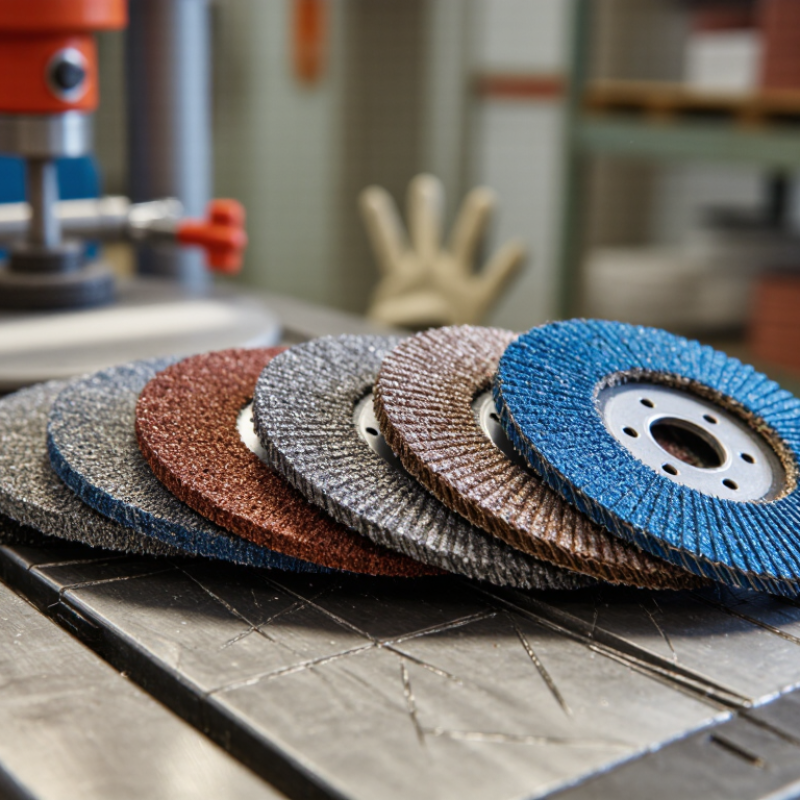
Define Your Fiber Disc Requirements and Application
Before contacting fiber disc suppliers, record the job in measurable terms. Name the workpiece, such as stainless steel, mild steel, or a painted weld, and describe the task: stock removal, blending, or finishing. Include disc diameter, grit range, backing-pad type, and tool speed. A disc that fits but runs beyond its rated speed is not a suitable choice. Check the tool and disc specifications together.
Application details change the recommendation. Stainless steel may need a different abrasive and heat-control approach than carbon steel. For weld blending, test whether the required finish can be reached without gouging the surrounding surface. Keep dust extraction, pressure, and operator position consistent during trials. Small details matter. Grand View Research’s 2024 abrasives-market analysis estimated the global market at USD 44.2 billion in 2023, showing how broad the product category is; that figure does not identify the right disc for your process. Ask suppliers for technical data sheets, speed limits, and sample discs for a controlled trial. I have seen specifications that looked complete yet omitted the workpiece grade. That gap is easy to miss. Compare removal rate, finish, disc life, and operator feedback before setting a purchase specification.
Identify Potential Suppliers Through Reliable Industry Channels
Finding reliable fiber disc suppliers in 2026 begins with choosing credible industry channels, not chasing the longest search result. Trade associations, abrasive-focused exhibitions, and established industrial directories can reveal companies serving specific applications. Ask maintenance teams, machine shops, and regional distributors which suppliers deliver consistent disc dimensions and grit performance. Those referrals are useful, but they are not guarantees. Directory listings may be stale. Treat every channel as a starting point, then confirm the supplier’s actual manufacturing or converting role. Check whether its product range matches your material, operating speed, and finishing requirements.
Before requesting a quote, send a concise specification. Include disc diameter, grit, backing, attachment type, and intended workpiece. Request sample discs and batch identification details, then test them on the same grinder, material, and pressure used in production. Compare cutting rate, finish, wear, and dust behavior, not price alone. Where quality certificates are offered, check their scope and validity rather than relying on a logo or sales claim. Good evidence matters. A supplier may respond quickly yet provide vague process details. If answers stay vague, keep looking, even when the quote is attractive. Your first shortlist may be imperfect.
Evaluate Supplier Credentials, Product Quality, and Production Capacity
How to Find Reliable Fiber Disc Suppliers in 2026?
A dependable supplier should make its qualifications easy to verify. Check business records, quality-management documents, and material traceability for abrasive grains, backing, and bonding agents. Ask who handles technical questions and how quickly they respond. Request references from buyers with similar disc sizes and applications. A certificate is useful, but it does not prove consistent production by itself. Ask for dated records.
Inspect samples under the conditions your team actually uses. Look for even grain coverage, secure bonding, clean edges, and backing that resists tearing. Request test data for dimensions, adhesion, and performance consistency across batches. A polished sample can flatter. Compare several discs, not just one, and ask how defects are recorded and corrected. Small details matter.
Tips: Ask for monthly output, current lead times, and typical order size. Check whether machinery, staffing, and inspection capacity can support your forecast during busy periods. Ask what happens when demand rises or a raw material shipment arrives late. A site visit or live production video can help, though neither replaces documented checks. Be cautious of promises that sound exact; capacity changes, and suppliers may not disclose every constraint at first.
How to Find Reliable Fiber Disc Suppliers in 2026? - Evaluate Supplier Credentials, Product Quality, and Production Capacity
| Evaluation Area | What to Check | Reliable Evidence or Benchmark | How to Verify |
|---|---|---|---|
| Supplier credentials | Business identity and operating history | Registered legal entity, verifiable business address, and a consistent record of manufacturing or supplying coated abrasives. | Check official registration records where available; confirm that the quoted entity, invoice issuer, and payment beneficiary are consistent. |
| Supplier credentials | Quality-management certification | A current ISO 9001 certificate can support confidence in documented quality-management processes. Certification alone does not guarantee product performance. | Verify the certificate number, validity dates, issuing certification body, and whether the certified scope covers the relevant manufacturing or trading activities. |
| Supplier credentials | Product safety documentation | Request applicable safety and product documentation for the specific fiber disc. EN 13743 covers safety requirements for coated abrasives on backing, including relevant product types. | Check the document’s product scope, edition, issuer, and connection to the supplied disc. Confirm the applicable requirements for the destination market. |
| Product quality | Product specification | The quotation and technical data sheet should state disc diameter, abrasive grain, grit designation, backing, bond or coating details, and intended application. | Compare the purchase specification with the sample, product label, packaging, and batch documentation. Do not assume FEPA and ANSI grit designations are interchangeable. |
| Product quality | Dimensions and fit | Check the ordered diameter and center-hole configuration against the machine and backing pad. Common disc diameters include 115 mm, 125 mm, and 180 mm; availability varies by product and market. | Measure samples with suitable tools and confirm the hole pattern and permitted fit with the equipment manufacturer’s instructions. |
| Product quality | Operating-speed marking | The maximum operating speed should be clearly marked on the product, label, or packaging as applicable. The disc’s marked limit must not be exceeded. | Compare the marked maximum speed with the grinder’s rated no-load speed and follow the tool and abrasive manufacturers’ safety instructions. |
| Product quality | Batch consistency and traceability | Each production lot should be identifiable through a batch or lot code linked to production and inspection records. | Request sample inspection records and confirm that the lot code on delivered packaging can be traced to the supplier’s records. |
| Product quality | Performance validation | Cutting or grinding results depend on the disc, workpiece, tool, pressure, and operating conditions; there is no single performance value that applies to every use. | Run a controlled trial using the intended material and operating conditions. Compare material removal, service life, finish, and disc condition against an agreed reference. |
| Production capacity | Available production output | There is no universal monthly-output threshold for a reliable supplier. Capacity should be sufficient for the buyer’s forecast and confirmed order schedule. | Request documented output for the relevant disc types and sizes, current workload, available shifts, and any production constraints. Compare these figures with the order plan. |
| Production capacity | Lead time and delivery performance | Lead time should distinguish sample approval, production, and shipping. Supplier statements should identify assumptions such as order quantity and packaging requirements. | Review recent, anonymized on-time delivery records where available, then confirm the promised schedule and shipping terms in the purchase order. |
| Production capacity | Raw-material and process continuity | Ask how the supplier manages supply of abrasive grain, backing material, and bonding materials, as well as maintenance or equipment interruptions. | Review documented contingency procedures and ask how material substitutions or process changes are approved and communicated. |
| Commercial reliability | Sampling, complaints, and corrective action | A dependable supplier should define sample approval, complaint handling, investigation, and corrective-action procedures. | Agree on acceptance criteria before ordering and request a written process for reporting defects, retaining samples, and responding to quality issues. |
Use the buyer’s application, destination-market requirements, and written purchase specifications to make the final assessment. Verify current standards and certification status before purchase.
Compare Samples, Pricing, Lead Times, and Commercial Terms
A reliable fiber disc supplier should be judged by evidence, not a polished quotation. Grand View Research estimated the global abrasives market at USD 47.5 billion in 2022, with projected growth through 2030. That growth makes careful supplier comparison more important, not less. Request samples in the exact grit, diameter, and backing you plan to buy. Test them on the same grinder and workpiece. Record cut rate, heat discoloration, edge wear, and disc life. Keep the lot numbers. One good sample proves little; operator pressure can skew results.
Compare pricing per usable disc, including freight, packaging, minimum order quantities, and any tooling charges. Ask suppliers to separate sample, production, and shipping lead times. UNCTAD’s Review of Maritime Transport 2024 reports that shipping carries over 80% of world trade by volume, so international delivery estimates deserve scrutiny. Get quoted dates in writing, and ask how delays are handled. Check commercial terms for payment milestones, inspection windows, replacement procedures, and tolerances. A low unit price may hide costly conditions. I would still leave room for judgment: a spreadsheet cannot capture every production surprise.
Verify Supplier Reliability Before Placing a Full Order
Before placing a full order, request a small, production-representative sample lot. Check that the grit, disc diameter, backing, and hole pattern match your requirements. Labels should agree with the product and paperwork. A tidy specification sheet helps, but it cannot prove consistent performance.
Test the discs on the same tool, material, and operating conditions used in your shop. Record cut rate, edge finish, heat, wear, and how securely each disc stays attached. Compare several discs, not just one. One sample can flatter a supplier. Start small. Keep notes. If results vary, ask whether the samples came from regular production or a special batch.
Ask for batch identification, inspection records, stated tolerances, and a clear process for handling defects. Check whether the supplier answers specific questions with measured information, rather than broad promises. Confirm lead times and packaging details in writing, then place a limited trial order before committing to volume. This takes extra time, and the test may not capture every production variation. Still, a documented trial gives you a more useful basis for judging reliability than price or polished sales material alone.