

How to Find China Top Shower Arm Manufacturers?
Finding reliable Shower Arm manufacturers in China requires more than comparing online prices. Product quality, certification, factory capability, and export experience can vary sharply between suppliers. The Global Bathroom Fittings Market reports from Grand View Research and Fortune Business Insights identify Asia-Pacific as a major production and consumption region. However, these reports usually group shower arms with broader plumbing fixtures. That limitation matters.
A factory may advertise polished brass products while outsourcing casting, plating, or cartridge components. Ask for the exact production location. Request recent factory photographs, process records, and batch inspection reports. Real evidence is stronger than a decorative showroom.
Technical compliance deserves equal attention. ASME A112.18.1/CSA B125.1 covers plumbing supply fittings in North American markets. WaterSense specifications from the U.S. Environmental Protection Agency focus on showerhead flow performance, although a Shower Arm itself is not the main flow-control device. Confirm thread dimensions, pressure testing, material composition, surface treatment, and installation compatibility separately.
Trade data can provide another useful check. UN Comtrade records plumbing fittings under broader HS classifications, so shipment numbers may not isolate shower arms precisely. Treat them as signals, not proof. This is where many searches become unreliable.
Look for measurable experience. Does the manufacturer provide salt-spray test results? Can it maintain G1/2 or NPT thread accuracy across repeated batches? Are brass grades documented? A supplier that answers slowly may still produce well, but unclear answers create purchasing risk.
The best shortlist combines audited facilities, transparent documentation, stable quality control, and responsive communication. Price still matters. It should not lead the decision. A cheaper arm can become expensive after leakage, coating failure, returns, and installation complaints.
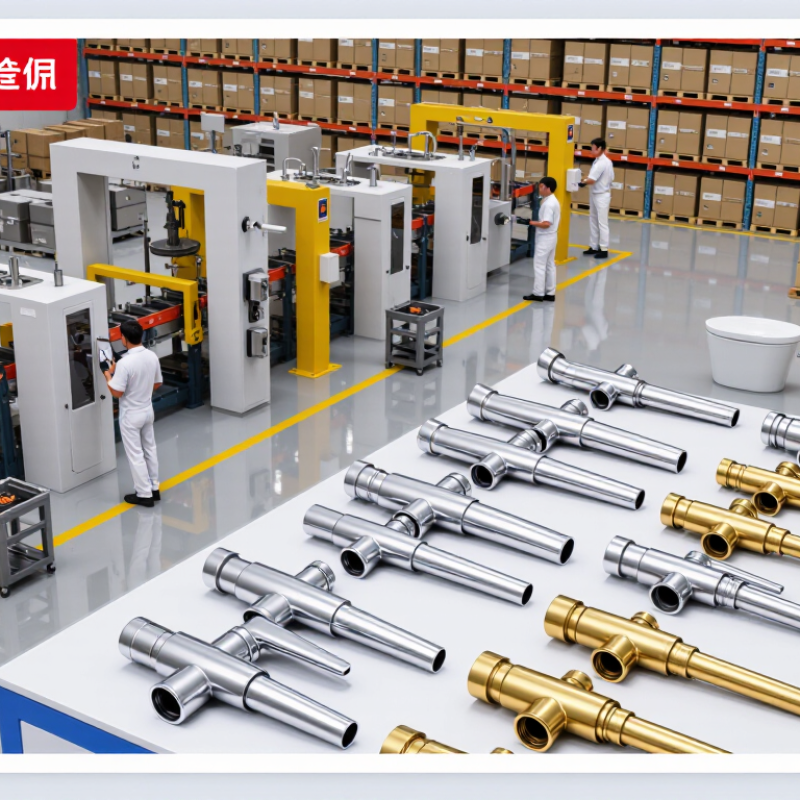
Define Your Shower Arm Specifications and Quality Requirements
How to Find China Top Shower Arm Manufacturers?
Define Your Shower Arm Specifications and Quality Requirements
Before contacting a Chinese shower arm manufacturer, define the product in measurable terms. Specify the connection thread, arm length, outlet angle, tube diameter, and installation method. Most residential models use 1/2-inch connections, but tolerance still matters. Confirm the required pressure range and flow compatibility with the matching showerhead. The U.S. EPA WaterSense program reports that showers represent nearly 17% of indoor household water use. Therefore, leakage control and stable water delivery deserve serious attention.
Material selection should match the bathroom environment. Stainless steel offers strong corrosion resistance, while brass provides useful weight and machining stability. Request material certificates, dimensional inspection records, and pressure-testing procedures. Ask whether the finish has passed corrosion testing, such as ASTM B117 salt spray evaluation. Applicable plumbing requirements may also include ASME A112.18.1/CSA B125.1. A polished sample can still hide weak threads. Inspect the internal passage, sealing surface, weld points, and wall flange.
Tips: Send a marked drawing, not only a product photo. Define acceptable scratches, color variation, thread tolerance, packaging protection, and inspection limits. Use an independent pre-shipment inspection when order value justifies it. Do not trust “premium quality” without evidence. I have seen attractive samples fail during repeated installation tests. That detail is easy to overlook. Ask for batch records and test videos, but verify them against physical samples.
How to Find China Top Shower Arm Manufacturers? - Define Your Shower Arm Specifications and Quality Requirements
| Specification Area | What to Define | Example Requirement | What to Verify with the Manufacturer |
|---|---|---|---|
| Product type and shape | Arm configuration, bend, wall connection, and showerhead connection | Straight, L-shaped, or S-shaped arm; ceiling-mounted or wall-mounted; threaded outlet | Confirm the drawing shows the bend direction, connection locations, and installation orientation. |
| Dimensions | Overall length, exposed length, tube diameter, wall thickness, and projection from the wall | Specify dimensions in millimetres or inches on a controlled engineering drawing; do not rely on a general product description. | Request a dimensioned drawing and agree on tolerances for critical fit dimensions before sampling. |
| Thread type and size | Thread standard, nominal size, pitch, and gender at both ends | State the required connection standard explicitly, such as G 1/2 (BSPP) or 1/2-14 NPT, where appropriate for the target market. | Check thread gauges and verify compatibility with the intended showerhead and wall fitting. G 1/2 and 1/2 NPT are different thread systems. |
| Base material | Tube and fitting material, alloy designation, and material traceability | Common options include stainless steel 304 or 316 and copper-alloy components; select materials according to the application and corrosion exposure. | Request material declarations or test reports and confirm that the specified alloy applies to the actual production parts. |
| Wall thickness and construction | Tube wall thickness, formed or welded construction, and joint design | Set a minimum wall thickness on the drawing based on structural and installation needs; there is no single thickness suitable for every design. | Define how thickness is measured and inspect samples for dents, cracks, incomplete joints, and excessive weld irregularities. |
| Surface finish and coating | Finish type, colour, appearance standard, and coating system if applicable | Examples include polished chrome, brushed stainless appearance, or a specified PVD finish. Identify the reference sample and acceptable appearance limits. | Agree on inspection lighting, viewing distance, and limits for scratches, pits, stains, colour variation, and coating defects. |
| Corrosion and coating tests | Applicable test method, exposure duration, acceptance criteria, and sampling plan | ISO 9227 specifies salt-spray test methods; the buyer and supplier should agree on the applicable method and acceptance criteria. Test duration alone does not establish product performance. | Ask for test reports identifying the test method, specimen, exposure conditions, results, and issuing laboratory. |
| Leak and pressure checks | Test method, pressure, duration, and pass/fail criteria for the assembled part | Set requirements according to the applicable product standard and the intended plumbing system; do not assume an unverified pressure value is universal. | Request documented test procedures and production inspection records for leakage at joints and threaded connections. |
| Regulatory requirements | Destination-market plumbing, drinking-water contact, and product requirements | For the United States, confirm which plumbing requirements apply; NSF/ANSI/CAN 372 addresses lead content, while applicable product standards may include ASME A112.18.1/CSA B125.1. | Verify the exact product, materials, and scope covered by any certificate or test report. Requirements vary by market and product configuration. |
| Packaging and protection | Individual protection, included installation parts, carton strength, and shipping labels | Specify thread protectors, surface protection, accessory list, carton markings, and packaging requirements for the shipping method. | Review a final packing sample and confirm that the finish and threads are protected against transit damage. |
| Quality documentation | Inspection plan, measurement records, material records, and nonconformity handling | Agree on incoming, in-process, and final inspection checkpoints, along with the defect classification and acceptance criteria. | Request a sample inspection report and confirm how production lots are identified and how corrective actions are documented. |
| Pre-production approval | Golden sample, approved drawing revision, finish reference, and change control | Approve a production-representative sample before mass production and record the drawing revision and finish reference. | Require written approval for changes to material, dimensions, thread, coating, or production process. |