What Is a Portable Milk Frother and How Does It Work?
A Portable Milk Frother is a small, handheld tool that whips air into milk to create a light, foamy texture. Its compact size makes it useful at home, at work, or while travelling. Most models use a battery-powered motor to spin a narrow whisk. Dip the whisk into milk, press the button, and the rotating loop draws air into the liquid. In seconds, the surface can turn silky and frothy.
The result depends on more than the device. Milk temperature, fat content, and the depth of the whisk all affect the foam. A cup of warm milk may produce soft bubbles for a latte, while cold milk can add lift to iced coffee. Keep the whisk just below the surface at first; lowering it too soon may leave little foam. Small adjustments matter.
Coffee educator James Hoffmann is a relevant voice on coffee preparation, but no verified, frother-specific quotation from him was provided. Rather than inventing a quote, this guide focuses on practical, testable details: how the motor and whisk work, what affects foam, and how to use the tool safely. A handheld frother is convenient, not magical. It will not heat milk on its own, and it cannot fully replace a steam wand’s finer control. Knowing those limits helps set realistic expectations—and makes the first cup less of a guessing game.
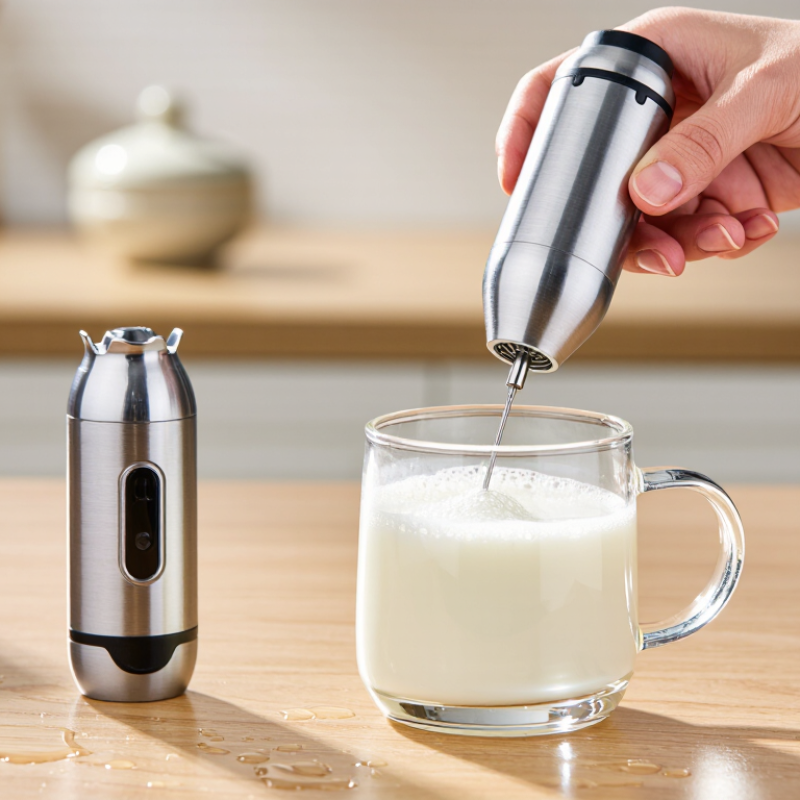
What a Portable Milk Frother Is
A portable milk frother is a compact, handheld tool that whips air into milk to create a lighter texture. Most models use a narrow rotating whisk powered by replaceable batteries or a rechargeable cell. It fits in a drawer or travel mug pouch, unlike countertop steam equipment. It does not necessarily heat milk.
That distinction matters.
The National Coffee Association’s 2024 National Coffee Data Trends report found that 67% of U.S. adults drank coffee the previous day, making a quick home frothing tool useful for many coffee drinkers.
With the whisk just below the surface, air is pulled into milk, forming bubbles and increasing volume. Lowering it slightly after a few seconds can make finer foam, though results depend on milk type, temperature, and technique. Small splashes happen.
For a latte at home, it offers quick texture without a bulky machine, but it cannot replace every café function. Many handheld units cannot create heated microfoam like a steam wand. Some multifunction models add heating; check their specifications.
Foam varies. And the first try may look lopsided.
The Main Parts of a Portable Milk Frother
A portable milk frother usually has a slim handle, a narrow metal shaft, and a small wire whisk at its tip. The handle contains a compact motor that spins the shaft. Inside the whisk head, several loops of wire move through the milk and draw in air. That creates foam; the result depends on milk type, temperature, and how long the whisk runs. The parts are small, but their fit matters.
Many models use replaceable batteries or a built-in rechargeable cell. A button on the handle starts and stops the motor, while the casing helps keep the electrical parts away from splashes. It is water-resistant only to a limited degree, so the handle should not be submerged. The shaft and whisk head are usually the parts that need rinsing. A narrow head can reach the bottom of a mug, though it may take longer to aerate a larger cup. Small parts matter. Some designs include a stand or storage cover, useful for keeping the whisk clean between uses. The layout seems simple, but button placement and balance can feel awkward in the hand. Checking how the shaft attaches also helps, since a loose connection may wobble during use.
How the Frothing Mechanism Works
A portable milk frother uses a small motor to spin a wire whisk at high speed. The whisk is usually a narrow loop of metal attached to a handheld shaft. As it turns, it draws air into the milk and breaks that air into small bubbles. The swirling milk helps distribute those bubbles through the liquid. That is the frothing mechanism: air, rapid movement, and milk working together. No magic involved.
Milk proteins help stabilize the bubbles, while fat can make the foam feel richer but sometimes less firm. Warm milk often froths well, but overheating can weaken its structure; aim for warm, not steaming-hot milk. Start with the whisk just beneath the surface to introduce air, then lower it slightly to mix the foam more evenly. Use a deep cup, since the milk can rise quickly. Keep the whisk submerged enough to limit splashing. Still, results vary with the milk, temperature, and angle of the whisk. A slightly uneven layer is normal.
What Is a Portable Milk Frother and How Does It Work?
Milk Frothing Mechanism: Practical Temperature Checkpoints
A portable frother’s spinning whisk pulls air into the milk and breaks it into small bubbles. Milk proteins help stabilize the bubbles. Starting with cold milk can leave more time to froth before heating; a common finishing target is around 55–65°C. Avoid overheating, as very hot milk can lose sweetness and foam quality. Temperatures are practical guides and may vary with milk type and preference.
How to Use a Portable Milk Frother Step by Step
A portable milk frother is a small, battery-powered whisk that spins a wire coil to add air to milk. It makes foam quickly, but the result depends on milk type, temperature, and how you move the whisk. The National Coffee Association’s 2024 National Coffee Data Trends report found that 67% of U.S. adults had coffee the previous day. For many coffee drinkers, a frother is a compact way to prepare a café-style topping at home.
Pour cold milk into a narrow cup, filling it no more than one-third; foam expands. Warm the milk first if you prefer a hot drink, but avoid boiling it. Place the whisk head fully under the surface before switching the frother on. Then switch on. Keep the whisk near the bottom for a few seconds, then slowly raise it toward the surface to draw in air. Move gently, rather than splashing.
Stop when the foam looks smooth and has roughly doubled in volume, usually after 15 to 30 seconds. Turn the device off before lifting it from the milk. Tap the cup lightly on the counter to settle large bubbles, then spoon the foam onto your drink. Results vary: plant-based milks and different fat levels can foam differently. That can be frustrating. Rinse the whisk promptly, keeping the motor handle dry, and follow the device’s cleaning instructions.
Factors That Affect Foam Quality
A portable milk frother spins a small whisk to pull air into milk, creating bubbles that proteins help stabilize. Foam quality depends on milk composition, temperature, and how the whisk moves. USDA FoodData Central reports that whole milk contains about 3.2 grams of protein and 3.3 grams of fat per 100 grams. Protein supports the thin films around air bubbles; fat contributes a creamy feel but can make foam less resilient. The balance matters.
Milk that is very cold gives you more time to aerate it before warming, while overheated milk can taste cooked and produce coarser bubbles. Start with cold milk in a narrow cup, keeping the whisk just below the surface to introduce air, then lower it to circulate the foam. Keep the whisk submerged. A shallow angle or a whisk pressed against the cup wall can leave large bubbles and uneven texture. Plant-based drinks vary widely in protein and fat, so the same technique may yield different results.
Even with careful technique, a compact frother may make loose foam rather than café-style microfoam. That limitation is easy to miss.