What Is Lumebox Red Light Therapy and How Does It Work?
Lumebox Red Light Therapy refers to using a Lumebox device to deliver red and, depending on the model, near-infrared light to the body. These wavelengths are often described as photobiomodulation. The idea is that light absorbed by cells may influence biological signaling and energy use. It is not a heat lamp, and the goal is not simply to warm the skin. That distinction matters.
A session may involve placing the device near a chosen area for a set time, following the manufacturer’s instructions. Yet the exact wavelength, power, distance, and exposure time can vary by device and treatment goal. Those details affect how results should be interpreted. Research into red-light therapy is growing, but evidence differs across conditions, and results from one device or study may not apply to another. The explanation is less tidy than some marketing makes it sound.
This article looks at how Lumebox Red Light Therapy is designed to work, what users may reasonably expect, and where uncertainty remains. It also considers practical points such as consistent use, eye safety, and when to ask a healthcare professional for guidance. Red light therapy should not be treated as a guaranteed cure or a replacement for medical care. Small details count. Checking the device’s specifications and keeping realistic expectations are sensible steps before starting.
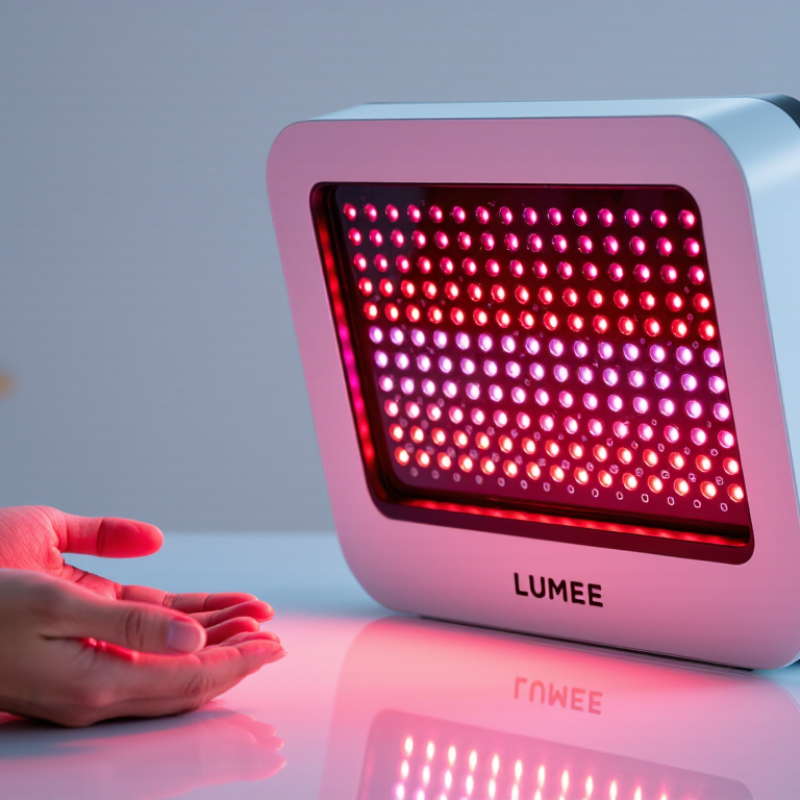
What Lumebox Is: A Device Combining 660 nm Red and 850 nm Near-Infrared Light
A red-light therapy device combines 660 nm visible red light with 850 nm near-infrared light. The red glow is easy to see; near-infrared is invisible. These wavelengths fall within the 600–1,100 nm range discussed in a 2016 IEEE review of photobiomodulation. The device delivers light to the skin, but wavelength alone does not determine exposure. Irradiance, treatment distance, and session length also matter.
Researchers propose that light-sensitive molecules in cells absorb some of this energy and influence cellular signaling. The exact mechanisms remain under study. The 2016 review by de Freitas and Hamblin describes these proposed pathways, not a guarantee of benefit from any particular device. Small details count. Two devices with the same wavelengths may deliver different doses, so evidence from one setup may not apply to another. That distinction is easy to overlook.
Tips: Follow the device’s distance and timing instructions, and protect your eyes as directed. Keep a simple session log. If results seem unclear, that is useful information too; don’t assume more exposure is better.
How Photobiomodulation Uses Light in the 600–1,000 nm Wavelength Range
Photobiomodulation (PBM) uses red and near-infrared light, commonly within the 600–1,000 nm range. Red light sits toward the shorter end; near-infrared light reaches deeper into tissue, though penetration varies with wavelength, skin, and other factors. The light is not ultraviolet. Instead, researchers study how certain cell components may respond to it, including mitochondria and light-sensitive molecules. These interactions may influence cellular signaling and energy use. The science is promising, but mechanisms and outcomes are still being studied.
Tips: Follow the device’s distance and timing guidance. Keep the light directed at the intended area, and use eye protection if instructions recommend it. More exposure is not automatically better.
A session may feel like sitting near a warm lamp, but PBM is not simply a heat treatment. Device power, treatment area, and consistency can all affect the amount of light reaching the skin. That makes results hard to compare between devices. Some people report changes in comfort or skin appearance, but responses differ, and light therapy should not replace medical care. The biology is still being mapped; that uncertainty matters when weighing bold claims.
How Irradiance (mW/cm²), Exposure Time, and Dose (J/cm²) Work Together
Red light therapy uses red or near-infrared light directed toward the body. Irradiance describes how much optical power reaches each square centimetre, measured in milliwatts per square centimetre (mW/cm²). Exposure time is the number of seconds the light is applied. Together, these determine dose, measured in joules per square centimetre (J/cm²): irradiance multiplied by seconds, then divided by 1,000. For example, 20 mW/cm² for 300 seconds delivers a calculated dose of 6 J/cm². That matters.
The calculation assumes irradiance stays steady at the treatment surface. In practice, distance, angle, movement, and device output can change the light reaching skin. A reading taken close to a panel may not describe exposure farther away. Check measurement conditions and follow the device’s instructions rather than treating one dose as universally suitable. More is not automatically better. Keep sessions consistent, note the distance and duration, and stop if the skin feels uncomfortably warm or irritated. These measurements help describe exposure; they do not, by themselves, prove a treatment will produce a particular health result.
What Is Red Light Therapy and How Does It Work?
How irradiance, exposure time, and dose work together
Dose (J/cm²) = irradiance (mW/cm²) × exposure time (seconds) ÷ 1,000. For this example, the chart shows the calculated time to reach a fixed dose of 10 J/cm² at different irradiance levels. This is a mathematical illustration, not treatment guidance; equal doses do not necessarily produce equal biological effects.
What Research Says About Red and Near-Infrared Light for Tissue Effects
What Is Red Light Therapy and How Does It Work?
Red and near-infrared light therapy exposes tissue to specific wavelengths, often around 630–660 nanometers and 800–850 nanometers. Red light reaches more superficial layers, while near-infrared light can travel somewhat deeper. Researchers are studying how cells absorb this energy, including possible effects on mitochondrial activity and signaling linked to inflammation and repair. These pathways are still being investigated. The mechanism is not fully settled.
Research reports possible changes in skin appearance, discomfort, and recovery in some settings, but results vary. Wavelength, dose, treatment schedule, and the condition being studied all matter. A lamp’s brightness alone does not show whether its output matches a tested protocol. That matters. Studies are often small, and findings for one tissue or device may not apply to another. I would be cautious about treating early evidence as proof of broad healing benefits.
Tips: Follow the device instructions and avoid staring into bright LEDs. Keep sessions consistent, note skin comfort and other changes, and stop if irritation develops. If you have a medical condition or use light-sensitive medication, ask a qualified clinician before trying it.
How to Use Lumebox Safely: Follow Device Guidance and Protect Your Eyes
Red-light therapy uses visible red light, sometimes alongside near-infrared light, to expose the skin to a chosen dose. Safe use depends on the device’s output, distance, session length, and eye sensitivity—not color alone. IEC 62471:2006, the international photobiological safety standard for lamps, defines four risk groups, from Exempt to Risk Group 3. This framework helps assess optical hazards, but it does not prove that every consumer device has been independently tested.
Follow the device’s stated distance and session time; do not add extra minutes because a session feels mild. Never stare into LEDs. Wear the supplied eye protection when the instructions require it, especially during facial use. Closed eyelids are not a substitute for specified protection. If eye guidance is missing or unclear, pause and ask the manufacturer or a qualified clinician before treating near your face. Check with a clinician if you have an eye condition or take medication that increases light sensitivity. A label alone is not a safety test.
Tips: Set a timer. Keep the unit steady at the recommended distance. Stop if you notice eye discomfort, unusual glare, or skin irritation. Note your session time and any reaction; small details are easy to forget.