Essential Tips for Mastering the Sand Molding Process?
Mastering the sand molding process is key for many industries. This method is essential in creating various metal castings. A well-executed sand mold can lead to high-quality parts and components.
Understanding the fundamentals of the sand molding process is crucial. The choice of sand, binder, and additives can significantly affect the final product. Yet, many fail to account for these details. Mistakes often happen during sand preparation, leading to defects in the casting.
Attention to these elements can make a difference. Consistency in mixing is vital for achieving the desired mold strength. However, achieving this can be challenging. It's easy to overlook small adjustments that could enhance outcomes. Embracing a mindset of continuous learning and improvement will help in mastering the sand molding process.
Understanding the Basics of Sand Molding Techniques
Sand molding is a fundamental technique in metal casting. This process involves creating molds from sand and is widely used due to its cost-effectiveness and versatility. Understanding the basics of this technique is essential for anyone looking to excel in casting.
The quality of the mold directly affects the final product. Research shows that over 70% of casting defects arise from poor mold quality. Key factors include moisture content and grain size. Properly controlling these parameters can significantly enhance mold strength. A typical optimal moisture range is between 2-5%. This small percentage can make a significant difference.
Moreover, the type of sand used plays a crucial role. Silica sand is the most common choice, but others like zircon or olivine offer different benefits. Choosing the right sand can lead to improved thermal conductivity and resistance to deformation. However, many beginners overlook these details, leading to inconsistent results. Continuous learning and adaptation are vital in refining sand molding skills.
Preparing the Sand Mixture for Optimal Molding Quality
When preparing the sand mixture for optimal molding quality, attention to detail is crucial. The right blend enhances the mold's strength and surface finish. Recent industry reports indicate that a sand composition consisting of 90% silica and 10% clay yields one of the best outcomes in terms of mold strength. Sand grains must be uniform in size to ensure consistency.
Tip 1: Evaluate the clay content carefully. Too much clay can lead to excessive stickiness. Too little might cause poor binding.
Moisture control is often overlooked. A moisture level around 2-3% is ideal. This supports good compaction without the sand clumping excessively. An imbalance can lead to defects in the final product. Keeping tools clean is essential to prevent contamination that affects the mix.
Tip 2: Regularly test the sand mixture. Just because it worked before doesn’t guarantee success now. Adjustments may be necessary based on environmental changes.
Through constant evaluation and adjustment, you can achieve a more reliable molding process. Remember, even minor deviations can significantly impact final product quality.
Crafting Molds: Tools and Techniques for Precision
Mastering the sand molding process requires precision in both tooling and technique. The right tools can make a significant difference. A sturdy mold frame is essential; it supports the sand and ensures structure. Invest time in selecting a high-quality pattern. The pattern defines the mold's shape and affects the final product.
Techniques matter as much as tools. Wet sand holds together better than dry sand. It can be tricky to find the right moisture balance. Too much water makes it weak; too little leads to cracks. Packing the sand firmly is crucial. Weak packing can lead to deformities in the casting.
After molding, evaluate the results. It's normal to encounter flaws or misalignments. Reflect on your methods. Did the sand collapse? Was the pattern accurate? Improvement comes from recognizing these issues. Each attempt teaches something valuable. Embrace the learning process to master sand molding.
Filling and Compacting the Mold Effectively
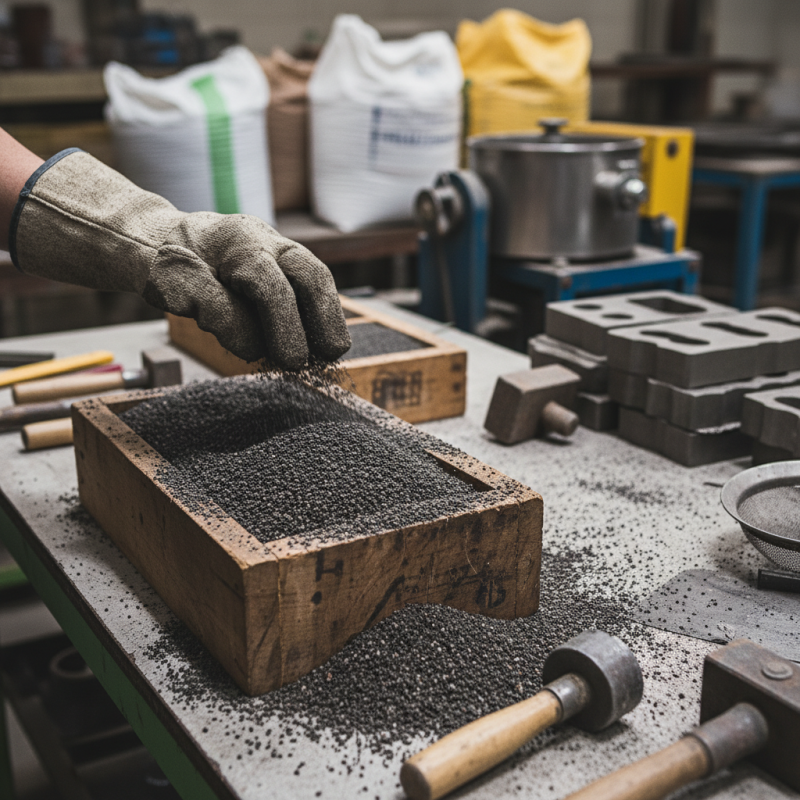
Filling and compacting the mold effectively is crucial in the sand molding process. Start by pouring sand evenly into the mold cavity. Ensure the sand flows smoothly without any clumps. Watch for air pockets that can weaken the final cast. If air gets trapped, it may lead to defects in the cast part.
After filling, compacting the sand is vital. Use your hands or a tamper to press the sand down firmly. This step helps achieve a denser mold, improving the overall strength of the casting. Pay attention to the corners and edges; they often require extra force. It’s common to overlook these areas, which can lead to a weaker structure.
Consider the moisture content in the sand. Too much moisture can make the sand stick together, while too little may cause it to crumble. Finding the right balance is often a trial-and-error process. Record your observations to improve future attempts. Each attempt will teach you something new about the mold’s behavior.
Essential Tips for Mastering the Sand Molding Process
| Tip | Description | Importance |
| Use Quality Sand | Select sand that has the right grain size and shape to ensure better mold strength and surface finish. | High |
| Achieve Proper Compaction | Use appropriate tools and techniques to compact the sand, ensuring that the mold can withstand the pouring of metal. | Very High |
| Moisture Control | Maintain optimal moisture content in the sand to improve the mold's integrity and prevent cracking. | High |
| Use Proper Ratios | Mix sand with the right amount of binder to achieve optimal adhesion and mold strength. | Medium |
| Regular Inspection | Inspect molds regularly for defects or inconsistencies to prevent failures during casting. | High |
Demolding and Finishing the Casted Parts
Demolding is a critical phase in the sand molding process. A well-executed demolding can greatly enhance the quality of casted parts. Industry reports indicate that improper demolding can lead to defects, including surface irregularities and dimensional inaccuracies. According to a recent study, 30% of defects in cast parts result from inadequate demolding techniques. Understanding the right timing is essential. Removing molds too early can damage the cast, while waiting too long may result in mold adhesion.
Finishing casts involves refining the surface and ensuring all specifications meet design standards. Processes like grinding, sanding, and machining are common. However, the process is not foolproof. Rough finishes can occur if the mold isn't properly prepared or if tools are worn out. A report from the Foundry Research Institute found that 25% of finishing labor is spent correcting initial mold defects. It emphasizes the need for meticulous inspection at every stage, which often gets overlooked in high-volume production. Not addressing these issues can lead to costly reworks and delays.
Essential Tips for Mastering the Sand Molding Process