

Who Are the Top 10 Coffee Machine Manufacturers in China?
China’s coffee equipment sector now serves cafés, hotels, offices, and home kitchens worldwide. Its manufacturers differ widely in product focus, export experience, and technical support. A polished product photo cannot tell you how a machine handles a busy morning rush. The details matter: stable brewing temperature, accessible service parts, and a steam wand that performs consistently.
Coffee educator James Hoffmann is often associated with a useful reminder: “The best coffee is the coffee you like.” For buyers, a related lesson applies: the best Coffee Machine depends on the drinks, workload, and service needs it must meet. A compact office brewer and a commercial espresso machine solve very different problems. One shortlist cannot serve every buyer equally well.
This guide introduces ten notable Chinese manufacturers and considers what sets each apart. It looks at product range, manufacturing capability, customization, export readiness, and after-sales support. These criteria help frame a practical comparison, but they do not make every supplier equally suitable. No shortlist is perfect. Company information can change, and published specifications may not reveal long-term reliability. Buyers should confirm certifications, warranty terms, spare-parts availability, and sample performance directly with each manufacturer. A machine may look impressive on paper. The cup, service response, and daily operating costs tell a fuller story.
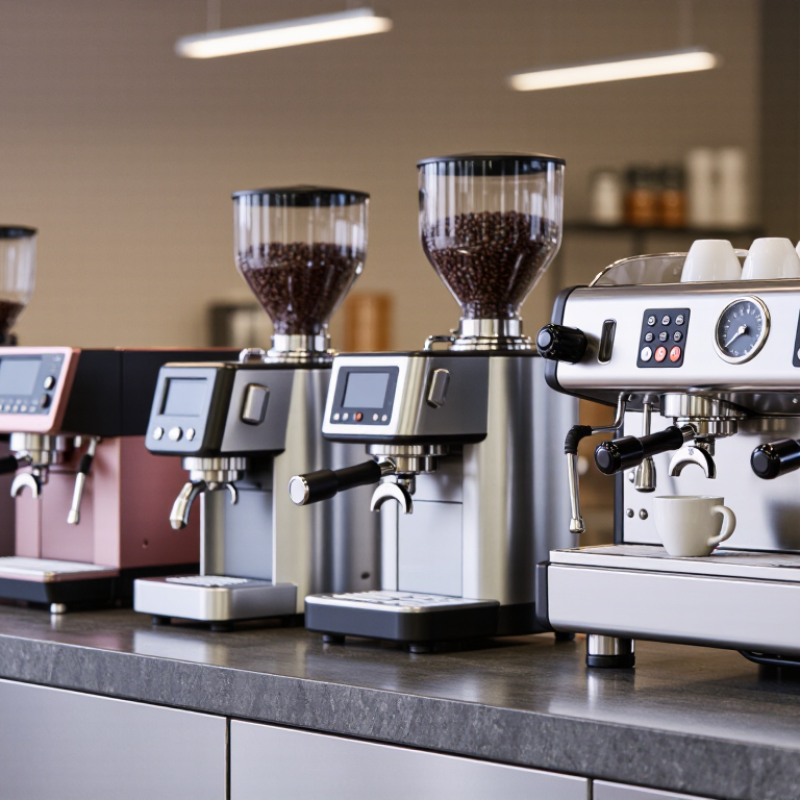
The Structure of China’s Coffee Machine Manufacturing Industry
China’s coffee-machine manufacturing industry is less a single sector than a layered supply network. Component makers produce pumps, heaters, controls, and molded housings; specialist factories assemble these parts for household and commercial machines. Export-oriented plants often handle large production runs, while smaller workshops may focus on customized designs or short batches. The boundary is not always clear. Some factories design products, while others mainly assemble components supplied by partners.
Demand shapes this structure. The International Coffee Organization’s 2023/24 market data puts China’s coffee consumption at roughly 3.1 million 60-kilogram bags in 2022/23. That rising market supports demand for both home machines and equipment for cafés. UN Comtrade tracks electric coffee and tea makers under HS code 851671, offering a useful view of cross-border trade, though the category does not reveal each factory’s capabilities. On a factory floor, differences show up in practical details: testing time, pressure consistency, and how carefully parts fit. Scale matters, but it is not the whole story. Supplier quality can vary, and public data rarely shows that clearly. Industry rankings should therefore be read with some caution.
Who Are the Top 10 Coffee Machine Manufacturers in China? - The Structure of China’s Coffee Machine Manufacturing Industry
This table maps ten major manufacturing segments in China’s coffee machine industry. It describes industry roles and product categories rather than ranking or naming individual companies.
| No. | Manufacturing Segment | Typical Products or Activities | Role in the Industry | Common Manufacturing Considerations |
|---|---|---|---|---|
| 1 | OEM and ODM production | Contract manufacturing, product adaptation, assembly, and private-label production | Connects product owners and importers with manufacturing capacity; services vary by factory. | Specifications, tooling, quality control, production volume, and export-market compliance |
| 2 | Espresso machine assembly | Pump-driven home and commercial espresso machines, including models with boilers or thermoblock heaters | Combines hydraulic, heating, electrical, and control systems into finished machines. | Pressure and temperature control, leak testing, electrical safety, and repeatable assembly |
| 3 | Drip and filter coffee machines | Automatic machines that heat water and distribute it over ground coffee in a filter basket | Serves household, office, and selected food-service applications. | Heating performance, water distribution, brew temperature, and food-contact materials |
| 4 | Capsule and pod machines | Compact brewers designed to pierce or otherwise extract from single-serve capsules or pods | Supports convenient, portion-controlled brewing formats. | Brewing-unit design, capsule compatibility, sealing, and pressure management |
| 5 | Bean-to-cup machines | Automatic machines integrating a grinder, brewing unit, water system, and user controls | Automates multiple preparation steps in one appliance. | Component integration, cleaning access, grinder consistency, and serviceability |
| 6 | Coffee grinders | Standalone burr or blade grinders and grinder assemblies incorporated into coffee machines | Provides the grinding function required by fresh-bean brewing systems. | Particle consistency, motor performance, noise, heat, and adjustment mechanisms |
| 7 | Heating and temperature-control systems | Boilers, thermoblocks, heating elements, thermostats, and temperature sensors | Supplies and regulates heat for brewing and, where applicable, steaming. | Thermal stability, scale resistance, electrical insulation, and component reliability |
| 8 | Pumps, valves, and water systems | Water pumps, solenoid valves, tubing, reservoirs, and related hydraulic components | Moves and controls water through the machine’s brewing and cleaning circuits. | Flow rate, operating pressure, material compatibility, and leak prevention |
| 9 | Electronic controls and user interfaces | Control boards, sensors, buttons, displays, and electronic safety controls | Coordinates machine functions and provides user operation and feedback. | Electrical safety, software reliability, interface usability, and electromagnetic compatibility |
| 10 | Enclosures and formed components | Plastic housings, sheet-metal panels, frames, drip trays, and other structural parts | Provides the appliance’s structure, protective surfaces, and finished exterior. | Dimensional consistency, finish quality, heat resistance, and assembly fit |
Related Posts
-
2026 Top Barista Coffee Machines for Global Buyers?
-
How to Find China Best Coffee Machine Suppliers?
-
What Is a Coffee Robot Machine and How Does It Work?
-
Ultimate Showdown of Best Robot Arm Coffee Machines for Global Buyers
-

Ultimate Guide to Choosing the Right Espresso Robot for Your Business Needs
-
The Future of Coffee: How the Best Robot Espresso Machines Are Revolutionizing Brewing