

top of page

China Top 10 Foot Scrub Manufacturers for Buyers

China is a major source of personal-care products, including Foot Scrub formulations for retail, spa, and private-label markets. Yet choosing a manufacturer takes more than comparing catalog photos or quoted prices. Buyers need to understand what each supplier can consistently produce, document, and deliver. This guide introduces ten Chinese manufacturers and offers practical points for evaluating their fit. No shortlist is perfect.

Compare product textures, exfoliating materials, fragrance options, and packaging formats against your customer’s needs. A coarse scrub in a wide-mouth jar serves a different purpose from a fine-textured formula in a tube. Request current ingredient lists, product specifications, sample units, and clear details about minimum order quantities and lead times. Check whether the supplier can explain its quality-control process and provide relevant documentation for your intended market. Requirements vary by destination, so confirm them independently before placing an order. A polished catalog is not proof of production consistency. Samples help, but one sample cannot reveal every batch variation. That distinction matters. Ask direct questions, record responses, and compare like with like. Consider communication, customization limits, packaging support, and follow-up service alongside cost. The best partner may not be the cheapest, and a low quote can leave important details unclear. Use this overview as a starting point for careful supplier research, not as a substitute for verification. Some information may change; confirm key claims with each manufacturer before making a decision.
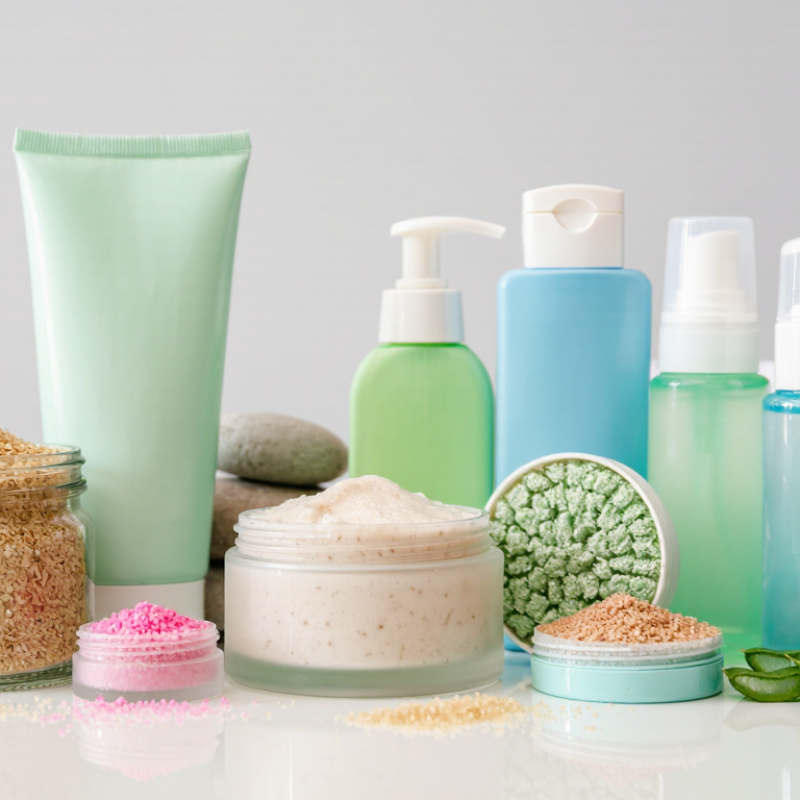
China Top 10 Foot Scrub Manufacturers for Buyers

Understanding China's Foot Scrub Manufacturing Industry

China’s foot scrub manufacturing industry serves buyers seeking private-label products and contract production. Factories may offer formula adjustments, filling, tube or jar packaging, and export documentation. Capabilities vary by facility, though. A supplier experienced with body scrubs may have less experience with foot-specific formulas. Typical products combine exfoliating particles with a cream or gel base. Particle size, rinse-off feel, fragrance strength, and residue on wet tiles all affect the user experience. Small details matter.

Tips: Ask for ingredient specifications, batch records, and samples from more than one production run. Test how easily the scrub rinses off in ordinary bathroom conditions. Check packaging compatibility, too. A jar may look premium, but moisture can enter during repeated use. Don’t rely on appearance alone.

For buyers comparing China’s top 10 foot scrub manufacturers, treat any list as a starting point, not a quality ranking. Ask about minimum order quantities, lead times, stability checks, and approval procedures for formula changes. Find out how the supplier checks particle distribution and filling weight. These details reveal how production consistency is managed. A polished sample alone is not proof of stable production. Some facilities may have limited data for a new formula, so discuss any gaps and agree on practical checks before scaling. That conversation can feel slower. It is often useful.

How to Assess Foot Scrub Manufacturers in China

Assessing foot scrub manufacturers in China starts with the product brief, not a polished catalogue. Specify the scrub’s texture, intended use, packaging, and target price. Ask whether the manufacturer can provide a sample that matches those details. Check that abrasive particles feel consistent across the jar, without sharp or oversized pieces. Details matter.

Review production controls, not just claims. Ask how incoming ingredients are checked, how batches are recorded, and how finished products are inspected. Request a sample batch record with confidential information removed. Discuss stability testing and packaging compatibility; a scrub that separates or leaks after storage can undermine an otherwise promising formula. Clear answers are useful, but vague assurances deserve follow-up questions.

Compare suppliers using the same checklist and sample conditions. Note texture, scent consistency, rinse-off feel, and whether the packaging closes securely after repeated use. Ask about minimum order quantities, lead times, and how production changes are communicated. A factory visit or live video walkthrough may clarify equipment and workflow, though it cannot prove every batch will be identical. No checklist removes all uncertainty. Even a convincing sample may not represent routine production, so confirm quality expectations in writing before placing an order.

Profiles of 10 Chinese Foot Scrub Manufacturers for Buyers

Profiles of ten Chinese foot scrub manufacturers can help buyers compare production strengths without relying on sales language. One profile may focus on pumice-based formulas for a coarse, gritty feel. Another may offer fine sugar or salt particles for gentler exfoliation. A third may specialize in private-label filling, while a fourth handles larger export orders. Some suppliers emphasize botanical ingredients; others provide fragrance-free options. Small-batch production can suit testing. Not always, though. Check minimum order quantities.

The remaining profiles may include factories with varied tube and jar packaging, suppliers offering formula adjustment, and makers experienced with granular texture control. One may provide detailed batch records; another may support sample development but have limited packaging choices. A final profile could focus on contract manufacturing across several scrub formats. These are sourcing models, not verified claims about named companies. Ask for ingredient lists, particle specifications, sample batches, and production timelines. Compare the sample’s texture after rinsing, not just its appearance in the jar. Request clear answers about quality checks. Small details matter. A polished brochure is not enough.

China Top 10 Foot Scrub Manufacturers for Buyers — Profiles of 10 Chinese Foot Scrub Manufacturers for Buyers

Buyer-oriented comparison of common foot-scrub manufacturing capabilities. The profiles below describe product and process categories, not named or ranked companies; verify each supplier’s actual capabilities and documentation directly.

Profile Typical foot-scrub format Common exfoliating materials Typical product base Packaging options Buyer checks
1. Salt-scrub capability Rinse-off scrub with visible crystals Sodium chloride; sometimes combined with sugar Oil-rich or emulsified scrub Jar, squeeze tube, or single-use sachet Crystal size, dissolution behavior, separation stability, and preservative testing
2. Sugar-scrub capability Granular scrub for rinse-off use Sucrose or other cosmetic-grade sugar crystals Oil, gel, or emulsified base Wide-mouth jar or tube Particle consistency, moisture control, microbial limits, and formula compatibility
3. Pumice-based capability Cream or gel scrub with mineral particles Pumice powder or granules Water-based cream or gel Tube, jar, or dispensing bottle Particle grade, suspension uniformity, abrasion assessment, and packaging compatibility
4. Cellulose-exfoliant capability Cream or gel scrub using plant-derived particles Cellulose-based exfoliating particles Water-based gel or emulsion Tube, jar, or sachet Particle source documentation, biodegradability claims support, and stability
5. Botanical-powder capability Powder- or cream-based scrub Cosmetic-grade plant powders, such as rice-derived powder Dry blend or water-based cream Sachet, jar, or tube Ingredient identity, supplier specifications, contamination controls, and claims review
6. Emulsified scrub capability Creamy scrub that rinses with water Salt, sugar, pumice, or cellulose particles Oil-in-water or other suitable emulsion system Tube or jar Emulsion stability, viscosity, rinse feel, and compatibility with the selected particles
7. Anhydrous scrub capability Oil-based scrub with little or no added water Sugar or salt crystals Oil-based blend Jar or sealed sachet Water activity or moisture control, oxidation stability, and user directions to avoid water ingress
8. Foot-mask scrub capability Scrub paired with a moisturizing foot mask or bootie Scrub particles in a separate product or treatment step Cream, lotion, or essence for the mask component Multi-piece kit, sachets, or sealed foot-mask pouches Component compatibility, pouch seal integrity, directions, and substantiation for product claims
9. Private-label development capability Customized scrub developed to a buyer brief Selected from documented cosmetic-grade ingredients Buyer-selected texture, fragrance, and rinse profile Buyer-selected format and artwork Formula ownership terms, sample approval, minimum order quantity, lead time, and change control
10. Export-ready production capability Scrub prepared for the buyer’s destination market Formula-dependent; confirm all ingredients against local rules Validated commercial formula with market-specific labeling Retail pack, shipper carton, and market-specific label Applicable cosmetic regulations, ingredient list, safety documents, batch traceability, and quality-system evidence

Before placing an order, request current facility and quality documentation, product specifications, safety and stability evidence, samples, and confirmation that the proposed formula and label meet the destination market’s requirements.

Comparing Product Ranges, Certifications, and Capabilities

When comparing China’s top foot scrub manufacturers, look beyond a broad product catalog. Check whether each supplier offers several formats, such as sugar or salt scrubs, exfoliating creams, foot masks, and complementary care products. This matters when you need a coordinated range rather than one standalone item. Ask for ingredient lists, sample sizes, and clear usage directions. Small details matter.

Certifications can help assess production controls, but verify their scope and validity with current documents. A certificate alone does not confirm that every product has been independently tested. Request relevant quality records, safety assessments, and batch traceability information. A polished catalog is useful, but it is not proof. Buyers should compare evidence, not just claims.

Manufacturing capability is equally practical. Ask about minimum order quantities, sample lead times, monthly capacity, packaging options, and support for custom formulations. For a scrub, check how the texture holds up in the intended packaging and whether particles settle or separate during storage. Request stability data where available. Some comparisons will remain imperfect; suppliers may report capacity differently, and sample performance can vary by batch. That deserves a follow-up, not an assumption.

Suggested buyer-evaluation framework for comparing foot scrub manufacturers. The percentages are proposed assessment weights, not measured results or ratings of specific companies. Verify product specifications, relevant certificates, and manufacturing capabilities directly with each supplier.

Steps for Verifying and Sourcing from a Chinese Manufacturer

China Top 10 Foot Scrub Manufacturers for Buyers

Steps for Verifying and Sourcing from a Chinese Manufacturer

A supplier’s website is a starting point, not proof of production capability. Verify its registered business name, factory address, and whether manufacturing is performed in-house or subcontracted. Ask for a live video walkthrough showing mixing or filling equipment, batch coding, and finished-goods storage. Small details matter. A machine shown in a brochure proves little about current capacity.

For foot scrubs, request a specification sheet covering ingredients, fragrance, texture, packaging, and batch tolerances. Test samples from a production run, not only hand-prepared samples. Ask how the factory checks stability, microbial quality, and packaging compatibility, and request recent test records. ISO’s 2022 Survey counted more than 1.2 million ISO 9001 certificates worldwide; certification can indicate a quality-management system, but does not guarantee consistent product batches.

Use the OECD’s six-step due-diligence framework to document supplier checks, risks, and corrective actions. Before ordering, agree on inspection criteria, defect limits, delivery dates, and remedies in writing. A third-party inspection can compare packed goods against an approved sample. Be cautious if records have mismatched addresses or unexplained revisions. I would still recheck a promising supplier after the first production order; paperwork can look tidy while actual output varies.

bottom of page