

top of page

Top 10 Preschool Classroom Seating Types for Global Buyers

Choosing the right Preschool Classroom Seating affects movement, comfort, supervision, and daily learning. For global buyers, the decision involves more than color or price. It requires careful attention to child development, classroom size, material safety, cleaning routines, shipping conditions, and local compliance expectations.

Loris Malaguzzi, the founder of the Reggio Emilia approach, famously said, “The environment is the third teacher.” His idea remains highly relevant. A curved chair can support group conversation. A lightweight stool can help children move independently. A floor cushion may create a calm reading corner. However, no single option suits every preschool. That assumption deserves challenge.

This guide examines ten practical Preschool Classroom Seating types for international purchasing teams, educators, and furniture distributors. It considers stackable chairs, tables with attached seats, benches, stools, cushions, soft seating, rocking chairs, floor seating, ergonomic chairs, and flexible modular units. Each type offers useful strengths, but each also has limitations.

Small details matter. Rounded edges reduce sharp contact points. Non-slip feet help protect polished floors. Easy-clean surfaces support busy classrooms. Adjustable designs may serve different age groups, but they can cost more and require stronger quality checks. A beautiful seat is not automatically a suitable seat.

Think beyond appearance.

The best choice balances posture, independence, durability, inclusivity, and classroom flexibility. Some recommendations may need adjustment after real-world testing. Children vary, rooms vary, and supplier claims require verification. This overview offers a practical starting point, not a perfect formula.
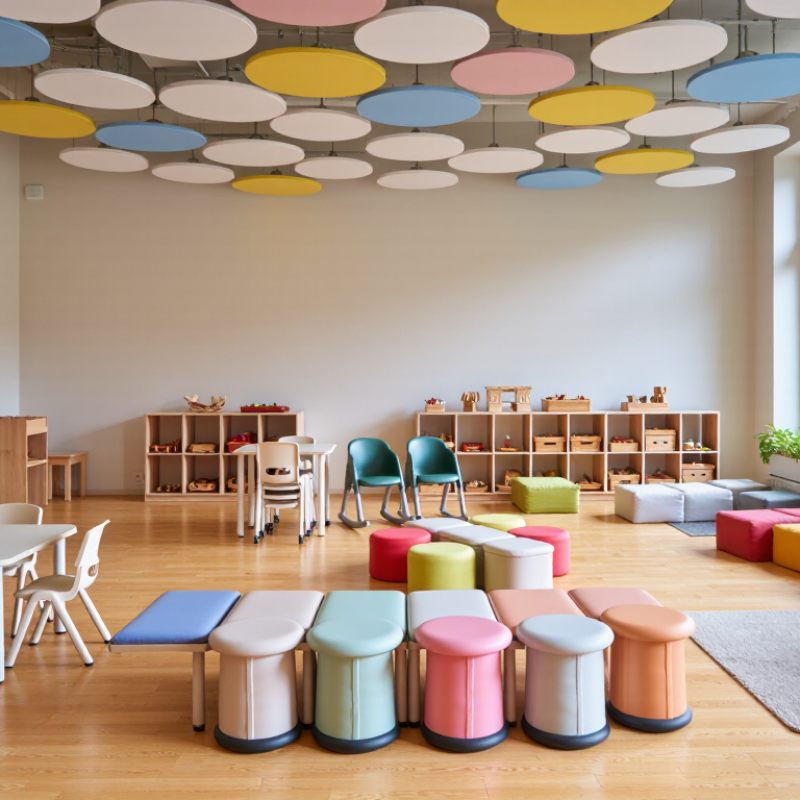
Top 10 Preschool Classroom Seating Types for Global Buyers

What Preschool Classroom Seating Means for Global Buyers

What Preschool Classroom Seating Means for Global Buyers

For global buyers, preschool seating is more than a small chair. It shapes movement, attention, safety, and classroom routines. The right choice depends on children’s age, body size, teaching style, climate, and room layout. Common options include low chairs, floor cushions, stools, benches, soft seats, wobble stools, stackable chairs, activity tables, modular seating, and floor tables. Each type supports a different learning moment.

Practical classroom evaluations often reveal details that product photos hide. A chair may feel stable on smooth flooring but slide on dusty tiles. A cushion may look comfortable but absorb moisture in humid regions. Rounded edges, easy-clean surfaces, balanced weight, and safe seat height deserve close checking. Buyers should request material information, load guidance, cleaning instructions, and relevant safety documentation before ordering. Local regulations and import requirements also need confirmation.

Cost matters, but replacement costs matter too. We once treated stackability as the main advantage. Later, storage noise and scratched floors changed that decision. Quiet movement can be more valuable than saving a few centimeters. Seating should also fit local teaching habits. Some classrooms need flexible circles, while others rely on shared tables and clear walking paths. A careful buyer measures doorways, storage areas, packaging volume, and assembly time. Small oversights can become daily frustrations.

How to Classify Seating by Structure, Function, and Age

Preschool seating should be classified by structure, function, and age, not by appearance alone. A 2019 UNICEF report estimated that 175 million children lacked access to pre-primary education. This makes adaptable, durable furniture important for many purchasing environments.

By structure, buyers can compare floor cushions, low stools, four-leg chairs, benches, and rocking seats. Floor seating supports circle discussions and movement. Stackable chairs save storage space. Benches encourage group work but may offer less individual support. By function, separate seating for reading, meals, art, sensory play, and quiet recovery. The OECD’s Starting Strong VI report highlights responsive interactions and well-designed learning environments as quality factors. A chair is not neutral. It can invite participation or restrict it.

Age classification should use body size, posture, and task demands. Toddlers need stable, low seats with rounded edges. Children aged three to four often need lighter chairs with foot support. Older preschoolers may use slightly higher seats for tables and creative work. EN 1729 educational-furniture guidance provides size categories that help buyers check seat height and desk compatibility. Measure the child, not only the catalogue. A tidy size chart can still mislead. I would also test cleaning time, tipping resistance, noise, and replacement availability. These details are easy to overlook. They often decide whether seating works after six months.

Ten Preschool Seating Types and Their Distinct Features

Preschool seating shapes movement, attention, and social contact. OECD’s Education at a Glance 2023 places four-year-old participation in early education near 90% across member economies. Global buyers therefore need adaptable, safe, and culturally suitable furniture. Ten useful types include individual chairs for focused work; table-and-chair sets for meals and projects; semicircle seating for teacher interaction; circle seating for storytelling; floor cushions for informal group talk; benches for shared activities; low stools for easy movement; wobble seats for active children; carpet zones for play; and nesting chairs for quick room changes. Each type solves a different classroom problem.

Size matters. A chair should support stable feet, upright hips, and easy standing. Rounded edges reduce sharp contact, though supervision remains essential.

EN 1729 guidance offers useful European reference dimensions, but local standards may differ. The World Health Organization and UNICEF also emphasize safe, supportive early-learning environments in their 2022 nurturing-care guidance. Reports rarely measure seating alone. That gap deserves more research. In practice, teachers often value flexibility more than appearance.

Tips: Test a sample with real children before ordering. Measure seat height, aisle width, cleaning time, and storage volume. Mix two or three types, rather than filling every room with one design. Lightweight pieces help children participate, but very light furniture may slide. I have found that “flexible” layouts sometimes become noisy. Plan quiet corners, clear walking paths, and washable surfaces. Ask teachers to review the setup after two weeks. Their feedback may challenge the original purchase decision.

How to Compare Safety, Comfort, Durability, and Flexibility

Top 10 Preschool Classroom Seating Types for Global Buyers

Choosing preschool seating requires more than attractive colors. Compare individual chairs, table sets, stackable chairs, stools, benches, floor cushions, wobble seats, rocking seats, adjustable chairs, and semicircle seating. Safety comes first. Check rounded edges, stable bases, non-toxic finishes, and pinch-resistant joints. The U.S. Consumer Product Safety Commission recommends inspecting children’s products for tip-over, entrapment, and structural hazards. A chair that wobbles on a smooth floor deserves rejection.

Comfort affects attention and movement. Seat height should support flat feet, relaxed shoulders, and easy standing. Adjustable designs help mixed-age classrooms, but complicated mechanisms may increase maintenance. UNICEF’s 2021 report identifies approximately 240 million children with disabilities worldwide. Flexible seating should therefore include clear floor space, supportive backs, and easy access for different mobility needs. Durability also matters. Look for reinforced joints, replaceable glides, washable surfaces, and tested load ratings. However, “heavy-duty” does not always mean comfortable.

Tips: Request test reports, material declarations, cleaning instructions, and spare-part availability. Ask suppliers to show stability testing, not only product photos. In my experience, lightweight chairs improve room changes, but very light chairs slide too easily. That trade-off needs observation. A practical trial should include circle time, drawing, meal use, and independent movement. Do not judge comfort after five minutes. Preschoolers often reveal problems adults overlook.

Top 10 Preschool Classroom Seating Types for Global Buyers

Comparative planning index: safety, comfort, durability, and flexibility

Scores use a 1–10 indicative index based on common design characteristics such as stability, age-appropriate ergonomics, cleanability, material resilience, portability, and suitability for different classroom activities. Actual performance depends on dimensions, materials, construction quality, supervision, and local safety requirements.

What Global Buyers Should Check Before Placing an Order

Top 10 Preschool Classroom Seating Types for Global Buyers

What Global Buyers Should Check Before Placing an Order

Preschool seating includes low tables with chairs, trapezoid tables, round tables, semicircle tables, benches, floor cushions, soft poufs, stools, wobble seats, and adjustable sit-stand stations. Each type supports a different classroom routine. Flexible layouts matter because OECD data shows that 83% of children aged three to five attended early childhood education in 2021. A single seating style may not suit every child, activity, or culture.

Before ordering, check seat height, table clearance, weight limits, rounded edges, stability, and cleanable surfaces. Request test samples, assembly instructions, carton dimensions, and spare-part policies. Materials should resist moisture, crayons, disinfectants, and repeated daily use. Ask for independent testing against the safety standards required in the destination market. The WHO recommends that children under five avoid being restrained for more than one hour at a time. Seating should support movement, not quietly restrict it. This is easy to overlook.

Tips: Measure children, not only rooms. Compare the seat height with each child’s lower leg. Check whether feet touch the floor. Confirm flame, chemical, and labeling requirements with a qualified local specialist. Photos can mislead. A chair may look sturdy but wobble on uneven flooring. We once underestimated storage space; nesting stools solved part of the problem, but cleaning became slower. That trade-off deserves honest review.

bottom of page