

What Are the Top Bolt Screw Types for Buyers in 2026?
Choosing the right Bolt Screw is less about finding one universal winner and more about matching the fastener to the job. A hex-head bolt may suit a steel frame, while a carriage bolt offers a smooth, rounded head for timber assemblies. Socket-head cap screws help where installation space is tight. Lag screws, machine screws, and flange bolts each solve different fastening problems. Small differences matter.
This guide compares common types buyers may encounter in 2026, with attention to head style, drive, thread, material, coating, and installation method. Buyers should check the product drawing and stated specifications, not rely on a product photo alone. A stainless fastener, for example, may resist corrosion in some settings, but the right grade depends on the environment and connected materials. There is no shortcut here.
The labels are not always used consistently across catalogs, and that can make comparisons harder than expected. We will clarify typical uses while noting where terminology or performance depends on the manufacturer’s specifications. Consider load, vibration, access for tools, exposure to moisture, and whether the joint may need frequent removal. A neat-looking fastener is not necessarily the right one. Reliable purchasing starts with measurable requirements, supplier documentation, and a careful fit check before ordering in volume.
How Bolts and Screws Differ in Design and Use
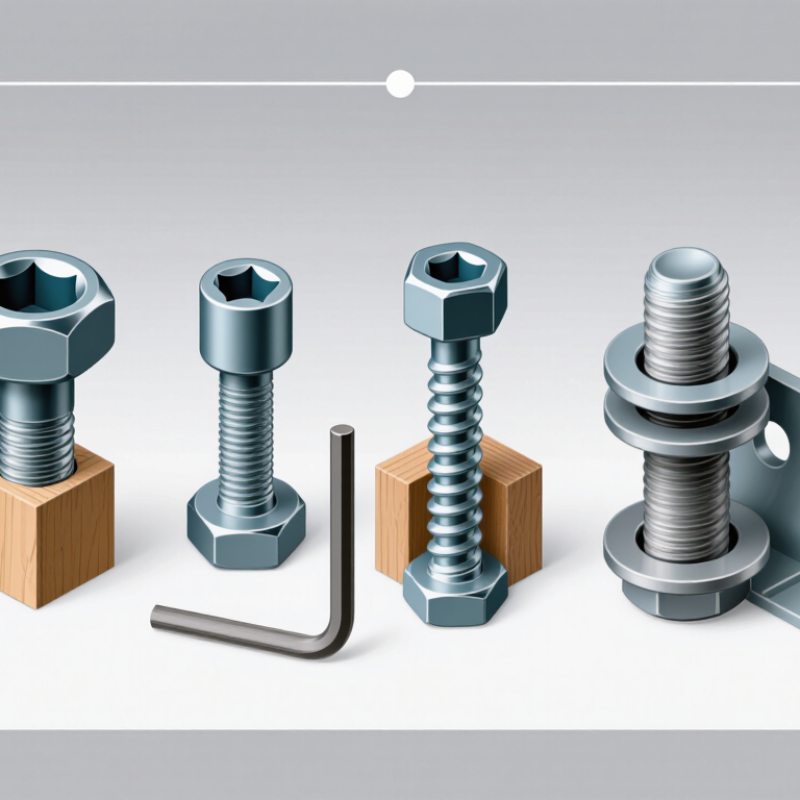
Bolts and screws may look similar on a workbench, but their connections differ. A bolt typically passes through an unthreaded clearance hole and is secured with a nut. Tightening often means turning the nut while holding the bolt head steady. A screw usually engages threads in the material or in a tapped hole. Some screws cut their own threads, so they can fasten parts without a separate nut.
The distinction affects what buyers should check. For a steel bracket joined to a frame, a bolt, nut, and washer can provide a firm, serviceable connection. For a cabinet panel, a wood screw’s tapered point and coarse threads can grip the material directly. Match the fastener’s diameter and length to the parts being joined, and consider whether vibration, moisture, or repeated removal is expected. Small details matter.
That rule is useful, but not perfect. Usage varies, and some fasteners called screws are used with nuts. Check the product specifications and installation instructions, not just the name. Head shape and drive type matter too: a hex head suits a wrench, while a countersunk head sits flush in a prepared surface. Choose the connection first, then compare material, coating, thread, and tool access. A neat-looking fastener is not necessarily the right one.
How Bolt and Screw Types Are Classified
Bolt and screw types are classified by more than head shape. Buyers typically compare drive style, thread form, material, strength class, and intended joint. A hex-head bolt is easy to tighten with a wrench; a socket-head screw fits tighter spaces. Thread choice matters, too: coarse threads suit many general assemblies, while fine threads allow smaller adjustments. The distinction can blur in product listings, so check the drawing and standard, not just the name.
For steel fasteners, ISO 898-1 gives useful mechanical-property data. Under its property-class system, class 8.8 indicates a nominal tensile strength of 800 MPa and a nominal yield-strength ratio of 0.8; class 10.9 indicates 1,000 MPa and 0.9. These figures help compare strength, but they do not replace checking load, temperature, corrosion exposure, or the mating material. Stainless fasteners use a separate classification system, ISO 3506, so an A2 or A4 designation should not be read as a direct equivalent to 8.8 or 10.9.
Tips: Match the classification to the joint, then confirm dimensions and material in the relevant ISO or ASME specification. A stronger fastener is not automatically safer; over-tightening can damage threads or the joined parts. Small detail, big consequence.
What Are the Top Bolt Screw Types for Buyers in 2026? - How Bolt and Screw Types Are Classified
| Fastener Type | Common Classification | Head or Drive | Typical Thread or Engagement | Common Applications | Buyer Selection Consideration |
|---|---|---|---|---|---|
| Hex Bolt | Bolt; commonly used with a nut or a tapped hole | Six-sided external hex head | Usually machine threads; available in coarse and fine pitches | Structural assemblies, machinery, equipment frames, and general construction | Confirm diameter, length, thread pitch, strength grade, and whether the joint uses a nut or a tapped component. |
| Carriage Bolt | Bolt; designed to resist turning during installation | Rounded head with a square section beneath it | Typically machine threads; the square section seats in a matching hole or material | Wood-to-wood and wood-to-metal connections, including benches and outdoor structures | Check the grip length and material thickness; the square section needs a suitable seating surface. |
| Flange Bolt | Bolt with an integrated bearing flange | Usually hex head with a washer-like flange | Machine threads; may be fully or partially threaded | Automotive assemblies, machinery, and joints where load distribution is useful | Check whether the flange is serrated or plain, and whether a separate washer is required for the joint. |
| Socket Head Cap Screw | Machine screw commonly used in precision and compact assemblies | Cylindrical head with an internal hex drive | Machine threads; commonly engages a tapped hole or nut | Machine tools, fixtures, equipment housings, and assemblies with limited wrench clearance | Verify the drive size, head clearance, thread engagement, and required strength specification. |
| Machine Screw | Screw for pre-tapped holes or use with a nut | Pan, flat, oval, and other head styles; slotted, Phillips, and other drives | Uniform machine threads, generally intended for metal or threaded inserts | Electrical enclosures, appliances, panels, and small mechanical assemblies | Match the thread diameter and pitch to the tapped hole; select a head and drive suited to access and finish requirements. |
| Wood Screw | Screw intended to form or engage threads in wood | Commonly flat, round, or pan head; several drive styles are available | Coarse threads designed for wood; many designs have a smooth shank near the head | Furniture, cabinetry, framing, and general woodworking | Choose a length that provides adequate embedment without protruding through the workpiece; consider a pilot hole where appropriate. |
| Self-Tapping Screw | Screw that forms or cuts mating threads during installation | Varies by application; common drives include Phillips, hex, and Torx-style recesses | Designed to create threads in a prepared or unthreaded material; some types use a drill point | Sheet metal, thin sections, plastics, and other specified materials | Match the point and thread design to the material and thickness; follow the specified hole and installation requirements. |
| Set Screw | Headless screw used to secure one component against another | Typically internal hex or another recessed drive; often has a flat, cone, or cup point | Machine threads; commonly installed in a tapped hole | Securing pulleys, collars, knobs, or gears to a shaft | Select a point style suited to the shaft surface and application; check thread engagement and access to the drive. |
| Lag Screw | Large wood screw, also called a lag screw or lag bolt in common usage | Usually a hex head or washer head | Coarse wood-engaging threads; typically installed into wood, often with a pilot hole | Heavy wood connections, ledger attachments, and timber construction | Check embedment, edge distances, wood condition, and any pilot-hole guidance for the fastener size. |
| Shoulder Bolt | Special-purpose bolt with a precision, unthreaded shoulder | Commonly a socket head | Threaded end secures the fastener; shoulder provides a bearing or locating surface | Pivots, linkages, guide rollers, and applications requiring a controlled bearing surface | Specify shoulder diameter and length separately from thread size; fit and clearance affect movement. |
Classification note: Bolts are commonly used with a nut or a tapped component, while screws often engage directly with the material or a threaded hole. Naming conventions vary by industry and region, so buyers should verify dimensions, thread form, material, strength specification, and applicable standards before ordering.
Which Bolt and Screw Types Buyers Choose in 2026
What Are the Top Bolt Screw Types for Buyers in 2026?
Which Bolt and Screw Types Buyers Choose in 2026
Buyers in 2026 are likely to choose fasteners by application, not by a single “best” type. Hex-head bolts suit accessible joints that need wrench tightening; socket-head cap screws work well where machinery has tight clearances. Carriage bolts are common for wood connections, while self-tapping screws can fasten thin sheet materials without a pre-threaded hole. These choices matter across a large building market: the U.S. Census Bureau reported that construction spending reached an estimated $2.154 trillion in 2024, up 6.5% from 2023. That figure signals broad demand, not a ranking of fastener types.
Material and installation conditions narrow the choice. Stainless steel can help resist corrosion in damp settings, while coated carbon steel may suit other applications. Check load requirements, mating materials, and exposure before ordering. A common mistake is comparing unit prices before confirming thread, length, and grade. I still see this overlooked, especially on replacement jobs.
Tips: Match the fastener to the joint, then verify dimensions against the drawing. Keep it simple. For critical connections, follow the project specification and applicable engineering guidance; don’t substitute based on appearance alone. U.S. Census Bureau, Value of Construction Put in Place, 2024.
What Are the Top Bolt and Screw Types Buyers Compare in 2026?
A practical comparison of common steel fastener strength classes.
This chart shows minimum tensile strength—not sales rankings or market share—for selected carbon and alloy steel fastener property classes under ISO 898-1. Buyers should also consider fastener type, dimensions, material, coating, and application requirements.
How Materials, Grades, and Coatings Affect Performance
For buyers comparing hex bolts, socket screws, and other fasteners in 2026, material choice should match the working environment. Carbon steel is common for general-purpose assemblies, while alloy steel can provide higher strength when the specified grade and installation are appropriate. Stainless steel helps resist corrosion in damp settings, but it is not automatically stronger or suitable for every chemical exposure. Check the product’s documented grade, not just its appearance.
Grades matter. A bolt’s markings and technical data identify properties such as strength, and requirements vary by application. For a load-bearing joint, confirm the design specification and use compatible nuts and washers. A stronger fastener is not always a safer substitute; the connected parts and tightening method matter too. Small details matter.
Coatings add another layer of performance. Zinc coatings can slow corrosion in many everyday environments, while hot-dip galvanizing offers a thicker protective layer for some outdoor uses. Coating thickness may affect thread fit and tightening behavior, so confirm compatibility before assembly. Stainless steel paired with certain dissimilar metals can also create corrosion concerns in wet conditions. Check the contact points.
In practice, inspect the fastener’s grade markings, coating specification, and fit before installation. Keep the storage conditions in mind: damp boxes can leave even well-chosen hardware stained or difficult to sort. I would not assume a coating solves every corrosion problem; exposure, maintenance, and joint design still deserve a second look.
How to Match a Fastener Type to Its Application
Matching a fastener to its application starts with the joint, not the catalog label.
A hex bolt with a nut suits many accessible metal-to-metal joints, where the assembly can be tightened from both sides. A socket head cap screw can help when clearance is tight and the head needs to sit in a smaller space.
Fit matters. For timber, a carriage bolt’s smooth, rounded head can reduce snagging, while its square neck helps resist turning in wood. For heavy timber connections, a lag screw may be considered, but it needs an appropriate pilot hole and sufficient embedment.
Next, check the load direction, base material, available space, and exposure to moisture or chemicals. Thread size and engagement affect how securely a joint holds; too little engagement can weaken it, while excessive length may interfere with nearby parts.
In outdoor or damp settings, corrosion resistance matters, but a coating alone does not make every fastener suitable for every environment. No type wins everywhere.
A useful detail to verify is whether the design expects a bolt-and-nut joint or a screw driven directly into the material. That distinction is easy to miss, and drawings do not always make the intended installation obvious.
If the joint carries significant loads, confirm dimensions and material requirements against the equipment or engineering specification before ordering.