

top of page

China Top Titanium Coffee Mug Supplier for Global Buyers?

Coffee is a daily ritual for millions, and the cup itself matters when buyers assess weight, durability, and everyday usability. The National Coffee Association’s 2024 National Coffee Data Trends report found that 67% of U.S. adults had consumed coffee in the past day. That figure describes U.S. habits, not global demand, but it shows why dependable drinkware remains relevant to retailers and outdoor brands.

A Titanium Coffee Mug may appeal to buyers seeking lightweight, corrosion-resistant drinkware. Yet material claims need checking. The U.S. Geological Survey’s Mineral Commodity Summaries tracks titanium mineral production and supply, but it does not certify finished mugs or their performance. Ask suppliers for material specifications, product test results, surface-finish details, and clear documentation of manufacturing processes. Small details matter: a rolled rim, a stable base, and a handle that stays comfortable when the mug is full.

China has a broad manufacturing base, but “China supplier” alone says little about quality. Request samples and compare them against the final production specification. Check capacity, inspection procedures, packaging, and lead times. Ask how defects are recorded and resolved. Then verify the answers.

Reports can frame the market; they cannot replace a factory audit or hands-on testing. That distinction is easy to overlook. For global buyers, selecting a supplier means weighing price against consistency, communication, and evidence. A polished product page is not proof. A well-documented sample is a better place to start.
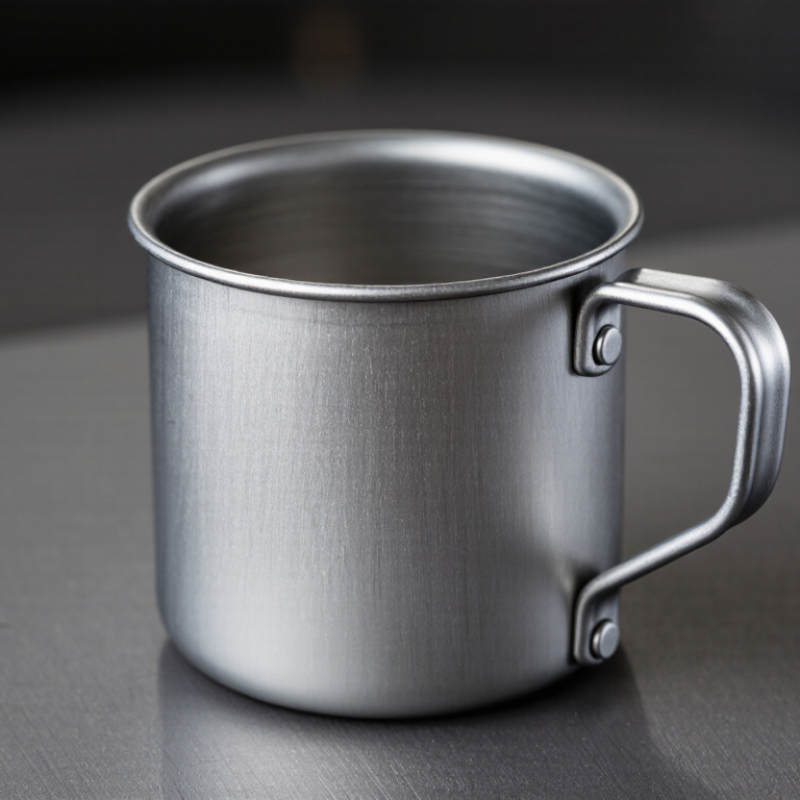
China Top Titanium Coffee Mug Supplier for Global Buyers?

What Defines a Titanium Coffee Mug and Its Common Uses?

A titanium coffee mug is a reusable cup made with titanium metal, valued for its low weight and resistance to corrosion. The ASM Handbook lists titanium’s density at about 4.51 g/cm³, compared with roughly 7.9 g/cm³ for common stainless steel. That difference can make a Titanium Mug easier to carry on a trail or pack into a work bag. It does not make every mug equally light: wall thickness, handles, and lids matter too.

Common uses include camping, hiking, travel, and everyday coffee or tea. Titanium resists rust in ordinary use, but a thin mug may feel hot quickly and can dent if crushed in a packed bag. Taste is usually neutral, though residue from coffee oils can still affect flavor. A double-wall design may improve insulation, while a single-wall cup is often lighter. There is a trade-off.

Tips: Check capacity, wall construction, and handle comfort before buying. For hot drinks, test how warm the rim becomes; product descriptions may not reflect real use.

Source: ASM Handbook, Volume 2, Properties and Selection: Nonferrous Alloys and Special-Purpose Materials.

How Are Titanium Coffee Mugs Designed and Manufactured in China?

Titanium coffee mugs made in China typically begin with careful material selection. Manufacturers choose titanium sheets or tubes according to the mug’s shape, weight, and intended use. The metal is lightweight and corrosion-resistant, but it can be harder to form than stainless steel. Cutting and deep drawing must be controlled to reduce wrinkles and uneven walls. For double-wall mugs, inner and outer shells are joined, then sealed and evacuated to create insulation. Small weld defects matter.

Surface finishing follows forming. Edges are trimmed and smoothed, while polishing or blasting creates the desired feel and appearance. Cleaning removes oils and particles from production. Quality checks may include visual inspection, dimensional measurement, weld review, and leak testing. Buyers should request clear specifications for capacity, wall construction, material grade, and inspection criteria. A polished surface alone does not prove consistent workmanship.

Tips: Ask how the supplier verifies double-wall vacuum performance, and request sample measurements before approving a large order. Check the rim and handle area closely; these details affect daily comfort. Also confirm packaging protects the finish during transport. A sample can look excellent, yet production results may vary, so the inspection plan deserves attention.

Titanium Coffee Mug Design: Material Density Comparison

Lower density can help reduce a mug’s material weight. This chart compares typical densities of commercially pure titanium, stainless steel, and aluminum—materials commonly considered for reusable drinkware.

Approximate reference values: commercially pure titanium 4.51 g/cm³, stainless steel 8.00 g/cm³, and aluminum 2.70 g/cm³. Actual values vary by alloy and grade; mug weight also depends on design and wall thickness.

Which Materials and Quality Standards Should Buyers Check?

A titanium mug should feel light, but material claims need proof. Pure titanium has a density of about 4.51 g/cm³, according to the Royal Society of Chemistry’s element data; alloys and finished products may differ. Ask suppliers to identify the exact grade, such as Grade 1 or Grade 2, and provide a material test certificate linking the batch to its chemical composition. ASTM B265 covers titanium sheet, strip, and plate, while ASTM B348 covers bars and billets. These standards help verify stock material, but they do not certify a finished mug as safe for food contact.

Check the inner surface, welds, rim, and handle joints for pits, sharp edges, residue, or uneven polishing. Request documented food-contact migration testing for the markets where the mug will be sold, plus traceable inspection records. ISO 9001 certification can indicate a quality-management system; it does not prove every mug passes inspection. A factory visit or sample review can reveal details a certificate misses. A slightly rough seam is easy to overlook.

Tips: Ask for the test method, lab name, report date, and product batch number. Compare the sample with the mass-production specification. If a supplier cannot explain its titanium grade clearly, pause before ordering. My own checklist is not perfect; even a clean-looking cup still needs test evidence.

China Top Titanium Coffee Mug Supplier for Global Buyers? - Which Materials and Quality Standards Should Buyers Check?

Buyer check What to verify Useful evidence or reference Why it matters
Titanium grade Confirm the exact grade and whether the cup body is commercially pure titanium or a titanium alloy. Grade 1 and Grade 2 are commonly specified commercially pure grades; do not accept “pure titanium” as the only material description. Mill test certificate (MTC) identifying grade, chemistry, lot or heat number, and applicable specification. ASTM B265 covers titanium and titanium-alloy sheet, strip, and plate. The grade affects strength, forming characteristics, and traceability. The certificate should match the material used in the production lot.
Material composition Check that the documented chemical composition falls within the limits for the declared grade. Ask how incoming material is identified and linked to finished products. Grade-specific MTC and, where appropriate, an independent material identification or chemical analysis report from a competent laboratory. Helps detect grade substitution and supports batch-level material traceability.
Food-contact surfaces Identify every surface that may contact a drink, including the interior, rim, lid, seal, and any coating or decorative finish. Request documentation for the finished article and its intended conditions of use. For EU-market articles, review applicable requirements including Regulation (EC) No 1935/2004 and good-manufacturing-practice rules under Regulation (EC) No 2023/2006. Confirm relevant national requirements in the destination market. Compliance depends on the complete article, intended use, and market—not solely on the name of the base metal.
Coatings, inks, and decoration Ask whether the inside is uncoated. If coatings, inks, adhesives, or printed finishes are used, identify their location, composition, and suitability for the intended food-contact conditions. Material declarations and migration or other testing selected for the specific coating, food type, temperature, and contact duration. Additional materials can affect compliance even when the titanium body is correctly specified.
Welds and joints Inspect seams, handle attachments, and rim joints for incomplete fusion, sharp edges, visible cracks, rough areas, or corrosion discoloration. Verify that any filler material is declared where used. Documented visual inspection criteria, production checks, and sample inspection records; add suitable weld testing when required by the design or risk assessment. Defects at joints may affect durability, cleanability, and leak resistance.
Leak resistance Agree on a repeatable leak test for the assembled cup and lid, including test orientation, duration, and acceptance criteria. Test representative samples from production. Written test method and dated inspection records. Treat leak performance as a product specification unless a relevant standard is explicitly agreed. A cup body may be sound while its lid or seal still leaks during normal use.
Dimensions and capacity Specify nominal capacity, brimful capacity if needed, height, rim diameter, base diameter, and acceptable tolerances. Clarify the measurement method and units. Approved technical drawing, signed pre-production sample, and inspection results against agreed tolerances. Clear tolerances reduce disputes about fit, packaging, and usable volume.
Surface finish and cleanability Set acceptance criteria for burrs, sharp edges, dents, scratches, stains, and interior roughness or finish. Check that surfaces are accessible for routine cleaning. Approved appearance samples, inspection checklist, and agreed defect limits for critical and cosmetic areas. A consistent finish improves usability and helps prevent avoidable cleaning and handling problems.
Lid and seal materials Request the material specifications for plastic lids, silicone seals, coatings, and other non-metal components. Confirm their intended temperature range and food-contact documentation. Component declarations, technical data sheets, and applicable compliance or migration test reports for the target market and use conditions. Non-metal parts may have different temperature limits and regulatory requirements from the titanium body.
Quality management Check whether manufacturing controls cover incoming materials, process inspections, nonconforming products, corrective actions, and lot identification. Current ISO 9001 certificate, if claimed, verified with the issuing certification body; review its scope and validity rather than relying on a logo alone. ISO 9001 concerns quality-management systems; it does not by itself certify a mug as food-contact compliant.
Batch traceability Confirm that finished cartons or production records can be linked to a production date or lot, material certificates, inspection results, and relevant component batches. Sample traceability records and a written procedure for handling complaints, returns, and corrective actions. Traceability makes it easier to investigate quality issues and identify affected production.

Buyer note: Request reports for the exact product configuration and intended destination market. A supplier certificate or general material statement is not a substitute for checking the finished cup, lid, coatings, and use conditions.

How Can Global Buyers Evaluate and Select a Chinese Supplier?

Global buyers should evaluate a Chinese titanium mug supplier through traceable material records, repeatable production, and clear quality checks—not polished product photos alone. The USGS Mineral Commodity Summaries 2024 estimated global titanium sponge production at 310,000 metric tons in 2023, with China producing about 210,000 tons. This scale indicates a substantial upstream industry, but it does not prove that a particular mug uses verified titanium. Ask for material specifications, batch-level certificates, and test reports that match the quoted product. Check whether the supplier can explain wall thickness, weld inspection, surface finishing, and leak testing in practical terms.

Tips

Request a sample from the same production process planned for your order. Weigh it, inspect the rim and seams, then test it with hot water. Confirm the sample’s alloy grade and finish in writing. Ask how defects are recorded and what happens when a batch fails inspection. A useful supplier will share measurable acceptance criteria, not just promise “high quality.” Verify third-party reports with the issuing laboratory where possible, and compare the report’s product details with your sample.

Also review production capacity, lead times, packaging, and communication before placing a large order. Request dated photos or video of the actual workshop and production line, then confirm whether key processes are performed in-house or subcontracted. Independent audits can add confidence, but certificates should be checked for scope, validity, and site address. One imperfect sample may reveal more than a lengthy sales presentation. Still, supplier claims and documents need cross-checking; no single certificate guarantees every shipment meets your requirements.

What Should Buyers Know About Pricing, Customization, and Shipping?

Pricing for titanium coffee mugs depends on more than the metal. Buyers should compare capacity, wall thickness, lid design, finish, and order quantity. A lightweight single-wall mug usually costs less than a double-wall model with a fitted lid. Ask suppliers to quote the same specifications, including packaging and sample fees. Small details matter.

Customization can include laser-etched logos, colors, handles, and retail packaging. Request a digital proof and a physical sample before approving a large order. Check whether the logo remains clear on curved surfaces, especially near the rim or handle. Custom colors may require minimum quantities, and a sample may not perfectly match a later production run. That deserves a direct question.

Shipping estimates should state the production lead time separately from transit time. Confirm carton dimensions, unit count per carton, and protective packing; a dented rim can make an otherwise sound mug unsellable. Ask for the shipping method, tracking details, and who handles export documents. Compare the full landed cost, not just the quoted unit price. Delays happen, even with careful planning, so leave room in the schedule.

bottom of page