

Top Combination Sweeper Scrubber Manufacturers in China?
China’s cleaning-equipment sector is attracting attention as warehouses, factories, and transport hubs seek faster, more consistent floor care. A Combination Sweeper Scrubber handles loose debris and wet cleaning in one pass, which can reduce repeated routes in large spaces. The practical value depends on the site. Dusty warehouse aisles, for example, place different demands on a machine than a wet food-production floor.
Market reports help frame the opportunity, but they require careful reading. Grand View Research’s commercial cleaning equipment market analysis tracks demand by equipment type, application, and region. Fortune Business Insights’ industrial cleaning equipment coverage offers another view of market trends and growth drivers. These reports provide useful context; they do not independently verify a manufacturer’s capacity or product claims. That distinction matters. A glossy specification sheet is not a field test.
For buyers comparing Chinese manufacturers, the useful questions are concrete: Can the machine collect fine dust without leaving slurry behind? How long does the battery last during a real shift? Are replacement brushes and squeegee blades readily available? Ask for test results, service arrangements, and references from comparable facilities. Then check the details. Performance can vary with floor texture, operator training, and maintenance habits. Even reliable suppliers may not fit every site. This guide introduces leading manufacturers and the evidence buyers should examine before choosing one.
What Is a Combination Sweeper Scrubber?
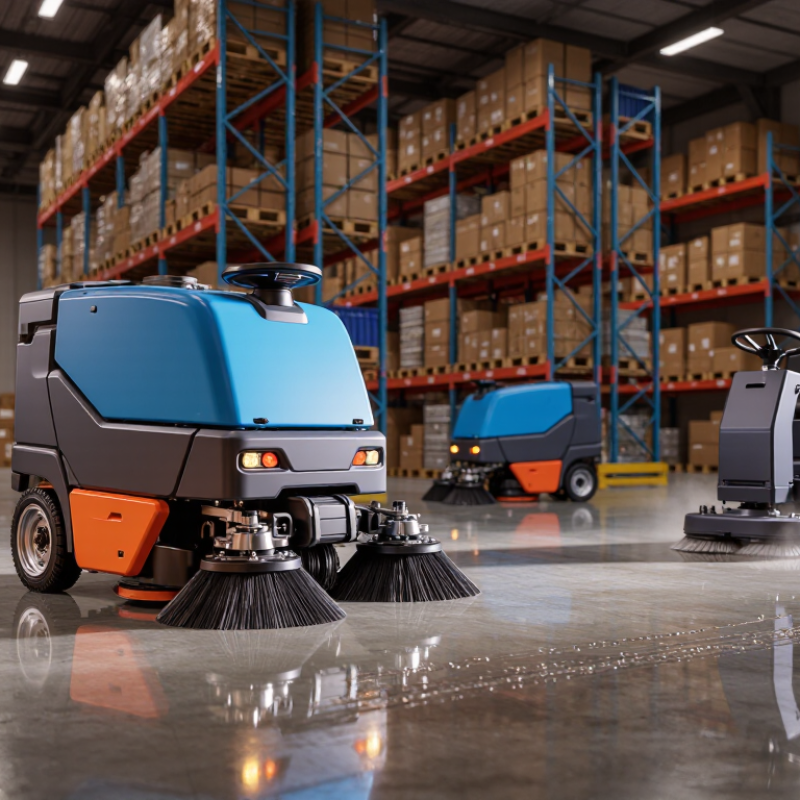
A combination sweeper scrubber is a floor-cleaning machine that collects loose debris and washes hard floors in one pass. A sweeping system, often using side brushes and a central broom, directs dust and grit into a debris hopper. Behind it, a scrub deck applies cleaning solution and agitates the floor. A squeegee then gathers the dirty water, which a vacuum system draws into a recovery tank.
The two-stage action matters in warehouses, loading areas, and large retail spaces. For example, a machine can pick up dry leaves near an entrance before scrubbing muddy tire marks from the concrete. Operators should check brush pressure, solution flow, and squeegee condition; worn blades may leave narrow wet streaks. Small details count.
These machines can reduce separate cleaning passes, but they are not a perfect fit for every floor or soil type. Heavy debris may fill the hopper quickly, while oily residue can require a suitable detergent and slower scrubbing. Tank capacity, turning radius, floor texture, and access to maintenance all affect real-world productivity. The trade-off is easy to miss: combining tasks saves time, yet adds systems that need regular inspection. A practical trial on the actual floor often reveals more than a specification sheet.
What Is a Combination Sweeper-Scrubber?
A combination sweeper-scrubber integrates dry-debris sweeping with wet floor scrubbing and recovery. This chart compares the typical functions of a combination machine with those of standalone sweepers and scrubbers.
Values indicate whether a function is typically included (1) or not included (0). Actual capabilities vary by machine design and configuration.
How Combination Sweeper Scrubbers Work
A combination sweeper scrubber handles loose debris and wet floor cleaning in one machine pass. Side brushes guide grit toward a central brush, which lifts it into a hopper. Meanwhile, water and cleaning solution reach the floor through controlled outlets. A rotating brush or pad loosens grime, and a rear squeegee collects the dirty liquid into a recovery tank.
That sounds simple. The timing matters. Sweeping before scrubbing helps keep dust and larger particles from spreading into wet residue. On a warehouse floor, for example, the machine may collect packaging scraps and fine dust before its brush works over oily tire marks. Exact results depend on brush pressure, solution flow, floor texture, and travel speed. Manufacturers may use different layouts, so operators should follow the machine’s instructions.
A practical check before work includes inspecting the brushes, squeegee blades, filters, and tanks. Too much solution can leave streaks; too little may not loosen soil. Even with careful setup, a damp line can remain near uneven joints, and that is worth checking rather than ignoring. Slow turns and overlapping passes can improve coverage, though they take more time. On heavily soiled floors, one pass may not be enough.
Key Criteria for Evaluating Chinese Manufacturers
The right Chinese supplier is not simply the one offering the lowest price. Grand View Research’s 2024 Floor Cleaning Equipment Market report valued the global market at US$6.85 billion in 2023 and forecast 8.3% annual growth through 2030. That growth makes supplier claims easy to find—and harder to compare. Ask for measured cleaning productivity, water use per hour, noise levels, and performance on the floor types you actually maintain.
Check the details. A combination machine should sweep debris and scrub evenly without leaving puddles behind. Request test videos, technical drawings, battery specifications, and reports showing how productivity was measured. Compare claimed coverage with a timed site trial. Brochures can be optimistic. I would not trust one demonstration alone.
Review factory quality controls, component traceability, warranty terms, spare-parts availability, and technician response times. Ask for references from customers using similar shifts and floor conditions. Verify certificates directly, and confirm their scope covers the relevant factory or product. A certificate is useful, not a performance guarantee. Check whether the supplier can provide manuals and training in your working language. It sounds minor. It isn’t. Also, clarify how software updates, replacement batteries, and wear parts are handled after delivery; these practical questions are easy to overlook.
Top Combination Sweeper Scrubber Manufacturers in China? - Key Criteria for Evaluating Chinese Manufacturers
Use these criteria to compare manufacturers and request verifiable, model-specific evidence. The table does not rank or endorse individual companies.
| Evaluation dimension | What to compare | Evidence to request | Evaluation signal |
|---|---|---|---|
| Combined cleaning design | How the machine coordinates debris sweeping, dust control, water application, scrubbing, and recovery. | Operating demonstration, machine layout, and explanation of how sweeping and scrubbing functions work together. | The manufacturer can explain the intended surface, debris types, and operating sequence without relying only on marketing claims. |
| Cleaning performance specifications | Cleaning width, theoretical productivity, brush configuration, and performance on the surface types relevant to your site. | Model datasheet and a live or recorded test using a clearly described surface, speed, and operating setup. | Specifications are tied to a specific model and test conditions; theoretical area coverage is not presented as guaranteed real-world output. |
| Water and debris capacity | Clean-water and recovery-tank capacities, debris-hopper capacity, and the access needed for emptying and cleaning. | Capacity specifications, tank and hopper drawings, and a demonstration of draining, dumping, and routine cleaning. | Usable capacities and service procedures are clear, including any conditions that limit usable volume. |
| Battery and operating time | Battery chemistry, rated voltage and capacity, charging time, and stated operating time under defined conditions. | Battery and charger datasheets, warranty terms, and a duty-cycle explanation covering brush use, vacuum, and operating conditions. | Runtime claims identify the test conditions; replacement battery availability and charging requirements are documented. |
| Filtration and dust control | Filter type, cleaning method, access for maintenance, and the manufacturer's stated dust-control performance. | Filter specifications, maintenance instructions, and any test report supporting performance claims. | Claims are supported by documentation; filtration is not described as a substitute for site-specific dust-risk assessment. |
| Build quality and serviceability | Frame and component construction, wear-part replacement, access to service points, and protection of electrical components. | Parts list, maintenance schedule, service manual, and inspection of a production or demonstration unit. | Routine maintenance tasks and expected consumables are documented and can be performed without unusual tools or procedures. |
| Safety and compliance documentation | Applicable electrical, machine-safety, and market-access requirements for the destination country and intended use. | Declarations, certificates, test reports, and model identifiers; verify documents with the issuing body where appropriate. | Documents match the offered model and destination market. A certificate or quality-system claim is checked rather than assumed to prove product performance. |
| Quality control and traceability | Incoming-part checks, assembly inspections, final testing, and identification of units and key components. | Quality procedures, sample inspection records, serial-number policy, and the final-test checklist for the quoted model. | The supplier can describe repeatable checks and provide records associated with the delivered machine. |
| Spare parts and after-sales support | Availability of wear parts, technical support, warranty coverage, and the process for handling service requests. | Written warranty, parts catalogue, recommended spare-parts list, and documented support channels and response process. | Coverage, exclusions, and parts ordering are stated in writing and suited to the buyer's location and expected usage. |
| Factory and supplier verification | Whether the supplier manufactures the offered equipment, manages production, or acts as a trading intermediary. | Business registration details, facility or production evidence, references, and a pre-shipment inspection option. | The contracting party, manufacturing responsibility, and inspection arrangements are transparent and consistent with the quotation. |
| Commercial and delivery terms | Model configuration, included accessories, lead time, packaging, shipping terms, and payment milestones. | Itemized quotation, approved configuration, delivery schedule, packaging details, and written trade and payment terms. | The quotation clearly defines what is included and avoids relying on verbal promises for important delivery or performance terms. |
Before purchase, compare like-for-like model configurations, request evidence for key claims, and confirm that the machine is suitable for the intended floor, debris, operating hours, and destination-market requirements.
Leading Combination Sweeper Scrubber Manufacturers in China
Chinese manufacturers produce combination machines for warehouses, factories, car parks, and other large floors. These machines sweep loose debris and scrub the remaining dirt in one pass. Buyers should look beyond headline cleaning width. A practical assessment includes brush pressure, tank capacity, turning radius, battery runtime, and access to replacement parts. On a warehouse floor, a wide machine may save time but struggle between closely spaced racks.
Manufacturing strengths vary. Some suppliers focus on export-ready configurations, while others offer more flexible options for batteries, squeegees, and control systems.
Ask for test results on the actual floor type, not only polished showroom concrete. Check how the machine handles fine dust, oily marks, and tight turns. Request operating-hour estimates under comparable conditions. Small details matter. A confusing maintenance panel or delayed squeegee replacement can reduce uptime. I would also treat unusually high productivity claims cautiously; site layout and operator training change real-world results. Independent trials are not always available, so clear service terms and spare-part availability deserve close review.
How to Compare Manufacturers by Product Range and Support
When comparing combination sweeper scrubber manufacturers in China, look beyond catalog size. Grand View Research estimated the global floor-cleaning equipment market at USD 12.73 billion in 2023, with an expected 8.1% compound annual growth rate from 2024 to 2030. This signals a growing market, but does not prove any supplier’s quality. Check whether its range covers different cleaning widths, battery options, tank capacities, and floor types. Ask for test results on your actual surface, such as dusty concrete or a damp warehouse aisle.
Support matters after delivery. Request a parts list, warranty terms, troubleshooting guides, and typical response times in writing. Ask how technicians diagnose faults remotely and whether common items, such as squeegees and brushes, are stocked for export orders. A polished demonstration is useful. It is not a substitute for service records or clear documentation. Some details may remain uncertain until the machine runs in your facility.
Tips: Compare two models on the same route and record cleaning time, water use, and missed debris. Ask for references from similar sites. Check whether training includes battery care and daily brush inspection. A low price can look attractive; delayed parts can change the calculation.