What Are the Top Digital Watches to Buy?
Choosing a Digital Watch is less about chasing the newest model and more about finding features you will use every day. A clear display, dependable buttons, and a comfortable strap can matter more than a long feature list. Small details matter. A backlight should be easy to activate in a dim hallway, while the screen should remain readable outdoors. Battery life also deserves attention, especially if frequent charging would disrupt your routine.
This guide compares popular digital watches by practical criteria, including display visibility, durability, water-resistance ratings, battery type, comfort, and price. Manufacturer specifications can clarify what a watch is designed to handle, but they do not always show how it feels after hours on your wrist. That is a limitation worth remembering. A bulky case may feel reassuringly sturdy to one person and awkward to another. Likewise, extra alarms or timers can be useful, yet unnecessary menus may make simple tasks slower. The best choice depends on your habits, budget, and preferred style—not one universal ranking. Before buying, check the exact model’s specifications and warranty, since similar-looking versions can differ. A practical pick should feel easy to read, simple to operate, and reliable enough for ordinary use. The comparisons ahead aim to make those trade-offs easier to judge, without treating any single watch as perfect.
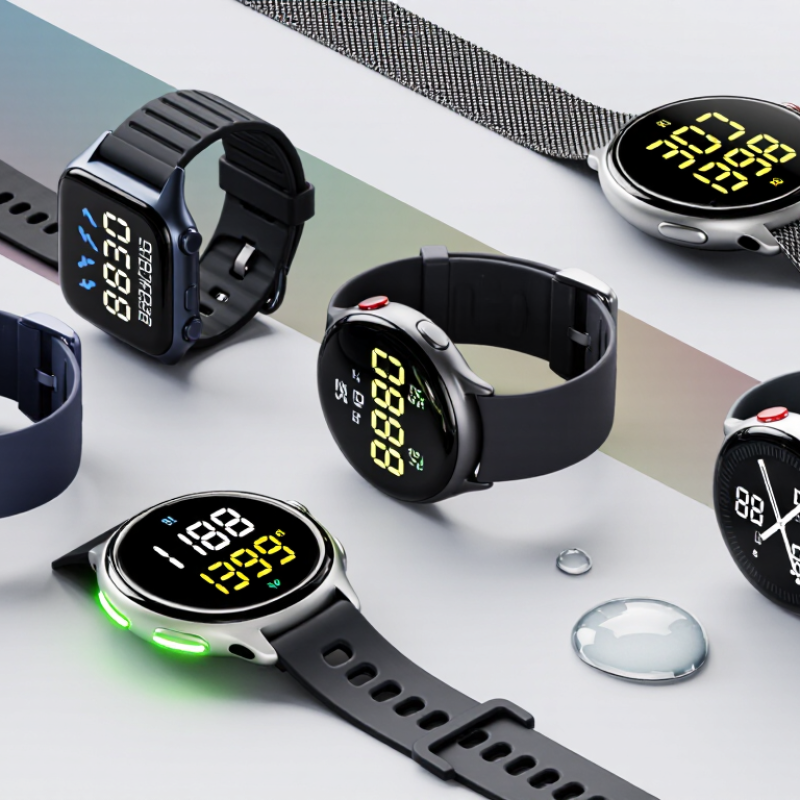
What Defines a Digital Watch and How Does It Work?
A digital watch shows time as numerals on a screen rather than with moving hands. The display may use liquid-crystal pixels, which reflect light, or light-emitting diodes that glow. Many screens also show the date, alarms, a stopwatch, or a timer. Clear digits are useful when checking the time quickly, especially in dim rooms.
Inside, a tiny quartz crystal vibrates at a steady frequency when powered by a battery. An electronic circuit counts those vibrations and converts them into seconds, minutes, and hours. The circuit then updates the display. Simple, but clever. In many models, buttons let the wearer adjust settings or switch functions. Some watches add sensors for movement, temperature, or heart rate; these features need extra components and may use more power.
The screen and case can affect everyday use. A reflective display often stays readable in sunlight but may need a light in darkness. A glowing display is easier to see at night, though frequent illumination can drain its battery faster. Water resistance also varies, so a digital watch should not be assumed safe for swimming without checking its stated rating. I find the terminology a little confusing: “digital” describes how time appears, not how every internal part works. A watch can use electronic timing while still relying on familiar buttons and a basic screen.
What Defines a Digital Watch and How Does It Work?
A digital watch keeps time electronically and displays it with numerals or segments. Many quartz digital watches use a 32,768 Hz crystal oscillator as a time reference. The circuit divides its signal down to one pulse per second, then updates the time display.
Illustrative quartz oscillator waveform: The chart shows three idealized cycles at 32,768 Hz. One cycle lasts about 30.52 microseconds. The amplitude is normalized for illustration and is not a measured voltage. When choosing a digital watch, consider display readability, water-resistance rating, battery life, and the functions you need.
Which Features Matter Most When Choosing a Digital Watch?
Choosing a digital watch starts with the tasks you actually perform. A clear display matters when you check the time outdoors or glance at it during a workout. Look for strong contrast, large digits, and a backlight that is easy to activate. Try the buttons if possible. Small controls can be frustrating with gloves or wet hands.
Consider battery life, comfort, and water resistance together. A rechargeable model may suit daily charging habits, while a replaceable battery can mean fewer charging stops. Check the stated water-resistance rating and care instructions; ratings come from controlled tests, and they do not make every watch suitable for swimming. Simple features count. A timer, alarm, and stopwatch are useful only if their menus are easy to understand. A thick case may feel secure but press against your wrist under a sleeve. I might overvalue extra functions in a product listing; in practice, unused menus add clutter. Compare the watch’s size and strap material with your wrist, and consider whether the display remains readable at your usual viewing angle.
What Are the Top Digital Watches for Different Needs?
For everyday use, choose a digital watch with clear numerals, a dependable alarm, and buttons you can operate without scrolling through menus. Keep it simple. IDC’s Worldwide Quarterly Wearable Device Tracker recorded 506.7 million wearable-device shipments in 2023, up 2.6% year over year. That figure covers more than watches, so it shows category scale, not which model suits you. For workouts, look for a timer, comfortable fit, and—if you need route tracking—built-in GPS. ACSM’s 2024 Worldwide Survey of Fitness Trends ranked wearable technology first among fitness trends, reflecting strong interest in tracking activity. But more data is not always more useful.
Outdoor users may prefer a rugged case, readable backlight, and buttons that work with gloves. That matters outdoors. Swimmers should check the watch’s stated water-resistance rating and whether its controls are usable in water; “water resistant” alone is vague. For long trips, battery life may matter more than a bright color screen or frequent phone notifications. I would not buy by feature count alone. A wrist sensor can also give imperfect readings during movement, so treat its numbers as estimates, not medical measurements. Check the details. A watch that fits your routine and feels comfortable after a full day is often the better choice.
How Do Leading Digital Watch Models Compare?
Digital watches differ most in display clarity, battery life, comfort, and useful features. A rugged outdoor model usually has a thicker case, raised buttons, and a screen that stays readable in bright sun. It can suit hiking or work gloves, but may feel bulky under a shirt cuff. A slim everyday model is lighter and easier to wear all day. Its smaller display, however, can make menus harder to read at a glance. Small details matter.
Fitness-focused models often add heart-rate tracking, step counts, and phone notifications. These tools are convenient, but frequent measurements and alerts can shorten battery life. A basic digital watch usually offers fewer distractions and longer use between charges. Compare the stated battery estimate with the features you will actually keep switched on. Check water-resistance ratings carefully, too; they describe tested conditions, not a promise for every swim or shower. That distinction is easy to overlook.
For a fair comparison, try reading each screen indoors and outdoors, then press the buttons with damp fingers. Check whether the strap feels secure without pinching, and whether the settings are simple enough to use without reaching for a phone. There is no perfect winner. A feature-rich model may look better on paper, yet a simpler watch can be the more dependable choice for daily wear. That judgment is imperfect: wrist size, eyesight, and routine can change the result.
How Can You Choose the Best Digital Watch for Your Budget?
Choosing a digital watch starts with how you will use it, not its price tag. For everyday wear, check that the digits are easy to read indoors and outdoors, and that the backlight works with one simple press. A clear display matters more than extra modes you may never use. Small details count. Try the buttons if possible; stiff controls can be annoying when you are timing a walk or setting an alarm.
Set a spending limit, then compare practical features within it. A modest watch may offer a stopwatch, timer, alarm, and long battery life without costly extras. If you work outdoors or exercise often, consider a tougher case and a clearly stated water-resistance rating. Check what that rating actually covers; it does not automatically mean the watch is suitable for swimming. Also look up battery replacement options, warranty terms, and the return window. It is easy to overvalue a crowded feature list. I would rather have a readable screen and dependable controls than functions I cannot explain. Some compromises are unavoidable, so decide which one you can live with before buying.
What Are the Top Digital Watches to Buy? — How Can You Choose the Best Digital Watch for Your Budget?
| Watch type | Typical price (USD) | Display and power | Common features | Best for | Main trade-off |
| Basic digital watch | $10–$30 | LCD; usually a replaceable coin-cell battery lasting months to several years, depending on use | Time, date, alarm, stopwatch, backlight | Everyday use and tight budgets | Limited sports, health, and smart features |
| Rugged outdoor digital watch | $30–$100 | Typically an LCD; many models use a replaceable battery, while some use rechargeable power | Shock-resistant construction, stopwatch, countdown timer, alarms; some models add a compass or altimeter | Outdoor activities and rough daily wear | Can be bulky; advanced sensors vary by model |
| Fitness-focused digital watch | $50–$200 | Usually a rechargeable screen; battery life ranges from several days to longer depending on GPS and display use | Activity tracking, heart-rate monitoring, workout modes; GPS is available on some models | Exercise tracking and training | Needs regular charging; sensor results are estimates, not medical measurements |
| Entry-level smartwatch | $80–$250 | Color touchscreen; commonly rechargeable, with battery life often measured in days | Notifications, activity tracking, timers, and app support; capabilities depend on phone compatibility | Connected features at a moderate budget | Frequent charging and some features may require a paired phone |
| Premium multisport digital watch | $200–$600+ | Rechargeable display; battery life varies widely with GPS, navigation, and screen settings | Often includes GPS, route tools, training metrics, and expanded activity profiles | Frequent training and navigation needs | Higher cost; feature set may be excessive for basic timekeeping |
Prices and battery life are general estimates, not guarantees. Before buying, check the specific model’s water-resistance rating, battery claims, screen readability, strap comfort, warranty, and compatibility with your phone or preferred activities.