

What Are the Top Main Door Lock Types in 2026?
A front door is more than a boundary. It is a daily touchpoint: keys turn, handles move, and the latch meets the strike plate. In 2026, choosing a Main Door Lock means weighing security, convenience, door construction, and household habits. Deadbolts remain a familiar option, while mortise locks combine several functions in one body. Keypad and smart locks can reduce key juggling, but they also depend on power, setup, and careful account management. No single type suits every doorway.
Security educator and lock expert Deviant Ollam is known for explaining how lock mechanisms work and where their limits lie. A useful paraphrase of that approach is: “Judge a lock as part of the whole door, not by its features alone.” The reminder matters. A strong cylinder cannot compensate for a loose frame, short screws, or a poorly aligned strike plate. Small details matter. Sometimes the lock is not the weak point.
This guide introduces the main door lock types and the practical differences homeowners should examine. It considers mechanical reliability, key control, access sharing, installation needs, and everyday usability. Readers will see where smart features help—and where they add maintenance or privacy questions. Product labels can sound reassuring, yet ratings and compatibility details deserve a closer look. Measure the door, check its material and thickness, and confirm the lock fits the existing hardware before buying. These steps are not glamorous. They can prevent an expensive mismatch. The best choice is the one that fits the door and the people using it, with security claims supported by clear specifications rather than promises.
How Main Door Locks Are Classified in 2026
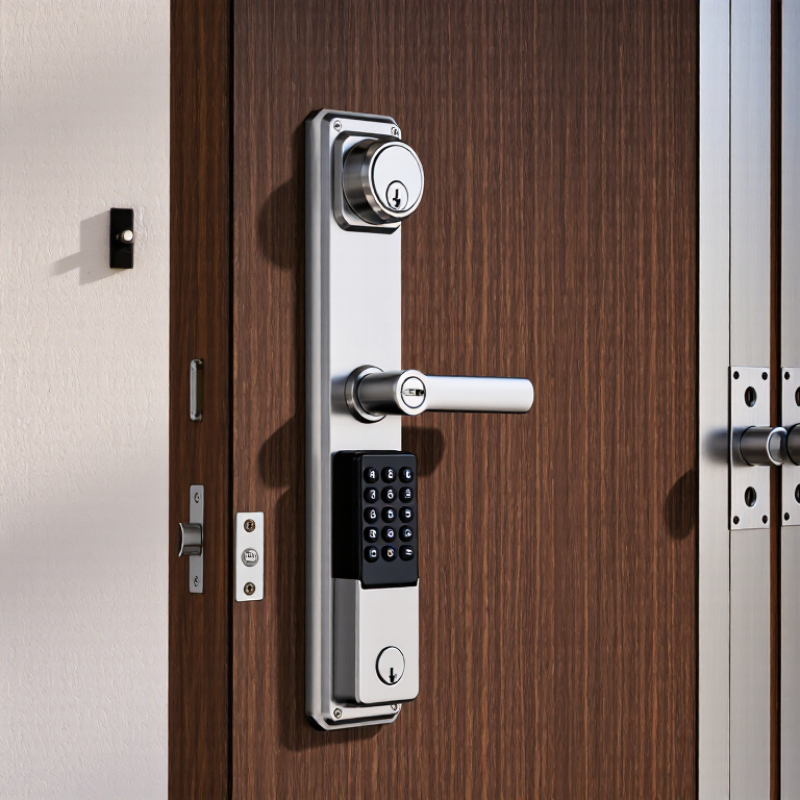
Main door locks are commonly classified by their locking mechanism, installation method, and way of operation. A deadbolt uses a solid bolt that slides into the door frame; a spring latch relies on a spring-loaded bolt. Mortise locks fit into a pocket cut inside the door, while cylindrical locks sit through a drilled hole. These categories can overlap, so a neat chart may not describe every door accurately.
Locks are also grouped by access method. Mechanical models use a key, thumbturn, or keypad, while electronic models may use a code, card, fingerprint, or phone. Some combine electronic entry with a physical key. That backup matters during a power failure, though its usefulness depends on the model and installation. A lock’s rating, door material, frame strength, and fit all affect practical security. The lock alone is not the whole story.
Tips: Check the door’s thickness, backset, and frame before choosing a replacement. Ask a qualified installer to confirm compatibility, especially with older doors. Keep the distinction clear: “smart” describes how access is managed, not necessarily how resistant the lock is to force. Categories help narrow choices, but they can still leave important details out.
Traditional Mechanical Locks: Deadbolts, Knob Locks, and Mortise Locks
A deadbolt’s solid bolt extends into the door frame, making it a strong choice for exterior doors. A single-cylinder model uses a key outside and a thumb-turn inside. Knob locks are convenient, but their locking mechanism sits in the knob, so they work better as secondary security than as the only exterior lock. Mortise locks fit into a pocket cut into the door. Their integrated latch and bolt can feel reassuringly sturdy, though installation requires precise measurements and may not suit every door. The FBI’s 2019 Crime in the United States report found that 55.7% of reported burglaries involved forcible entry. That figure is not a guarantee that any one lock will prevent entry; door frames and installation matter, too.
Tips: Check the lock’s ANSI/BHMA grade, not just its appearance. BHMA grades locks under standardized performance tests, with Grade 1 representing the highest tested level. Confirm that the grade applies to the lock type and intended use. A sturdy deadbolt installed with short screws can still disappoint. This detail is easy to miss.
Electronic Keypad Locks and Their Access Methods
Electronic keypad locks replace a cut key with a numeric code entered on a touch panel or raised buttons. A short personal code suits daily entry, while temporary codes can help manage guests or scheduled maintenance. Some models store several codes; others allow only a few. Check the limit before buying.
The access options are useful, but they differ. A keypad-only lock works without a phone or internet connection. A connected model may let an owner create or delete codes remotely, depending on its network setup. Keep a mechanical key or another entry method available. Batteries run low, and a wet or worn keypad can miss a press. Small details matter.
Grand View Research valued the global smart-lock market at about $2.9 billion in 2023 and projected a 19.6% compound annual growth rate through 2030. That report tracks market growth, not lock reliability, so it cannot prove one access method is safer. In practice, choose a code that is easy to enter but not obvious, and avoid sharing a permanent household code with short-term visitors. I would also test the keypad in low light and with cold fingers; manufacturers’ specifications rarely capture that awkward moment.
Smart Locks: App, Biometric, and Connected Entry Systems
Smart locks bring app control, biometric entry, and connected access into one door system. An app can lock the door remotely, show activity, and provide temporary codes for visitors. That is useful when a delivery arrives early. Still, remote features depend on power, network access, and correct setup.
Biometric models commonly read fingerprints, letting household members enter without carrying a key. Keep the sensor clean; damp or dusty fingers may not register consistently. Some systems store biometric data locally, while others use connected services, so check the product’s privacy and data-storage details before buying. Fast entry is appealing. It is not infallible.
Connected locks may work with home automation or send alerts when a door opens. Their reliability varies with the lock, router, and installation, so test access from the rooms and entry points you actually use. Ask whether the lock accepts your existing deadbolt, and confirm that the door closes smoothly before installation. Keep a backup entry method available, such as a physical key or keypad, and replace batteries when low-power warnings appear. A phone-based lock can feel effortless on a normal day; during a dead battery or network outage, that convenience deserves a second look.
What Are the Top Main Door Lock Types in 2026? — Smart Locks: App, Biometric, and Connected Entry Systems
| Lock Type | Typical Entry Methods | Connectivity | Key Advantages | Things to Consider | Often Suited To |
|---|---|---|---|---|---|
| Traditional deadbolt | Physical key; some models also have a thumbturn on the inside | None | Simple operation; no batteries, network, or app required | Key access can be inconvenient to manage; remote status checks and access sharing are not available | Entrances where straightforward, key-operated security is preferred |
| Keypad electronic lock | PIN code; some models also accept a physical key | Varies by model; many operate without an internet connection | Allows entry without carrying a key and can support separate user codes | Requires batteries; codes need to be managed and changed when access should end | Households or properties that need convenient code-based access |
| App-connected smart lock | Mobile app, physical key, keypad, or other methods depending on the model | Bluetooth commonly supports nearby control; Wi-Fi or a compatible hub may enable remote features | May provide remote locking, activity records, and temporary access sharing | Features depend on the lock, network, app, and setup; check battery status and account security | People who want app-based control or to manage access while away |
| Biometric smart lock | Fingerprint or another supported biometric method; some models include a PIN or key backup | May work locally or connect to an app or smart-home system, depending on the model | Can provide quick entry without a key or memorized PIN | Sensor performance can vary; provide a backup entry method and review how biometric data is stored | Users who value quick, individual access at a frequently used entrance |
| Retrofit smart lock | App or existing key; some models support a keypad or voice-assistant integration | Typically Bluetooth, with remote access sometimes requiring Wi-Fi or a separate hub | Often installs on the inside of a door and turns an existing compatible deadbolt | Compatibility depends on the door, deadbolt, and interior hardware; it may not replace the exterior cylinder | People who want smart features while keeping much of their existing lock hardware |
| Connected multi-method lock | May combine an app, PIN, fingerprint, physical key, or other supported methods | May use Bluetooth, Wi-Fi, Thread, or a compatible smart-home hub; support varies by model | Offers more than one way to enter and may integrate with compatible home systems | Check that the exact protocols and features work with existing devices; more features can mean more setup and battery monitoring | Homes that want flexible entry options or smart-home integration |
Selection note: Lock fit and capabilities vary by door thickness, backset, deadbolt or multipoint hardware, and local installation requirements. Confirm compatibility and retain a reliable backup entry method for electronic locks.
How Security, Convenience, and Installation Needs Shape Lock Choice
What Are the Top Main Door Lock Types in 2026?
Security, convenience, and fit all matter when choosing a main-door lock. A keyed deadbolt is a straightforward choice, while a keypad or smart lock can reduce the need to carry keys. The FBI estimated 847,522 burglary offenses in the United States in 2023. That figure describes reported offenses, not lock failures, so it should not be read as proof that one lock type prevents crime. A properly fitted deadbolt, a sound door frame, and a secure strike plate work together. Fit matters.
Convenience comes with trade-offs. Keypads avoid spare-key handoffs, but users must manage codes and batteries. Smart locks may allow remote access, yet connectivity adds maintenance and cybersecurity questions. NIST’s NISTIR 8259A identifies six baseline cybersecurity capabilities for connected devices, including access control, data protection, and secure software updates. That guidance does not certify a specific lock; it offers useful questions to ask before buying. A lock that is difficult to operate may also be left unsecured.
Installation needs can narrow the options quickly. Check door thickness, backset, handing, and existing bore holes before choosing a replacement. A retrofit model may suit an existing cutout, while a new installation can require drilling and careful alignment. Small errors matter: a bolt that scrapes the strike plate can make a strong lock frustrating to use. It is tempting to shop by feature list alone. In practice, compatibility is less exciting—and often more important.