

top of page

China Top 10 Wire Rope Thread Lifting Loop Manufacturers

Choosing a Wire Rope Thread Lifting Loop supplier calls for more than comparing prices or browsing polished product photos. These components connect lifting equipment to a load, so details matter: thread fit, rope construction, termination quality, rated capacity, and clear product identification. A loop that looks robust on a screen still needs verifiable specifications and careful inspection before use.

China’s manufacturers vary in production methods, testing practices, documentation, and export experience. This guide to China’s top 10 Wire Rope Thread Lifting Loop manufacturers offers a starting point for comparing them. It considers product range, manufacturing capability, quality controls, customization, communication, and the evidence available to buyers. No ranking can replace checking a specific product against its intended application. Small differences can matter.

Expert quotations deserve the same care as product claims. Rigging engineer and author David Duerr is a relevant expert to consult, but no verified quotation from him was provided for this introduction. Rather than inventing words or implying an endorsement, verify any direct quotation against its original source before publication. That restraint is useful. It keeps the comparison grounded in evidence, not marketing language.

Use the list to develop better questions. Ask how products are identified, what inspection records accompany them, and how the manufacturer supports technical inquiries. Then compare answers, not just catalog images. A careful shortlist begins there.
China Top 10 Wire Rope Thread Lifting Loop Manufacturers

What Is a Wire Rope Thread Lifting Loop?

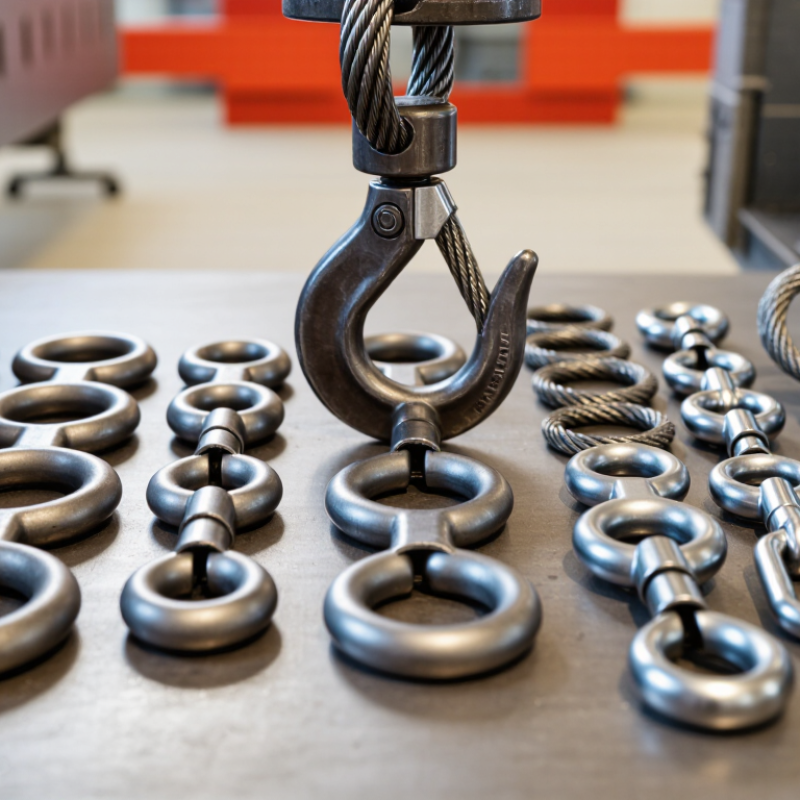
A wire rope thread lifting loop is a lifting assembly that combines a flexible steel wire rope loop with a threaded terminal or connection. The loop provides a place to attach a hook, pin, or compatible lifting point. The threaded end helps secure the assembly to equipment designed for that connection. Exact designs vary, so confirm the fitting type before use.

The rope’s strands bend around a core, giving it flexibility while carrying tension. At the loop, a sleeve or other engineered termination holds the rope in position. A properly rated assembly should state its working load limit and intended loading direction. A loop that looks substantial may still be unsuitable for a particular lift. That distinction matters. Check the identification tag, inspect for broken wires, corrosion, kinks, and loose fittings, and follow the supplier’s handling instructions. Never judge capacity by appearance alone.

Tips: Keep the threaded terminal clean and fully engaged with its matching connection. Avoid side loading unless the assembly is specifically rated for it. Before lifting, make sure the rope sits smoothly in the loop and the load is balanced. I would not assume a familiar-looking fitting is compatible; checking the thread and rating takes little time.

How Wire Rope Thread Lifting Loops Are Designed and Manufactured

Wire-rope threaded lifting loops are designed around the load path, not just rope diameter. Engineers check working load, pull direction, bend radius, rope construction, and thread engagement. A loop pulled sideways may not carry its stated axial capacity. Small details matter.

Manufacturing typically includes selecting and cutting the rope, forming or attaching the loop, fitting protective hardware where specified, and securing the threaded end. Depending on the design, the termination may use a pressed fitting or another qualified method. Each step needs process controls: clean cut ends, correct fitting dimensions, and documented inspection. ISO 2408:2017 sets requirements for steel wire ropes, while ISO 4309:2017 provides guidance for inspection and discard. These standards do not replace product-specific design or testing. There is no shortcut here.

The Grand View Research Wire Rope Market Size, Share & Trends Analysis Report estimated the global market at about USD 10.2 billion in 2023 and projected 4.8% annual growth from 2024 to 2030. That signals broad industrial demand, not proof that any individual loop is safe. Manufacturers should verify assembly performance against its intended load and configuration, and clearly state limits. A neat finish helps. It is not evidence of capacity.

China Top 10 Wire Rope Thread Lifting Loop Manufacturers - How Wire Rope Thread Lifting Loops Are Designed and Manufactured
Technical comparison framework: the entries below describe ten manufacturing and quality criteria, not a verified ranking or performance claims about specific companies. Final specifications depend on the product design, rated capacity, applicable standard, and intended use.
No. Design or Manufacturing Dimension Factual Technical Information Useful Verification Record
1 Wire Rope Construction Wire rope is made from wires laid into strands, with the strands laid around a core. Constructions such as 6×19 and 6×36 describe the number of strands and the nominal number of wires per strand; actual wire layouts vary by rope design. Rope specification, construction designation, rope diameter, and supplier documentation.
2 Rope Core and Material Common core types include fiber core and independent wire rope core. Rope material and core selection affect properties such as flexibility, resistance to crushing, and suitability for the operating environment. Material certificate and stated core type matched to the approved design.
3 Surface Finish and Environment Wire rope may be supplied bright, galvanized, or in corrosion-resistant alloy, depending on the specified material and service conditions. A coating or finish should not be treated as a substitute for selecting a suitable rope material. Material and coating specification, plus any required corrosion or environmental requirements.
4 Threaded End-Fitting Design A threaded lifting-loop assembly may combine wire rope with a threaded terminal or other purpose-designed end fitting. Thread form, engagement, geometry, and load path must be defined for the specific assembly. Approved drawing showing thread designation, dimensions, engagement, and assembly configuration.
5 Rated Capacity and Load Path The working load limit (WLL) applies to the complete lifting assembly as specified by its designer or manufacturer. Capacity depends on the rope, termination, fitting, geometry, and loading conditions—not on rope diameter alone. Product rating documentation and design calculations or qualification records for the complete assembly.
6 Cutting and Rope-End Preparation Rope is cut to the required length and prepared for its selected termination. Appropriate handling and preparation help control strand disturbance and support consistent assembly. Work instructions, length checks, and recorded inspection of prepared rope ends.
7 Termination Assembly Wire-rope terminations may use different methods, including mechanical fittings or ferrule-secured arrangements. The suitable method depends on the rope, fitting, design, and applicable requirements. Termination method, component traceability, assembly instructions, and process inspection records.
8 Dimensional and Visual Inspection Inspection can check rope diameter, overall length, fitting dimensions, thread condition, assembly alignment, and visible damage. Acceptance limits should come from the approved drawing and applicable product requirements. Inspection plan and completed records showing measured dimensions and visual-check results.
9 Testing and Standards Testing requirements depend on the assembly type, applicable regulations or standards, and the manufacturer's design. Standards in the EN 12385 series address steel wire ropes; EN 13411 covers wire-rope terminations; ASME B30.9 addresses slings. Applicability should be confirmed for the specific product and market. Test procedure, applicable standard and edition, test records, and product-specific conformity documentation.
10 Marking, Traceability, and Instructions Lifting equipment should be identifiable and supplied with information appropriate to its intended use. Product identification and traceability support inspection, maintenance, and confirmation of the correct rated capacity. Identification or batch records, stated WLL, inspection guidance, and instructions for use and retirement.

Key Standards and Safety Requirements for Lifting Loops

A wire rope thread lifting loop is only as dependable as its rating, installation, and inspection. Check the marked working load limit, thread size, and product identification before use. The applicable requirements depend on the component design and destination market; relevant documents may include EN 1677 or ASME B30.26 where they apply. Confirm the current edition and the manufacturer’s instructions rather than assuming one standard covers every lifting loop. Keep the certificate and inspection records with the equipment. Small details matter.

Before lifting, verify that the receiving hole is clean, undamaged, and correctly threaded. Engage the loop fully, with no forced or cross-threaded turns. Load in the direction stated by the manufacturer; side loading can reduce capacity unless specifically permitted. Keep the wire rope clear of sharp edges, and use suitable protection where contact could damage the strands. Inspect for broken wires, corrosion, deformation, loose fittings, and illegible markings. Remove questionable equipment from service until a competent person assesses it. A clear marking helps, but it does not prove the loop is safe today. Even careful checks can miss hidden damage, so use a documented inspection routine and never exceed the rated load.

How to Evaluate China’s Wire Rope Thread Lifting Loop Manufacturers

A capable wire rope threaded lifting loop manufacturer should explain its design, not just quote a load rating. Ask for the rope diameter, construction, core type, grade, termination method, and working load limit. Request batch-level material certificates and test records. Check that the threaded end fits the intended lifting point without forcing or excess play.

World Steel Association’s World Steel in Figures 2024 reports 1,882.6 million tonnes of crude steel production worldwide in 2023, with 1,005.1 million tonnes produced in China. This shows the scale of China’s steel supply chain, but volume alone says little about lifting-loop quality. Ask how incoming wire rope is identified and traced through cutting, forming, assembly, and inspection. A polished certificate can still hide a weak process. That is easy to miss.

Compare manufacturers against applicable requirements, including EN 13414-1 for wire rope slings, and request independent test evidence for the finished assembly. Confirm how proof testing is performed, what acceptance criteria apply, and whether records match the actual batch. For ongoing care, ISO 4309 gives guidance on wire-rope inspection and discard criteria; ask whether the supplier provides clear inspection instructions. If answers stay vague, pause. A factory visit or sample evaluation can reveal details a brochure cannot, though neither replaces verified test documentation.

Profiles of 10 Leading Wire Rope Thread Lifting Loop Manufacturers in China

China’s wire-rope thread lifting-loop sector includes factories with different strengths, from rope processing to finished sling assembly. These ten manufacturer profiles focus on practical capabilities rather than brand claims. One profile specializes in compact workshop production; another handles heavier rope diameters. Others emphasize custom loop sizes, protective sleeves, batch testing, or export packaging. Details matter. A clean swage sleeve and legible inspection tag can tell buyers more than a broad product promise.

Several profiles represent suppliers serving construction and machinery users, where repeatable dimensions and clear load markings are essential. Others focus on port, mining, or general industrial applications, often offering varied rope constructions and end fittings. World Steel Association data reports China produced about 1,005.1 million tonnes of crude steel in 2024. This indicates a vast industrial base, but it does not prove lifting-loop quality or supplier reliability. Buyers should verify product-specific test records.

The remaining profiles distinguish manufacturers by engineering support, short-run customization, inspection routines, and delivery coordination. Ask how each factory controls rope diameter, termination quality, and traceability between batches. Request sample documentation, then compare it with the delivered hardware. The ranking is never perfect. A capable workshop may have limited public records, while a polished catalogue cannot replace independent checks. These profiles are most useful as a starting point for direct technical questions.

bottom of page