What Is a Crystal Singing Bowl?
A Crystal Singing Bowl is a resonant vessel commonly made from fused quartz or silica. It is shaped and heated into a smooth bowl, often with a milky, frosted, or translucent finish. Sizes vary, and so does the sound. A small bowl may produce a higher tone, while a larger one often sounds lower, though shape and thickness matter too. A padded mallet can strike the side, creating a clear note that lingers. Gently circling the rim may produce a more continuous vibration. Listen closely.
The sound is only part of the experience. In a quiet room, the tone may seem to fill the space, while the bowl’s surface catches a narrow band of light. People use crystal bowls during meditation, relaxation sessions, or sound-based practices. These uses describe common settings, not proven medical treatment. Research on sound and wellbeing is still developing, so it is sensible to avoid promises of healing or specific health outcomes. Details matter. A bowl’s pitch, volume, and playing technique can affect how comfortable it feels, and some listeners may find the sound too intense. The word “crystal” can also suggest a uniform material, but bowls differ in composition, construction, and finish. Understanding those differences makes it easier to choose and use one thoughtfully. The appeal may be real, even when the explanations around it need careful scrutiny.
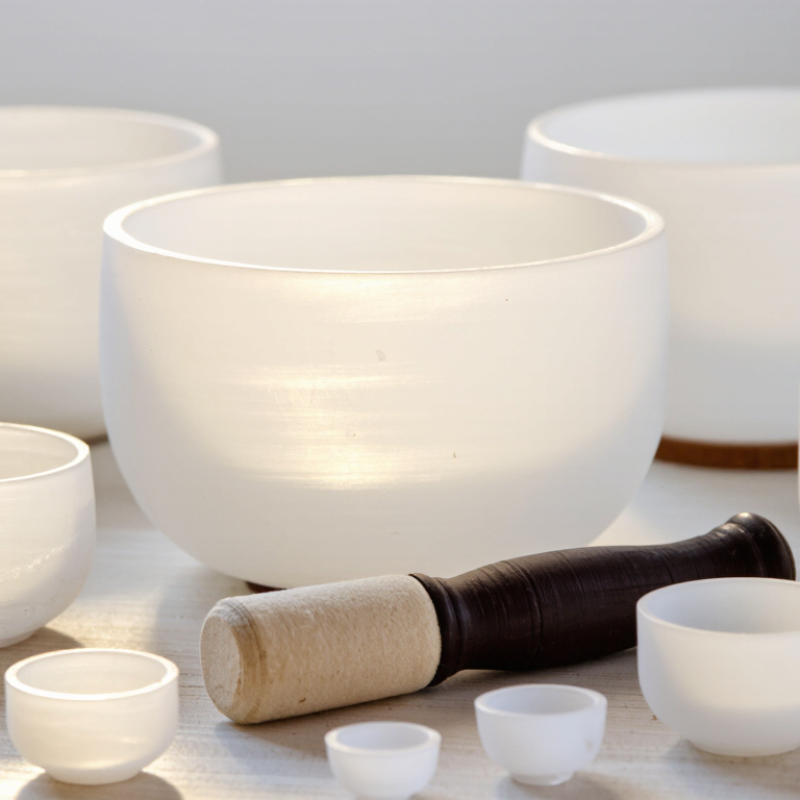
Definition and Basic Features of a Crystal Singing Bowl
A crystal singing bowl is a resonant vessel commonly made from fused quartz, a form of silica. Its circular opening and curved sides help create a sustained tone when the bowl is gently struck or rubbed with a mallet. Unlike a metal singing bowl, it is often opaque or milky in appearance, with a smooth, glass-like surface. The sound may feel clear and steady, though the exact tone depends on the bowl’s size, thickness, and shape.
Listen closely. A small bowl may produce a higher pitch, while a larger one often sounds lower. When a mallet moves slowly around the rim, the tone can swell and become more noticeable; uneven pressure may make it waver. Basic features include the bowl’s diameter, weight, rim, and resonance. These details affect both how it feels to handle and how its sound fills a room. The word “crystal” can seem more precise than it is: bowls differ in composition and finish, so the label alone does not predict their sound. They are acoustic instruments, not medical devices, and claims about their effects should be treated with care. A quiet room makes their tone easier to hear, but the listening experience remains personal.
Materials and How Crystal Singing Bowls Are Made
A crystal singing bowl is a resonant vessel, commonly made from high-purity quartz. Many makers begin with silica powder, the main ingredient in quartz, rather than a single large crystal. They heat the material until it fuses, then form it into a bowl using a mold. The exact process varies. It is often less simple than the finished bowl suggests.
After shaping, the bowl is cooled gradually to reduce internal stress. Its rim may be smoothed, and makers check its tone by measuring how it vibrates. Small differences in thickness or shape can change the sound. Some bowls are made with added mineral materials, so “crystal” does not always describe one identical recipe. That detail is easy to overlook.
Tips: Before buying, ask what material the bowl contains and how its pitch was checked. Tap the rim gently with the included mallet, then listen for a clear, steady note. Handle it with two hands; quartz bowls can chip or crack if knocked against a hard surface. No two bowls sound exactly alike, and a beautiful tone is partly a matter of personal preference.
How a Crystal Singing Bowl Produces Sound
What Is a Crystal Singing Bowl?
How a Crystal Singing Bowl Produces Sound
A crystal singing bowl is usually formed from fused silica, shaped into a thick, open vessel. A mallet strike makes its wall flex and vibrate. Those vibrations disturb nearby air, creating sound waves. Rubbing a mallet around the rim adds energy continuously, sustaining the bowl’s ringing tone. The exact sound depends on the bowl’s diameter, wall thickness, shape, and the contact material. Small details matter.
A bowl’s tone is not one pure note. Its main resonance combines with quieter overtones, giving the sound its layered quality. ISO 226:2003, an international acoustics standard, uses 20 micropascals at 1,000 hertz as the reference sound pressure for hearing measurements. This helps explain why pitch and loudness are not interchangeable: the ear responds differently across frequencies. The room also changes what listeners hear. A hard floor may return a bright reflection; curtains and cushions tend to absorb some sound. In practice, striking force and listening distance matter too. It is tempting to describe one bowl as having one fixed frequency, but its measured sound can shift with how and where it is played. The physics is clear; the experience is less tidy.
Common Shapes, Sizes, and Musical Characteristics
What Is a Crystal Singing Bowl?
Common Shapes, Sizes, and Musical Characteristics
Crystal singing bowls are commonly made from fused quartz and come in rounded, open-bowl forms. Some have straighter sides; others flare gently toward the rim. Frosted bowls often have a matte surface, while clear bowls look glass-like. Sizes vary, with many measuring roughly six to fourteen inches across. Smaller bowls are easier to carry. Larger ones can take up more room and may produce lower tones.
A mallet struck against the bowl creates a clear attack followed by lingering resonance. Moving it steadily around the rim can build a sustained, wavering sound. Larger bowls often sound lower, but size alone does not determine pitch. Wall thickness, shape, and construction also matter. A small bowl can sound surprisingly full. That is an easy detail to overlook when choosing by measurements alone.
Tips: If possible, listen before buying. Try a gentle strike, then a slow rim motion, and notice whether the sound feels comfortable in your space. A phone recording may not capture the bowl’s full resonance. Start softly; strong friction can create a rough or squeaky tone.
Crystal Singing Bowls: Shapes, Sizes, and Musical Characteristics
Crystal singing bowls are commonly made as open, round vessels, from small handheld sizes to larger floor-standing sizes. Their size and shape can influence their sound, but neither determines a single standard pitch.
The chart shows equal-tempered reference frequencies for notes from C4 to C5, not measurements of particular bowls. A bowl’s actual pitch and overtones vary with its dimensions and construction.
Uses, Handling, and Care of Crystal Singing Bowls
What Is a Crystal Singing Bowl?
Uses, Handling, and Care of Crystal Singing Bowls
A crystal singing bowl is commonly made from shaped quartz and produces a clear tone when gently rubbed or tapped. People use bowls for meditation, quiet reflection, or ambient sound. Sound varies. A bowl’s tone depends on its size, shape, and how it is played; no single sound suits everyone. Treat claims about health benefits cautiously: a bowl can support a calming routine, but it is not a medical treatment.
Place the bowl on a stable, padded ring before playing. Hold the mallet lightly and move it around the rim with steady pressure. Avoid forceful tapping, which can chip the bowl or create an unexpectedly loud sound. Keep the bowl away from ears, especially in small rooms, and pause if the volume feels uncomfortable. Keep it simple. A little practice helps, though uneven sounds can happen.
For care, wipe the bowl with a soft, slightly damp cloth, then dry it fully. Avoid sudden temperature changes, abrasive cleaners, and contact with hard surfaces. Store it separately in a padded place where it cannot roll or be knocked over. Check the rim for chips before each session; even a small flaw deserves attention. It is easy to overlook storage when putting things away quickly, so make a safe resting spot part of the routine.