

7 Best Coffee Robot Machines for Businesses in 2026
A coffee robot can look impressive under showroom lights. The real test begins at 8:15 a.m., when orders stack up, milk needs replenishing, and every cup must taste consistent. The National Coffee Association’s 2024 National Coffee Data Trends report found that 67% of U.S. adults had coffee in the past day. That figure signals a substantial daily occasion, but it does not prove that every café needs automation. Operators still need to weigh customer volume, menu complexity, footprint, cleaning routines, and service support.
Robotics pioneer Joseph Engelberger is widely quoted as saying, “I can’t define a robot, but I know one when I see one.” He was speaking about robots generally, not coffee equipment. Applied here, the useful question is whether a machine reliably handles real café work—not merely whether it looks futuristic. A strong Coffee Robot Machine should make repeatable drinks, fit the counter, and give staff a clear way to recover when something goes wrong. Small details matter. A syrup bottle that is awkward to change can disrupt a rush. Published data on coffee-robot adoption remains limited, so vendor claims deserve careful checking. This guide compares seven machines for businesses in 2026, focusing on practical capabilities, operating needs, and trade-offs. Some limits may remain. That is worth saying. A robot can improve consistency, but it cannot make a weak menu compelling.
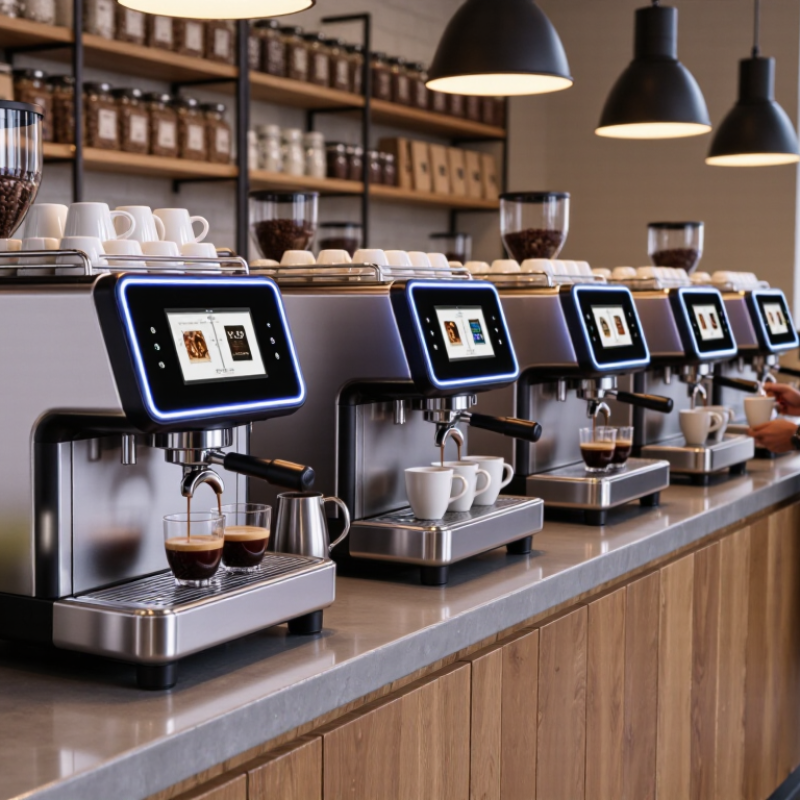
What Coffee Robot Machines Do and How Businesses Use Them
Coffee robot machines combine coffee equipment, software, and automated movement to prepare drinks with limited staff handling. Depending on the system, a robotic arm may move a cup between a grinder, brewer, and milk dispenser. Sensors can check cup position and ingredient levels. The exact workflow varies by machine. Some models still require staff to refill supplies or clear minor faults. That matters.
Businesses use these machines where drink orders are frequent and service space is tight. A commuter kiosk might offer espresso and iced coffee through a touchscreen, while a hotel could place a machine near its breakfast area. Customers choose a drink, pay, and wait as the machine follows its programmed steps. A clear pickup shelf helps prevent cups from being mistaken for someone else’s order.
For operators, the value is not just automation. Consistent recipes can make busy periods easier to manage, and order data may help reveal which drinks sell well. But a robot cannot fix poor coffee, stale beans, or an awkward menu. Staff still need to clean the brew group, replenish milk, and respond when a drink is made incorrectly. That part gets overlooked. The practical fit depends on daily order volume, available counter space, maintenance support, and how much human service customers expect.
7 Best Coffee Robot Machines for Businesses in 2026 — What Coffee Robot Machines Do and How Businesses Use Them
A practical comparison of seven commercial coffee-automation formats. Capabilities and suitability vary by configuration, menu, installation, and local service requirements.
| Machine Type | What It Automates | Best Business Fit | Typical Strengths | Operational Considerations |
|---|---|---|---|---|
| 1. Robotic Espresso-Arm System | Uses a robotic arm to move cups or portafilters through programmed espresso-preparation steps; some setups also automate milk steaming and drink finishing. | High-visibility cafés, hospitality venues, and locations where the preparation process is part of the customer experience. | Can repeat programmed movements consistently and create an engaging, demonstrable service format. | Requires suitable counter space, cleaning routines, ingredient replenishment, and staff oversight. The arm does not remove the need for maintenance or quality checks. |
| 2. Automated Espresso Kiosk | Combines a self-service ordering interface with automated espresso extraction and, depending on the configuration, milk dispensing and payment. | Office buildings, transport hubs, campuses, and other locations with steady walk-up demand. | Supports unattended or lightly supervised ordering and can offer a defined menu throughout operating hours. | Needs reliable power, water or an appropriate water supply arrangement, waste handling, and regular cleaning. Complex custom drinks may be limited by the menu setup. |
| 3. Robotic Barista Kiosk | Coordinates ordering, ingredient selection, drink preparation, and handoff through an enclosed or semi-enclosed automated station. | Retail venues, food halls, and public spaces seeking a compact, self-service coffee point. | Can standardize a set menu and combine digital ordering with a compact service footprint. | Site layout, accessibility, queue flow, and replenishment access matter. Operators still need a plan for cleaning, faults, and customer support. |
| 4. Bean-to-Cup Commercial Robot | Automates grinding, brewing, and dispensing from whole beans; many commercial units also provide programmed milk-based drinks. | Offices, hotels, staff areas, and smaller venues that need convenient drinks with limited preparation labor. | Offers a broad range of drinks from one machine and can be simpler to operate than a separate espresso-bar workflow. | Drink quality depends on settings, beans, water, and cleaning. Milk systems and brewing components need routine cleaning and servicing. |
| 5. Fresh-Brew Coffee Vending Robot | Uses a vending-style interface to prepare and dispense selected hot coffee drinks, often with automated payment and portion control. | Break rooms, waiting areas, hospitals, and sites where convenient service is more important than a full café experience. | Suitable for self-service and can operate in locations without a staffed coffee counter. | Menu flexibility and drink customization may be narrower than at a staffed café. Ingredient loading, cup supply, waste removal, and sanitation remain necessary. |
| 6. Modular Coffee Automation Station | Links separate modules—such as an espresso machine, grinder, milk unit, payment terminal, and cup handling—into a coordinated workflow. | Businesses with specific counter layouts or service needs, including cafés and larger workplace dining areas. | Modular equipment can be configured around a business’s menu and workflow, and individual components may be serviced separately. | Integration and staff training are important. More components can mean more connections, cleaning tasks, and points requiring maintenance. |
| 7. Mobile Coffee Robot Cart | Brings automated or semi-automated coffee preparation and ordering to a movable cart or compact mobile station. | Events, pop-up service, flexible office spaces, and venues where the serving location changes. | Can place service closer to customers and adapt to temporary or changing layouts. | Mobility does not guarantee full independence: operators must plan for power, water, ingredient storage, cleaning, safe movement, and local operating rules. |
Related Posts
-
What Is a Coffee Robot Machine and How Does It Work?
-
How to Choose a Robot Barista for Your Business?
-
How to Find China Best Coffee Machine Suppliers?
-
Trends Shaping the Future of Coffee Robot Machines in Global Markets 2025
-
10 Best Robot Coffee Kiosks for Global Buyers?
-
Emerging Coffee Innovations in 2025 A Comprehensive Guide to the Best Robot Espresso Machines