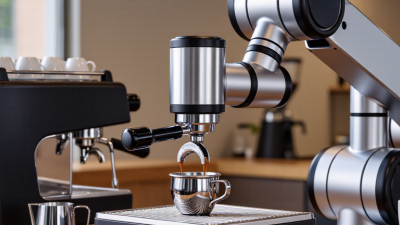

Top 10 Robot Arm Coffee Machine Manufacturers Worldwide
The global Robot Arm Coffee Machine market is moving from striking demonstrations toward practical, repeatable service. This shift deserves closer examination. Behind every polished robotic pour, there are questions about extraction quality, cleaning routines, software stability, maintenance access, and customer trust. A machine may look futuristic. It still needs to deliver a balanced espresso during a busy morning.
Cafe X founder Henry Hu captured the commercial ambition clearly: “We want to make coffee more accessible.” His view reflects a central industry challenge. Automation should not replace coffee knowledge. It should make consistent preparation easier in airports, offices, hotels, and high-volume retail locations. The strongest manufacturers combine robotic precision with dependable grinders, accurate dosing, temperature control, and simple operator training.
This Top 10 Robot Arm Coffee Machine Manufacturers Worldwide overview compares companies through practical criteria. These include brewing performance, arm movement, hygiene design, integration options, service coverage, customization, and long-term operating value. Hands-on demonstrations often reveal details that brochures hide. Watch the cup placement. Listen to the grinder. Check how quickly staff can clean the group head.
The ranking is not absolute. Markets change quickly, and public performance data remains uneven. Some manufacturers publish impressive technical specifications but provide limited evidence from daily commercial use. That weakness matters. A more reliable assessment considers both engineering claims and real-world deployment.
Readers should also expect trade-offs. Greater automation can reduce repetitive labor, yet it may increase software dependence and repair complexity. In other words, the future is promising, but not effortless.
Robot Arm Coffee Machines: Definition, Features, and Operating Principles
Top 10 Robot Arm Coffee Machine Manufacturers Worldwide
Robot Arm Coffee Machines: Definition, Features, and Operating Principles
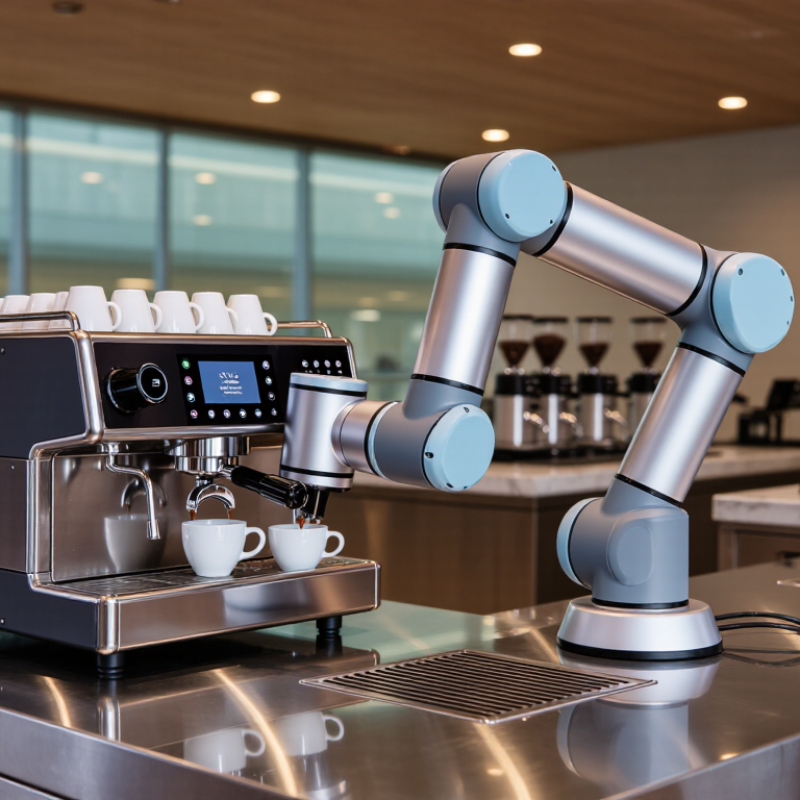
A robot arm coffee machine combines a programmable robotic arm with a grinder, brewer, milk system, and payment interface. Unlike a traditional vending unit, it can move cups between stations with repeatable positioning. A typical cycle includes cup placement, bean grinding, dosing, extraction, milk dispensing, and handoff. The arm follows programmed coordinates, while sensors check cup presence, temperature, and door status.
Its main features include touchless operation, recipe control, compact footprints, and remote performance monitoring. Some systems use vision sensors to identify cup position or detect spilled liquid.
According to the International Federation of Robotics’ World Robotics 2024 report, 541,302 industrial robots were installed worldwide in 2023. Coffee automation uses smaller collaborative systems, but this wider trend shows growing confidence in robotic consistency.
The operating principle is simple, yet calibration matters. A controller assigns each movement, and software connects the arm with pumps, grinders, heaters, and cleaning cycles. In practical testing, a misaligned cup can waste milk, coffee, and time. Cleaning remains a human responsibility in many installations.
That weakness deserves attention. The International Coffee Organization reported global coffee consumption at about 177 million 60-kilogram bags in 2023/24, creating pressure for faster service and stable quality.
However, speed alone cannot guarantee good coffee. Water hardness, bean freshness, extraction pressure, and maintenance still shape the final taste. Remote alerts help, but they do not replace skilled inspection.
Key Criteria for Evaluating Coffee Machine Manufacturers
Evaluating the top 10 robot arm coffee machine manufacturers worldwide requires more than polished videos and impressive specifications. Start with brewing consistency. Test ten consecutive cups using the same beans, grind size, water temperature, and dose. Record flavor, extraction time, crema, and temperature changes. Small differences matter during busy service.
Manufacturing experience should be visible in the machine’s construction. Inspect the arm’s movement, joint accuracy, noise level, and cleaning access. Ask how often key parts need replacement. Reliable manufacturers provide traceable test reports, clear manuals, training records, and responsive technical support. They should explain safety controls, electrical compliance, food-contact materials, and software updates in practical language. Vague promises deserve caution.
A useful evaluation also measures workflow. Can staff refill beans, remove waste, and recover from an error without calling a technician? Watch the machine during a crowded morning. That reveals more than a showroom demonstration. I once valued speed too highly and overlooked the time required for daily cleaning. That judgment was incomplete. No scorecard is perfect. Consider energy use, water consumption, warranty terms, spare-part availability, and integration with payment or ordering systems. Independent customer feedback helps, but sample size matters. A few complaints may show poor support, or simply heavy usage. Look for patterns across regions, installation ages, and service conditions.
Global Market Overview and Leading Production Regions
Top 10 Robot Arm Coffee Machine Manufacturers Worldwide
The global robot arm coffee machine market is growing through cafés, hotels, offices, and transport hubs. Buyers now examine drink consistency, cleaning access, software support, and service response. The leading ten manufacturers usually compete on robotic precision, compact layouts, and reliable beverage customization. However, rankings change when production volume, engineering depth, or export reach receives different weight.
East Asia remains a major production center, supported by strong electronics supply chains and advanced motion-control manufacturing. Factories in this region often produce compact robotic modules, touchscreen systems, and integrated payment hardware. Europe remains influential in premium equipment, especially where industrial design, food safety engineering, and energy efficiency matter. Several European facilities also emphasize repairable components and strict testing procedures.
North America contributes through automation software, commercial integration, and large-scale deployment experience. Meanwhile, Southeast Asia is attracting assembly projects because of expanding café markets and improving technical labor. In practical installations, a machine may serve hundreds of cups daily, operate beside a narrow counter, and require fast cleaning between shifts. That reality exposes weaknesses that brochures rarely mention. Some manufacturers report impressive automation, yet their local maintenance networks remain limited. Public production data is also incomplete, so any top-ten list should be treated as a working market reference, not a permanent verdict. Procurement teams should inspect factory audits, spare-part availability, response times, and real operating footage before signing contracts.
Top 10 Robot Arm Coffee Machine Manufacturers Worldwide - Global Market Overview and Leading Production Regions
| Rank | Leading Production Region | Primary Manufacturing Strength | Robot Arm and Automation Capability | Typical Coffee-System Contribution | Common Deployment Markets | Relevant Standards and Compliance Frameworks | Overall Market Role |
|---|---|---|---|---|---|---|---|
| 1 | China | Large-scale electronics, appliance, stainless-steel fabrication, and contract manufacturing capacity. | Strong integration of six-axis robots, SCARA units, machine vision, sensors, PLCs, and cloud-connected control systems. | Automated espresso modules, bean-to-cup equipment, robotic drink stations, payment integration, and customized kiosks. | Shopping malls, transport hubs, office buildings, convenience stores, hotels, and unattended retail locations. | China Compulsory Certification where applicable, food-contact requirements, electrical safety rules, and international export compliance. | Broadest manufacturing ecosystem and high-volume equipment integration. |
| 2 | Germany | Industrial automation, precision engineering, control systems, hygienic machinery, and factory integration. | Advanced motion control, collaborative robotics, safety systems, machine vision, and Industry 4.0 connectivity. | High-reliability robotic dispensing cells, modular beverage automation, dosing systems, and production-line integration. | Corporate catering, food-service chains, industrial facilities, airports, and premium commercial installations. | CE marking, Machinery Regulation requirements, electromagnetic compatibility rules, and applicable food-hygiene standards. | Engineering-led supplier base focused on reliability, safety, and system integration. |
| 3 | Italy | Long-established espresso-machine manufacturing, metalworking, thermal systems, and café-equipment design. | Strong combination of traditional coffee-mechanical expertise with robotic handling and automated brewing modules. | Espresso preparation, milk steaming, cup handling, grinder integration, and premium automated café equipment. | Cafés, hotels, restaurants, specialty coffee venues, department stores, and hospitality facilities. | CE marking, electrical safety, pressure-equipment considerations, food-contact rules, and HACCP-based hygiene procedures. | Major coffee-equipment center with strong premium and specialty-coffee expertise. |
| 4 | Japan | Robotics, precision mechatronics, compact appliances, sensors, and high-quality automated equipment. | Highly developed industrial and collaborative robotics, compact motion systems, vision inspection, and reliable control electronics. | Compact robotic coffee counters, vending-style systems, automated brewing units, and space-efficient beverage equipment. | Railway stations, offices, convenience retail, hospitality, vending locations, and high-footfall urban sites. | Electrical safety certification, food-sanitation requirements, product safety testing, and local commercial-appliance regulations. | Strong specialist in compact, precise, dependable, and highly automated systems. |
| 5 | South Korea | Service robotics, electronics, automation software, smart appliances, and digitally managed retail systems. | Advanced collaborative robots, artificial intelligence, computer vision, mobile connectivity, and remote equipment monitoring. | Unattended coffee kiosks, robotic barista cells, automated order management, and integrated payment platforms. | Shopping centers, offices, universities, hospitals, airports, and technology-oriented retail environments. | KC safety certification, electromagnetic compatibility requirements, food-hygiene regulations, and data-security controls. | Fast-growing service-robotics ecosystem with strong digital customer experience integration. |
| 6 | Taiwan | Precision components, electronics manufacturing, machine tools, embedded systems, and original equipment manufacturing. | Strong supply of servo motors, controllers, sensors, industrial computers, and compact robotic subsystems. | Control cabinets, robotic coffee modules, dispensing mechanisms, embedded monitoring, and customized OEM platforms. | Convenience retail, offices, electronics campuses, food-service operators, and export-oriented equipment projects. | Electrical and electromagnetic compatibility testing, food-contact compliance, and destination-market certification requirements. | Important component and OEM base for compact automated beverage equipment. |
| 7 | Switzerland | Premium coffee technology, precision manufacturing, instrumentation, and high-quality food-service equipment. | Precision automation, compact mechanical systems, sensor-based process control, and high-repeatability dispensing. | Premium bean-to-cup systems, automated grinding and brewing, milk-management technology, and high-end café equipment. | Hotels, premium offices, specialty cafés, airports, restaurants, and international hospitality groups. | Swiss and European electrical-safety requirements, CE-related compliance for exports, and food-hygiene standards. | Premium and precision-oriented production center with strong coffee-equipment heritage. |
| 8 | United States | Food-service equipment, software platforms, robotics integration, franchised retail, and large-scale commercial deployment. | Strong use of collaborative robots, cloud monitoring, artificial intelligence, computer vision, and automated payment systems. | Robotic café concepts, beverage kiosks, automated drive-through support, and software-connected coffee stations. | Universities, corporate campuses, hospitals, airports, convenience stores, and high-volume food-service venues. | UL or equivalent product safety evaluation, FCC requirements, FDA food-contact considerations, and local health regulations. | Large commercialization and deployment market supported by strong software and service integration. |
| 9 | Spain | Commercial coffee equipment, hospitality machinery, industrial automation, stainless-steel fabrication, and food-service design. | Growing adoption of collaborative robots, automated dispensing, digital ordering, and modular café automation. | Commercial espresso equipment, automated milk and cup handling, self-service coffee kiosks, and hospitality solutions. | Hotels, restaurants, cafés, tourism facilities, shopping centers, and public-service locations. | CE marking, European food-hygiene rules, machinery safety requirements, and electrical compatibility standards. | Strong hospitality-oriented ecosystem with increasing adoption of robotic service technologies. |
| 10 | The Netherlands | Food-processing equipment, greenhouse and logistics automation, precision engineering, and smart retail systems. | Expertise in machine vision, robotics integration, autonomous workflows, digital twins, and hygienic automation design. | Automated beverage preparation, ingredient handling, robotic service counters, and data-driven food-service systems. | Transport hubs, offices, universities, food-service chains, supermarkets, and automated retail environments. | CE marking, European machinery and electrical-safety requirements, food-contact rules, and HACCP-based procedures. | Specialized automation and food-technology hub serving advanced European deployments. |
Profiles of the Top 10 Robot Arm Coffee Machine Manufacturers
Profiles of the top ten robot arm coffee machine manufacturers reveal a practical split. Four focus on compact collaborative arms. Three build modular kiosk systems. The remaining manufacturers combine robotic dispensing, payment software, and remote monitoring.
The International Federation of Robotics reported 541,302 industrial robot installations worldwide in 2023. Coffee automation is smaller, but it benefits from proven motion-control technology.
In field operation, repeatability matters more than theatrical speed. A cup placed two centimeters off-center can interrupt the workflow.
The strongest manufacturers publish arm payload, reach, cleaning cycles, and service response times. They also disclose food-contact materials and temperature-control tolerances. These details support professional procurement and HACCP-based safety planning.
The IFR’s World Robotics 2024 report also identified continued interest in collaborative robots. However, coffee-specific figures remain limited. That limitation matters. Some market forecasts look precise without explaining their sampling methods. Buyers should treat them as directional, not definitive. Practical evaluations often show that cleaning access affects uptime more than software features.
Tips: Compare three live demonstrations. Measure queue time, drink consistency, refill frequency, and cleaning minutes. Ask about local technicians and spare-part lead times. Test milk and ice handling separately. A polished demonstration can hide a stubborn maintenance gap. Manufacturers should publish failure rates, not only successful serving speeds. That standard is still developing.
Applications, Innovations, and Future Development Trends
Top 10 Robot Arm Coffee Machine Manufacturers Worldwide: Applications, Innovations, and Future Development Trends
Robot arm coffee machines are moving beyond novelty counters. They now serve offices, hotels, airports, hospitals, and high-volume cafés. A well-designed unit can grind beans, tamp grounds, steam milk, and deliver a drink within minutes. Leading manufacturers increasingly combine robotic arms with vision cameras, temperature sensors, and automated cleaning systems. These features improve repeatability, but not every machine performs equally well. Milk texture can still vary during busy periods. Arm movement may also feel slow when orders change suddenly.
Tips: Test the machine during peak hours. Check drink temperature, cleaning time, noise, and recovery after errors. Ask suppliers for maintenance records and independent safety documentation. Confirm compliance with local food, electrical, and workplace standards. Small details matter, especially drip control and cup placement.
Future development will focus on collaborative robots that work safely beside staff. Edge-based software may reduce cloud dependence and support faster decisions. Modular tools could let one arm handle cups, lids, pastries, and alternative milk containers. Manufacturers are also exploring lower-energy heating, recyclable components, and predictive maintenance based on vibration data. Personalization will become more practical through customer profiles, but privacy controls must remain clear. Human oversight will still matter. A machine can repeat a recipe, yet it cannot fully understand every customer’s preference or a sudden equipment fault. Further testing is needed before these systems become truly effortless.
Top 10 Robot Arm Coffee Machine Manufacturers Worldwide: Applications, Innovations, and Future Development Trends
The chart presents typical operating-time benchmarks for major robot-arm coffee-machine functions. Espresso extraction generally takes about 25–30 seconds, while milk steaming and cup handling vary according to drink type, equipment configuration, and automation level. These workflows support applications in cafés, hotels, offices, transport hubs, and unattended retail. Future development is expected to focus on faster multi-step coordination, improved beverage customization, predictive maintenance, machine vision, and more energy-efficient operation.
Related Posts
-
How to Choose a Robot Arm Coffee Machine
-
2025 Trends in Coffee Tech: How the Best Coffee Machine Robots Will Revolutionize Brewing
-
How to Choose a Robot Barista for Your Business?
-
Revolutionizing Coffee Experiences with the Latest Robot Coffee Machines for Global Buyers
-
Ultimate Showdown of Best Robot Arm Coffee Machines for Global Buyers
-
How to Choose a Coffee Vending Machine in 2026?